From obstacle course to everyday terrain
Parkour’s military connection is best understood as a training lineage: its early models treated movement as a practical skill, not a performance. French physical-training systems drew on the idea that a person should be able to run, jump, climb, balance, and get past obstacles efficiently. Military obstacle courses put those movements into a demanding sequence, where hesitation or wasted effort could matter.
That approach valued adaptable bodies over specialized equipment. A wall was something to climb, a gap something to cross, and uneven ground something to negotiate—not scenery built for a show. The point was to move through a difficult environment while keeping control.
The course became the city
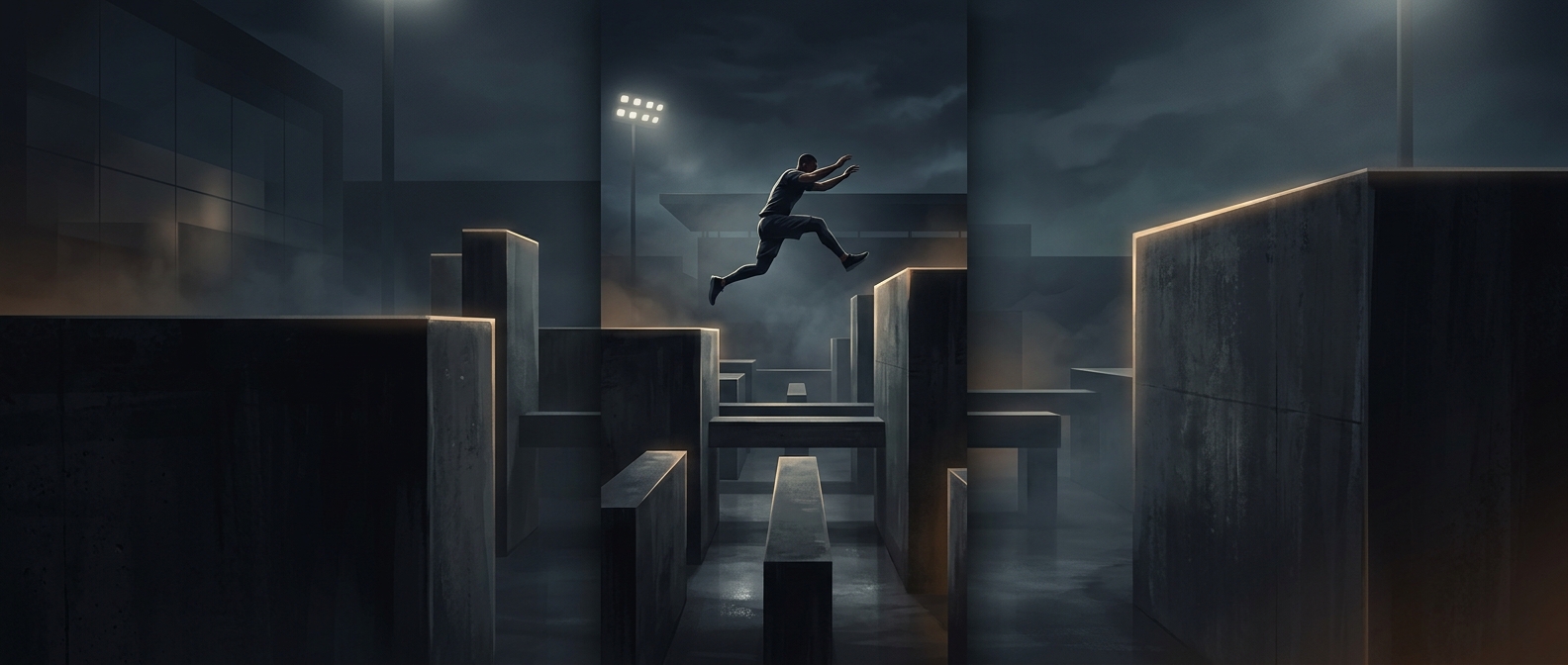
Modern parkour took shape when that obstacle-course logic was carried into ordinary surroundings. Instead of a designed training route, practitioners used the features of streets and buildings: rails, walls, stairs, and ledges. They adapted movements to what was actually there, choosing a route and judging whether they could complete it safely.
That change also altered the meaning of the movement. Military training prepares people for a specific kind of demanding situation; parkour made the broader skill of navigating obstacles into a discipline people could practice for itself. Videos and public demonstrations later made spectacular jumps highly visible, but those moments are only one part of the practice. The underlying challenge is controlled, efficient movement—not the height of the jump or the size of the audience.