From a voice to an electronic instrument
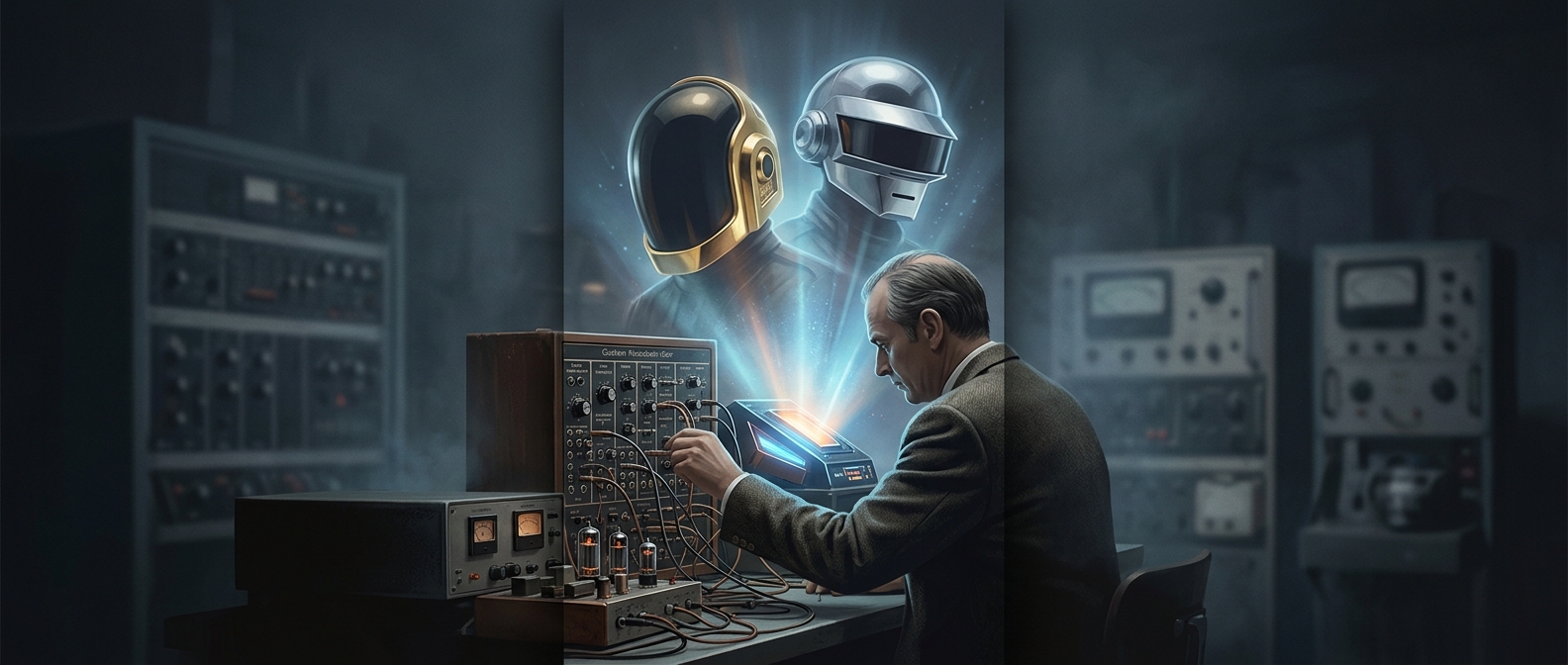
Harald Bode’s work helped make electronic sound equipment more flexible: instead of building one machine for one effect, engineers and musicians could combine circuits that generated, filtered, or altered sound. In a modular synthesizer, those circuits are separate units connected by signal paths. Change the connections, and the same collection of modules can produce a different sound or respond differently to a performer.
That flexibility mattered as electronic music moved from laboratory experiments toward studio composition and performance. A sound could be shaped in stages—generated, filtered to emphasize some frequencies, then modified again—rather than selected from a fixed set of tones. Bode’s instruments and designs helped establish this modular way of thinking about electronic music equipment.
How a vocoder makes speech sound synthetic
A vocoder does not simply add an electronic effect to a recorded voice. It analyzes the changing pattern of frequencies in speech, including which parts of the voice are strong at a given moment. That pattern is used to shape a second sound, called the carrier. The carrier might be a buzzy electronic tone; shaped by the speech pattern, it follows the voice’s syllables and inflections while retaining its own synthetic character.
The result can sound like a machine speaking, but the key is that the voice supplies the changing outline while another sound supplies the raw material. Bode helped develop and adapt vocoder technology for musical use, bringing speech-processing ideas into the electronic musician’s toolkit.
Shifting frequencies, not just notes
Bode also pioneered electronic frequency-shifting techniques. A frequency shifter moves each component of a sound up or down by the same amount, which changes the relationships among its harmonics. That is different from ordinary pitch-shifting, which scales frequencies together and tends to preserve those relationships. The difference can turn a familiar tone into something metallic, unstable, or hard to identify.
Together, modular instruments, vocoders, and frequency shifters made electronic sound less like a preset effect and more like a material that could be dismantled and rebuilt—sometimes until a human voice no longer sounded entirely human.