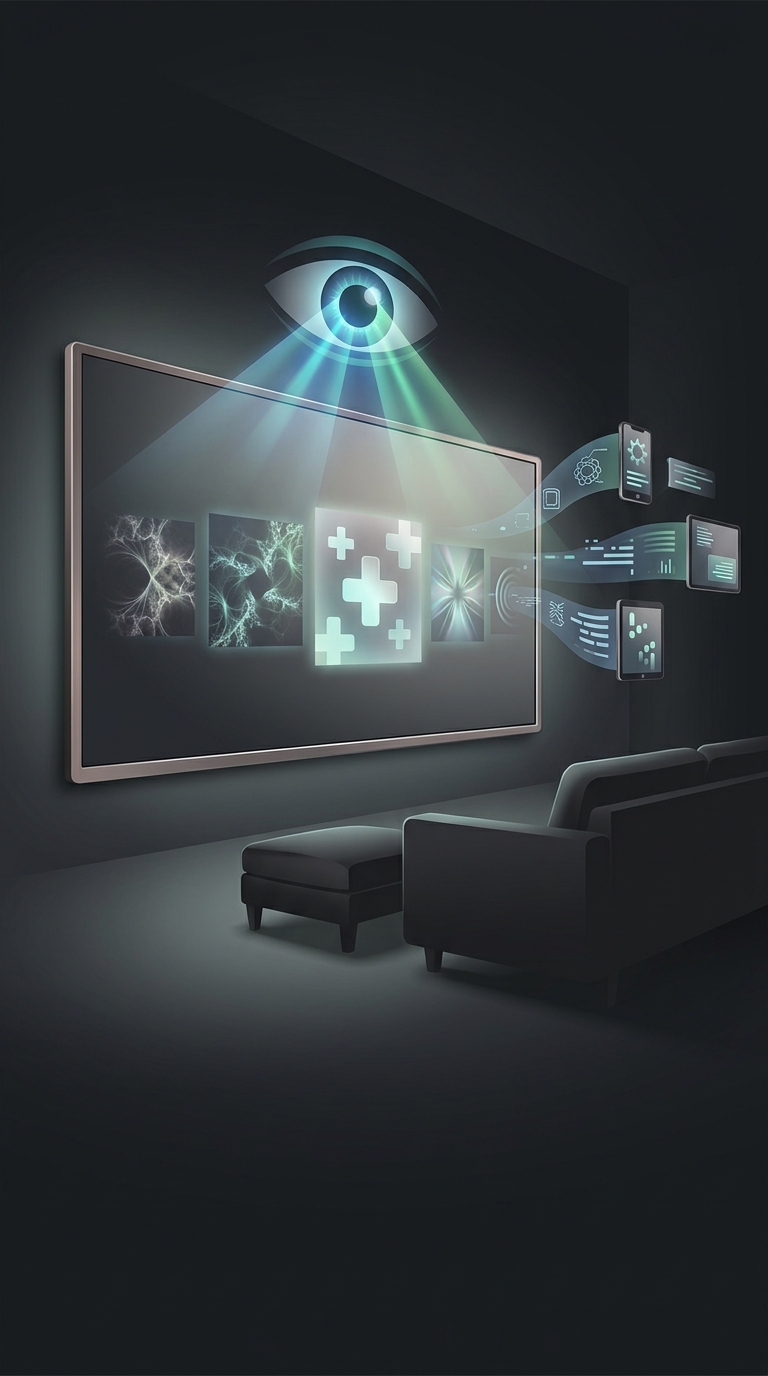
How a TV Can Recognize What’s on Screen
Automatic content recognition, or ACR, is software that identifies the program or other material playing on a television. Rather than sending a readable copy of every frame to an advertiser, an ACR system can analyze brief samples of the picture or sound and compare them with a catalog of known content. A match can reveal that the screen is showing a particular show, advertisement, or game—even when the content came from a cable box or game console rather than the TV’s own apps.
That recognition can support features such as program recommendations, but it can also produce viewing data for advertising. Depending on the TV maker’s services and the user’s settings, data may be used to choose ads on the TV or shared with advertising partners. The exact practice varies by device and service; it is not accurate to assume every television continuously sends every displayed image to advertisers.
Why Advertisers Want Viewing Data
An ad shown on a television is only part of the picture. If viewing data can be associated with a household or device, advertising systems may use it to decide which ads to show elsewhere, including on phones or computers. The value is in connecting exposure—what content or ad a household likely saw—with later advertising choices. That does not necessarily mean an advertiser receives a person’s name or watches the screen live; the details depend on the data collected and how a company handles it.
The Important Choice Is Often in Setup
ACR may be enabled through a setting presented during initial setup, sometimes alongside recommendations or personalized services. Because the option can be easy to accept without examining its consequences, it is worth reviewing the television’s privacy or viewing-data settings and disabling ACR or related personalization if you do not want that use. Turning it off can limit some recommendations or measurement features, but it does not stop every app or streaming service from collecting data about activity inside its own service.
A smart TV is therefore more than a display: its software can make the living-room screen a source of viewing signals. The practical difference between a feature and a tracking system can come down to a setting many owners encounter only once.