How Scissors Turn a Squeeze Into a Cut
A pair of scissors works by concentrating force along two moving edges. Pressing the handles rotates the blades around their pivot, or fulcrum. Because the blades are longer than the handles’ connection to the pivot, the arrangement gives the hand leverage: a modest squeeze can create a much greater force where the blades meet.
The Cut Happens a Little at a Time
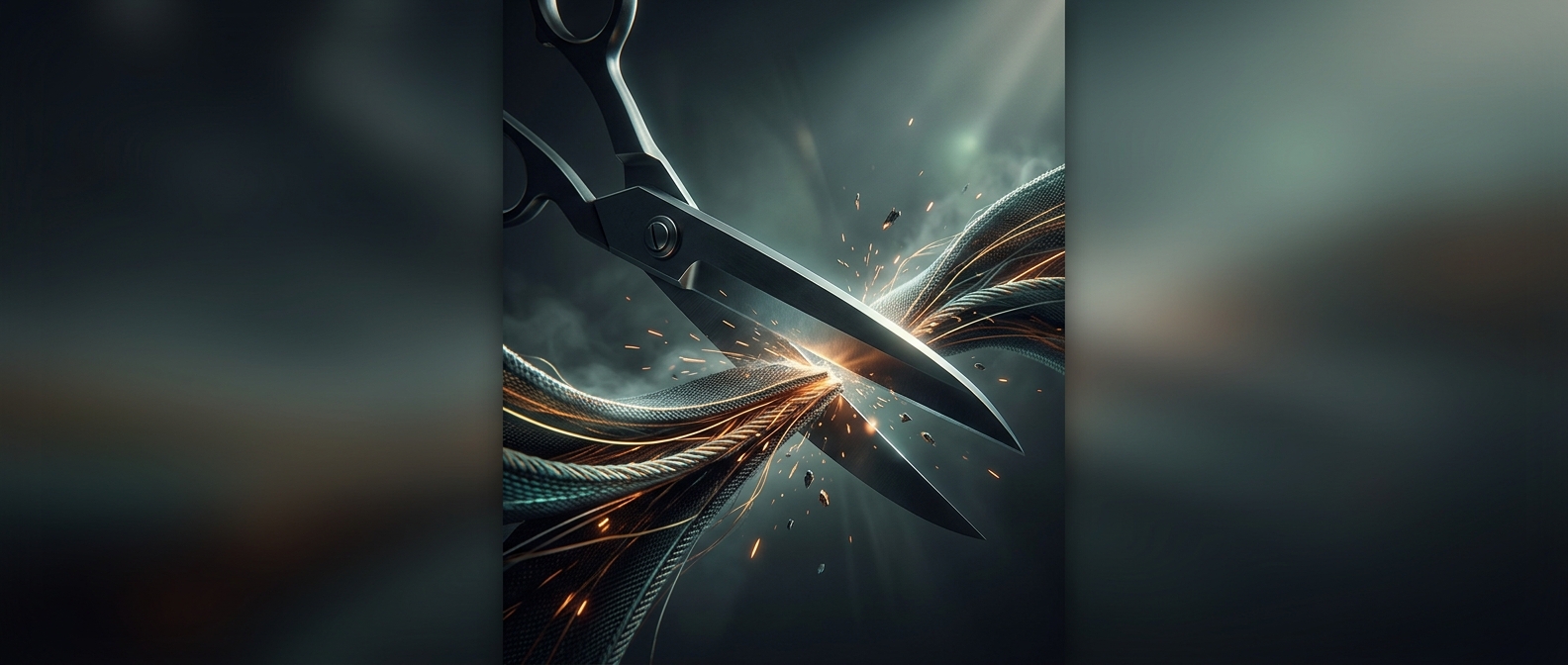
The blades do not usually crush the whole width of a material at once. As they close, their sharpened edges meet at a moving point. The material caught there is pushed in opposite directions across a very narrow zone. That sideways distortion is called shear. When it exceeds the material’s ability to hold together, fibers or other internal bonds break, and the cut advances along the blades.
The blades’ slight curve and the way they pass closely against each other help keep the cutting action focused near that meeting point. If the blades are loose, misaligned, or dull, the material can bend, slip between them, or get squeezed instead of cleanly sheared. That is why scissors may fold thin fabric or chew paper even when the handles still move normally.
Why the Material Matters
A sharp pair can slice paper, but thick or tough material demands more force and stronger blades. Scissors are therefore designed for particular jobs: the blade length, edge shape, pivot tightness, and handle leverage all affect how effectively they transfer force. The key is not simply pressing harder; it is keeping the material trapped between edges that meet closely enough to make the shear happen.