How a zipper turns many fastenings into one motion
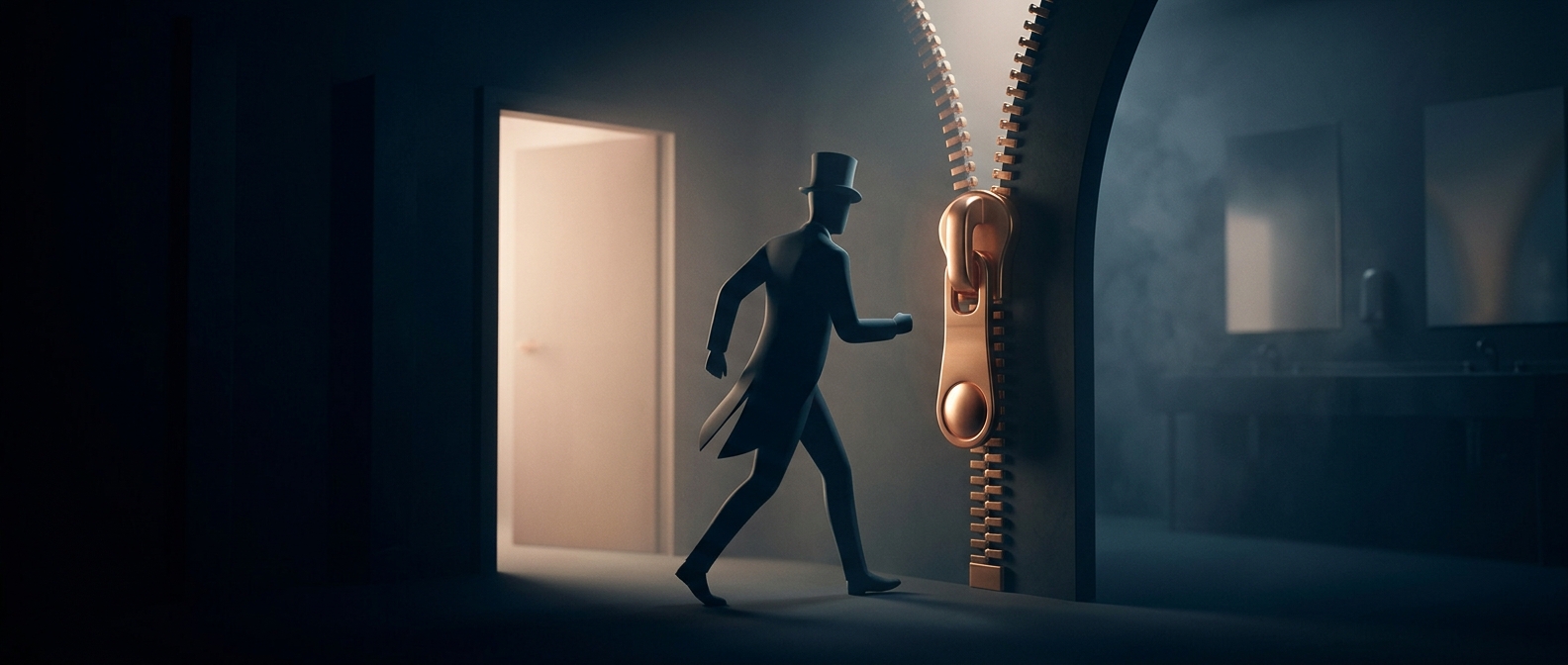
A row of buttons asks the wearer to repeat the same small task: line up each button with its buttonhole, push it through, then move to the next. A zipper replaces those separate closures with two rows of interlocking teeth. Pulling the slider brings the rows together; moving it the other way separates them. The wearer still has to guide the garment into place, but the closure itself happens in one continuous movement.
That difference gave early advertisers a simple benefit to demonstrate. Instead of describing a new mechanism in technical terms, they could contrast a drawn-out routine with a quick pull. Men’s trousers made the comparison easy to picture: the fastening was familiar, and the promised time saving was immediate.
Speed depended on more than the pull
A zipper’s convenience also relies on its parts staying aligned. If the teeth do not meet correctly, the slider cannot join them smoothly; if the closure is under strain, it may separate or jam. Buttons work one at a time, but each can be fastened independently. A zipper is quicker when it works, yet its single moving mechanism has to function as a whole.
The sales pitch therefore translated an engineering change into an everyday promise: less attention spent getting dressed. The memorable claim was not that trousers had become more complicated, but that one pull could replace a sequence of little decisions and movements.