How a trampoline turns a landing into a bounce
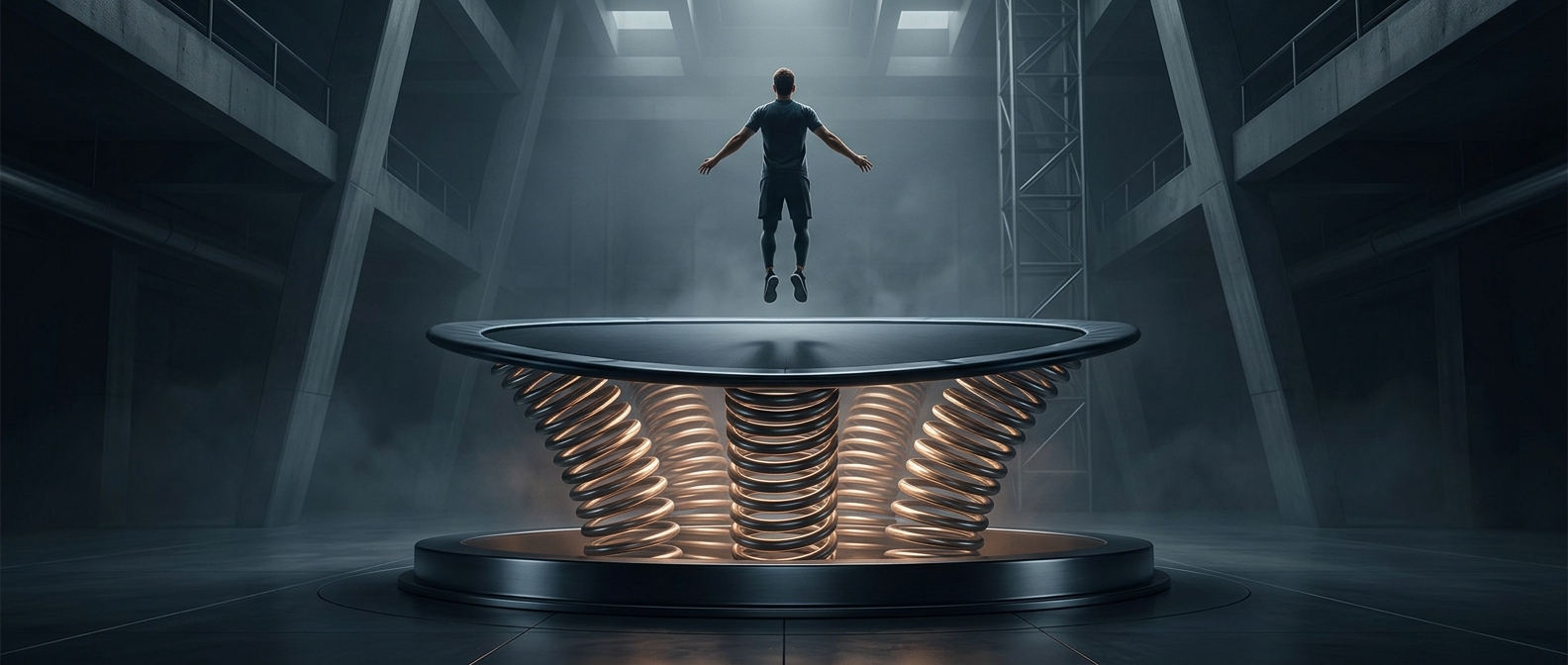
When a jumper lands, the mat moves downward and pulls on the springs around its edge. The springs lengthen under the load, storing some of the jumper’s motion as elastic energy—the energy held in a stretched or compressed object. As they contract, they pull the mat back up and send the jumper into the air.
That stretch also spreads the landing over a little more time than a rigid surface would. Instead of stopping abruptly, the jumper and mat decelerate while the springs extend. This can soften the impact, though it does not make landing risk-free: the force still depends on how high and how the person lands, as well as the trampoline’s condition.
Why the spring-and-mat combination matters
The springs must stretch enough to absorb energy, then recover to return it. If they are damaged, poorly attached, or mismatched to the mat and frame, the trampoline may respond unevenly or provide less predictable bounce. The frame holds the spring tension, while the flexible mat gives the force a broad surface to act on.
A trampoline therefore does not simply cancel a landing’s force. It redirects and releases energy through a controlled cycle of stretching and recoiling. The bounce comes from the same stored energy that helps make the landing less abrupt.