A hard surface for a delicate machine
Inside a mechanical watch, gears turn on narrow shafts called pivots. If a metal pivot rubbed directly against a softer metal support, repeated motion could gradually enlarge the support’s hole. The shaft would then wobble, changing how the gears meet and potentially disturbing the watch’s timekeeping.
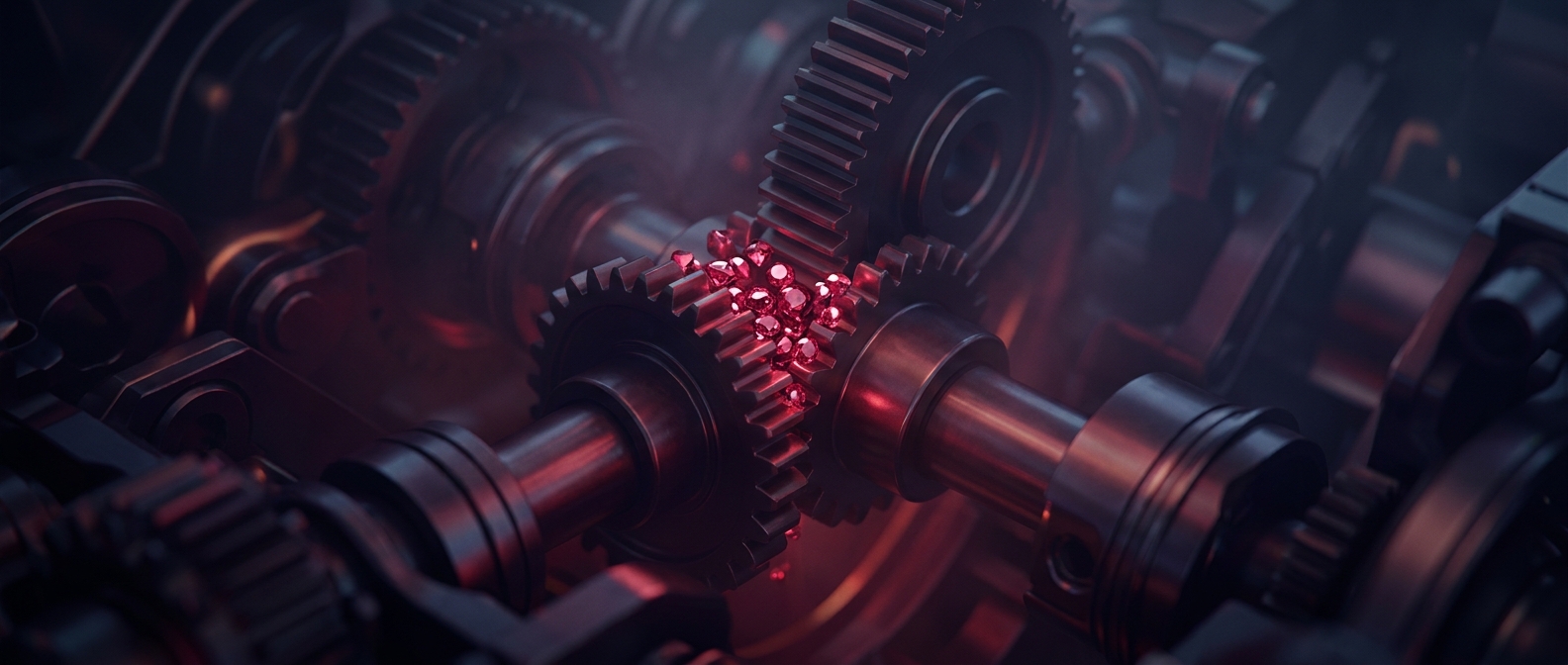
Watchmakers place tiny, precisely polished ruby pieces at these contact points. A ruby’s smooth, hard surface gives the pivot a durable place to turn, helping the bearing keep its shape through years of motion. The stones are usually synthetic: they provide the useful material properties of ruby without relying on rare natural gems.
Why the jewels are more than decoration
The stones are not miniature ornaments set into the movement for display. Many sit deep inside it, where their job is to control wear at a few small but important points. In some designs, a jewel also helps hold a tiny drop of lubricant near the pivot, reducing resistance as it turns.
That does not mean more jewels automatically make a watch better. Their value depends on where they are used and how well the movement is made. The striking idea is that a gemstone’s role in a watch is often almost invisible: it serves as a tough, stable contact surface so that much softer, more vulnerable parts can keep moving accurately.