How a tiny brick carries a growing load
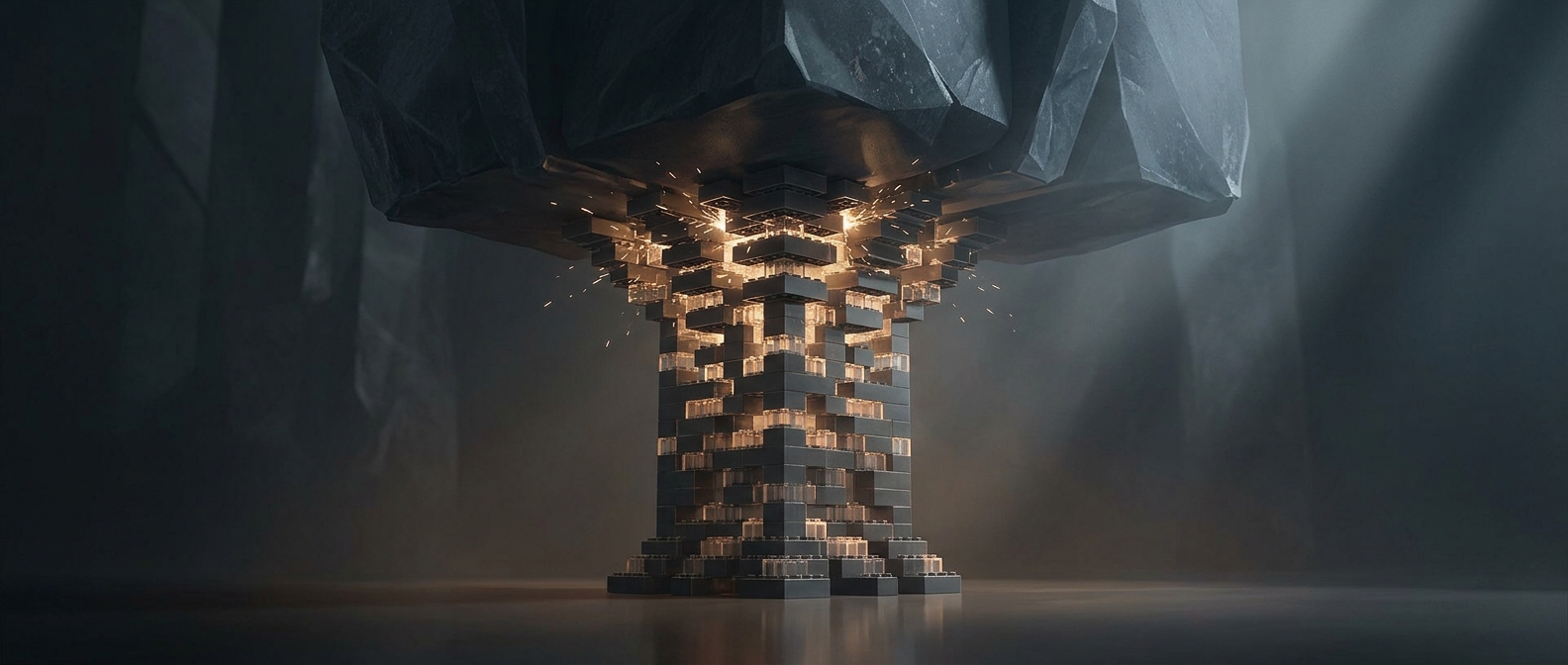
When bricks are stacked, each one passes the weight above it down to the brick below. The bottom brick therefore bears the weight of the whole stack, not just the brick immediately on top. Its resistance to crushing is a measure of how much compressive force—the push squeezing it from opposite sides—it can take before its shape gives way.
That strength makes a striking theoretical calculation possible: if every brick were perfectly aligned and the load increased only by adding more bricks, the bottom layer could support an exceptionally tall stack before crushing. The estimate treats the brick like a small structural column under a steadily growing weight.
Why the real limit is less tidy
A real tower would face more than a crushing test. Tiny misalignments can concentrate force on one area instead of spreading it evenly. A tall stack can also lean or buckle, turning a straight downward push into a sideways force that makes it unstable. The taller it gets, the harder it is to keep its weight centered over its base.
So the two-mile result is best read as a limit implied by the brick’s strength under idealized conditions—not a practical building height. It isolates one property, resistance to crushing, while leaving out the stability problems that would arise long before a person could build such a tower.
The surprising part is that the bottom brick’s strength is only one piece of the puzzle: keeping the entire stack straight matters just as much.