The sidecut gives a snowboard a turning shape
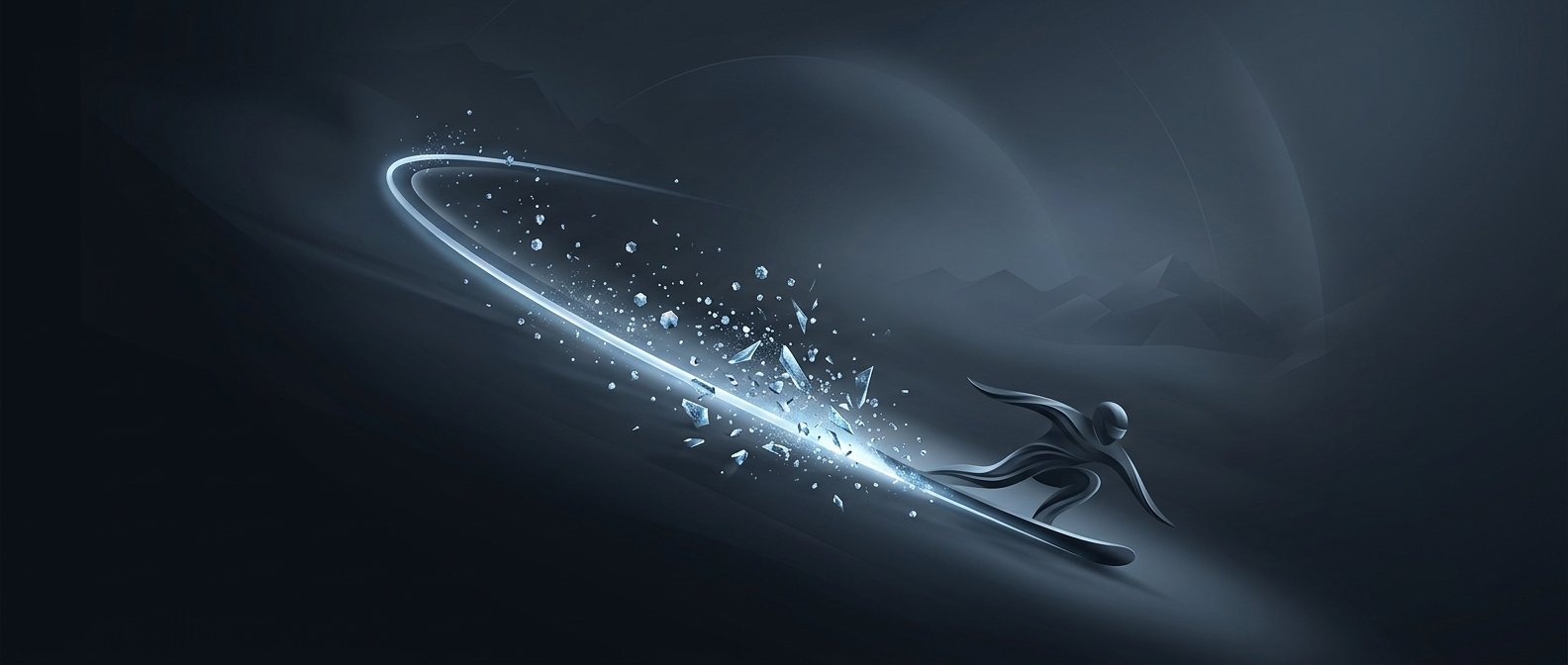
A snowboard’s long edges are not straight: each curves inward slightly between the wider nose and tail. This shallow outline is called the sidecut. When the board is tilted onto one edge, the curved edge meets the snow along an arc rather than along a straight line.
That geometry gives the rider a natural path to follow. The board’s sidecut radius—the radius of the circle its edge would trace if laid against a flat surface—indicates how tight that path can be. A smaller radius favors tighter turns; a larger one favors broader arcs.
Leaning turns the outline into a track
Tilting the board makes its edge bite into the snow. The rider’s weight also flexes the board, pressing more of the curved edge into contact. As the board travels forward, that engaged edge pushes snow aside and follows a curved track. The snow’s resistance helps keep the board from simply skidding sideways.
The rider controls the turn by changing edge angle and pressure. More tilt can make the edge grip more firmly, while the rider’s balance and the board’s flex affect how sharply it bends through the turn. If the edge loses its hold, the board slides more; when it holds, the sidecut helps guide a clean arc.
A turn comes from shape and control
The sidecut does not steer the board on its own. It supplies the curved edge, while the rider’s movements bring that edge into contact with the slope and regulate its grip. That is why a snowboard can move from a sideways slide into a controlled curve simply by tipping onto an edge: the board’s outline becomes a track, and the rider decides how strongly to follow it.