How a cam changes the effort
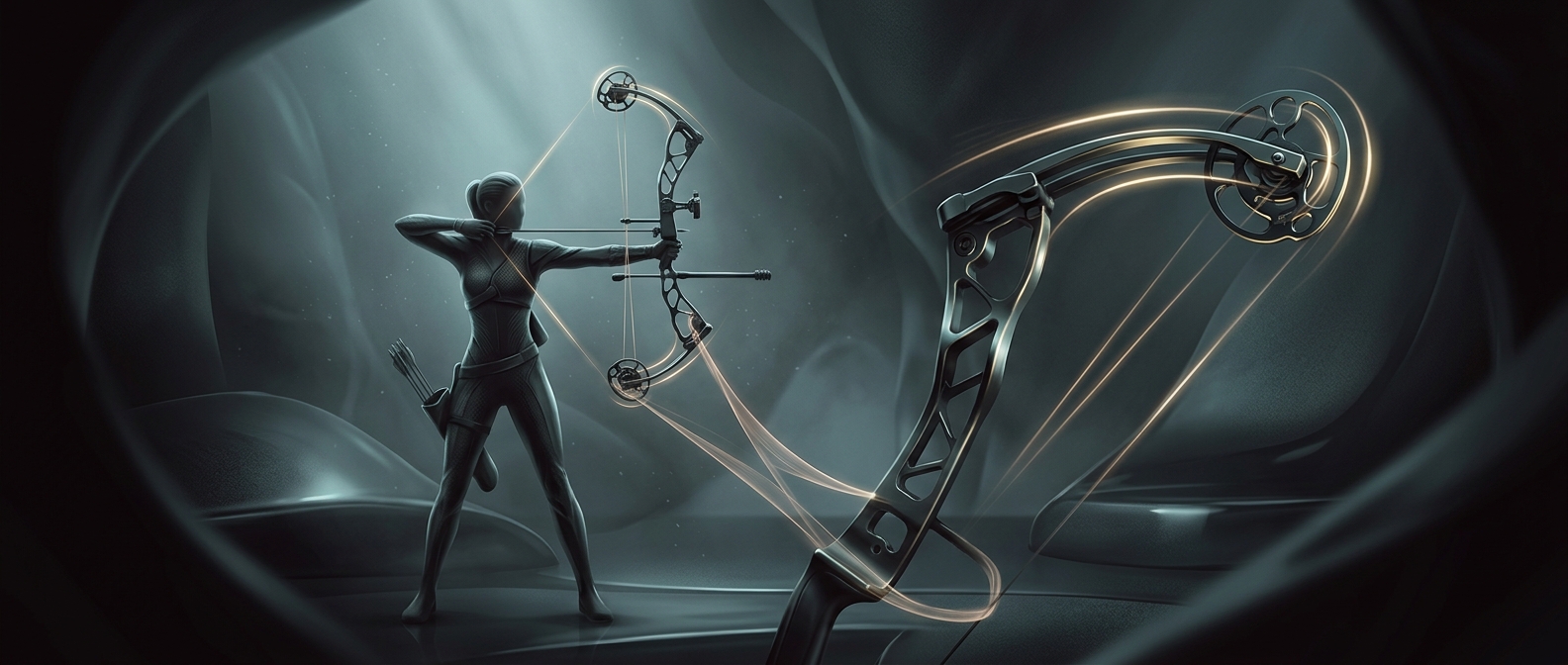
A compound bow’s cams are the shaped wheels mounted near the ends of its limbs. As an archer pulls the string, cables turn the cams, changing how the string and cables apply force to the limbs. The bow is designed to require its greatest pulling force partway through the draw, then less force as the cams rotate farther.
That late-draw drop is called let-off. Near full draw, the archer can keep the string back with substantially less force than was needed to pull it there. The exact feel depends on the bow’s cam design and setup.
Less holding force, energy still stored
The reduced effort does not mean the bow has stopped storing energy. During the draw, the archer bends the limbs; at full draw, those bent limbs are still under load. Releasing the string lets them spring back and propel the arrow. The cams change the leverage the archer experiences while holding the bow, not the basic role of the limbs as its energy source.
This makes it easier to pause at full draw, aim, and choose the moment to release. But it also means the bow can feel forgiving while held and still deliver a powerful shot when the string is released.