How a small fin keeps a surfboard on course
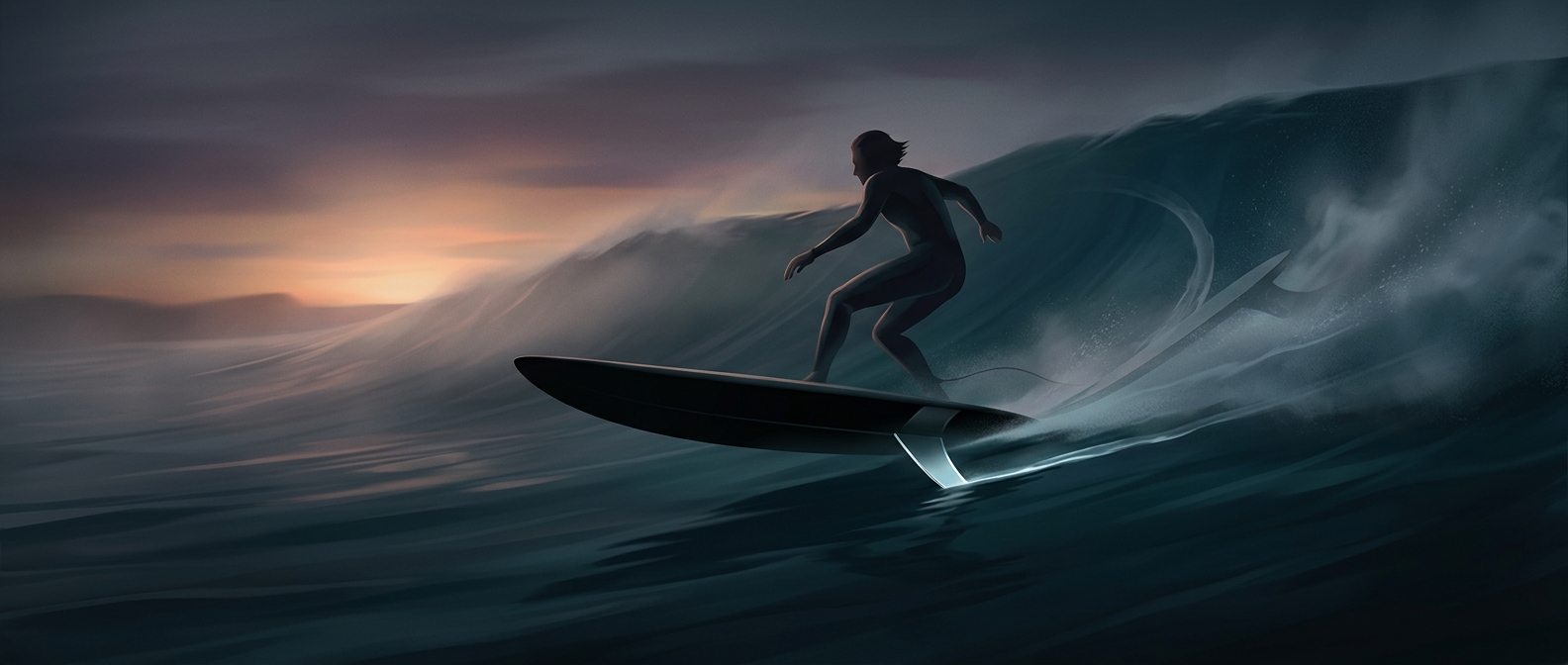
A surfboard moving across a wave pushes water aside. If its tail has no fins, the water can flow past it with little resistance, letting the board skid sideways instead of tracking along the wave. A fin gives that moving water a surface to push against.
The fin turns water into grip
As the board travels, water flows around each fin. When the fin meets the flow at a slight angle, it redirects some water sideways. The redirected water pushes back on the fin, producing a force that resists the board’s sideways motion. This is similar to how an airplane wing redirects air to create lift, though a surf fin works in water and is used to control the board’s path.
The grip is not a literal bite or a fixed hold: it depends on the board moving through the water. The fin also adds drag, so more or larger fins can make a board feel more secure but may make it less free to turn.
Grip also helps shape a turn
During a turn, the surfer shifts weight and changes the board’s direction. The fins resist the tail slipping out, helping the board hold an arc rather than simply skidding across the wave. They do not lock the board in place; they provide a controllable point of resistance while the board is moving. That balance—enough hold to stay on a line, but enough freedom to release into a turn—is why fin size and arrangement affect how a surfboard feels.