The wire does not do the cutting
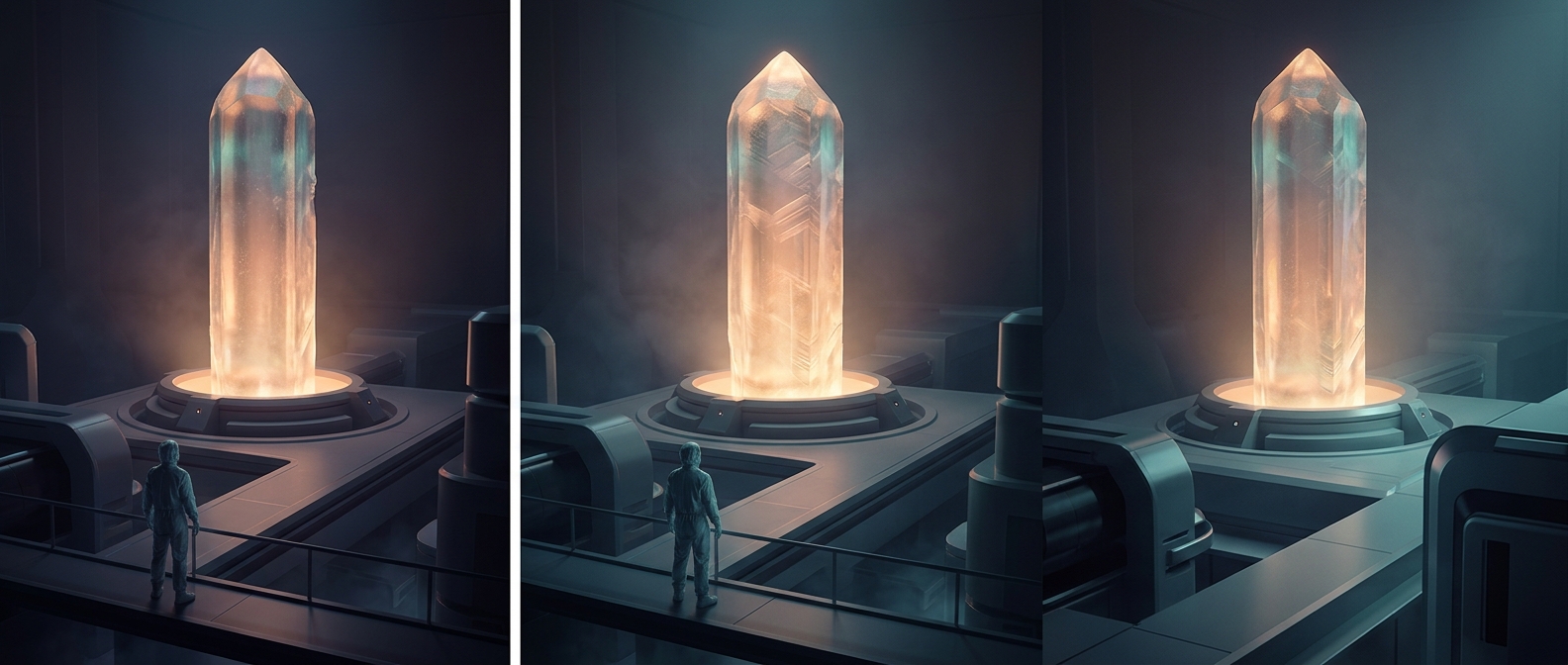
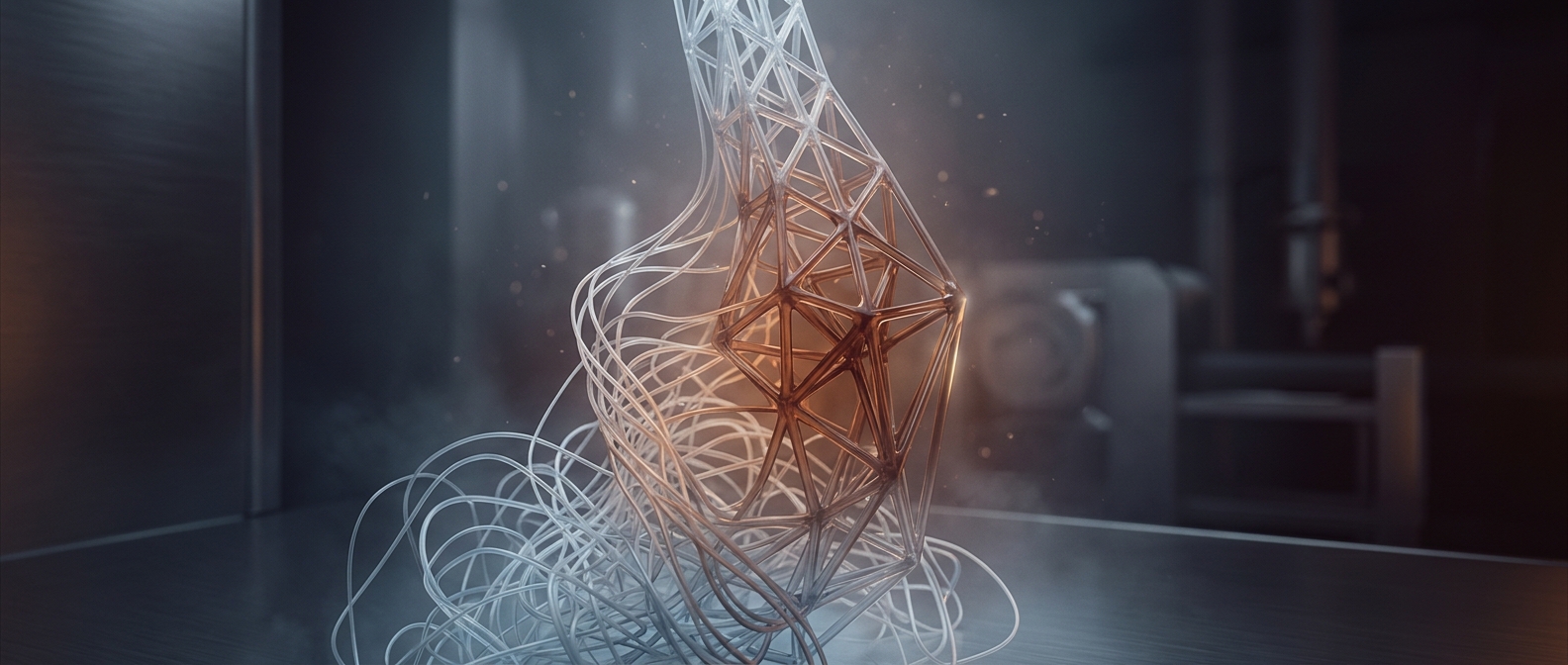
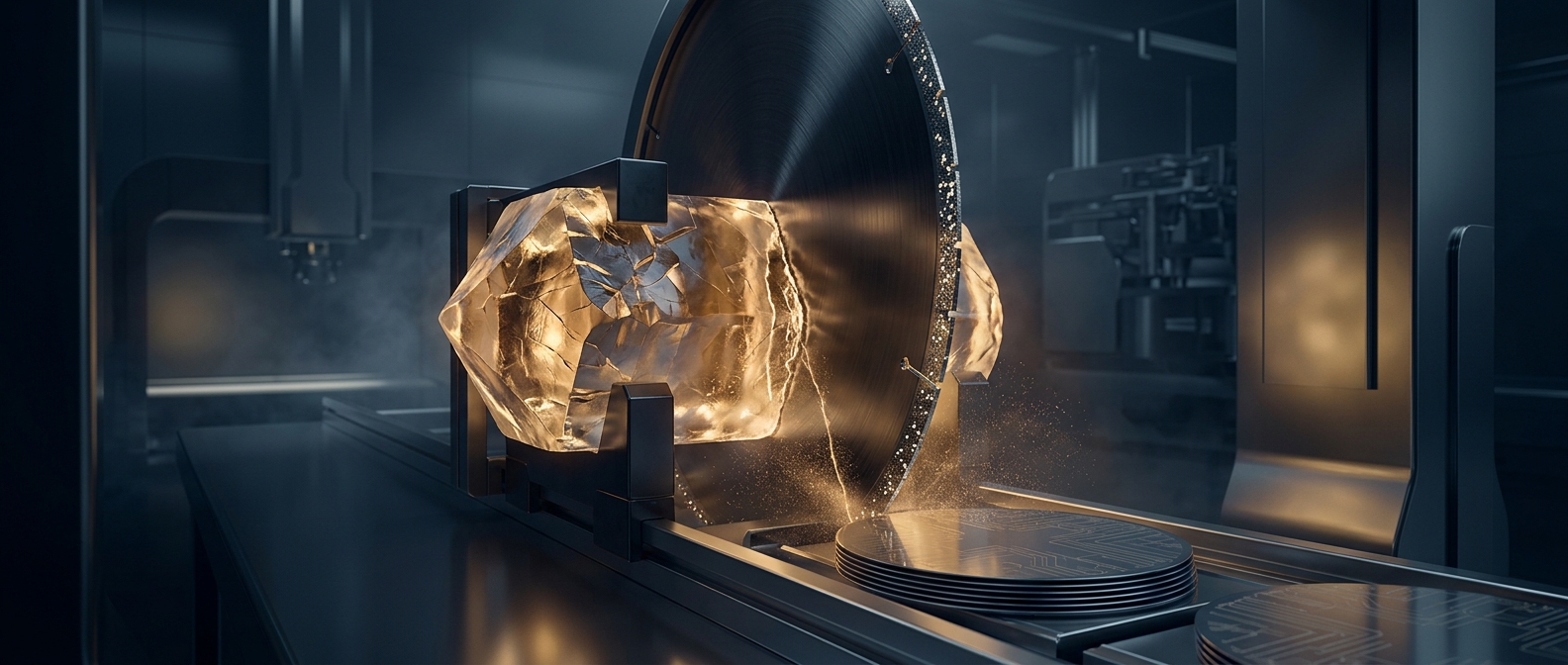
A silicon wafer begins as a cylindrical crystal, or ingot, that must be divided into slices thin enough for later processing. The saw’s wire is mainly a carrier: tiny diamond grains attached to it act as cutting edges. As the wire moves across the crystal, those hard grains scrape away microscopic chips of silicon.
Diamond is useful because it is harder than silicon, so its grains can keep abrading the crystal rather than simply sliding over it. The cutting action is distributed across many small points, instead of relying on one blade edge to push through the whole ingot.
A careful cut through a brittle material
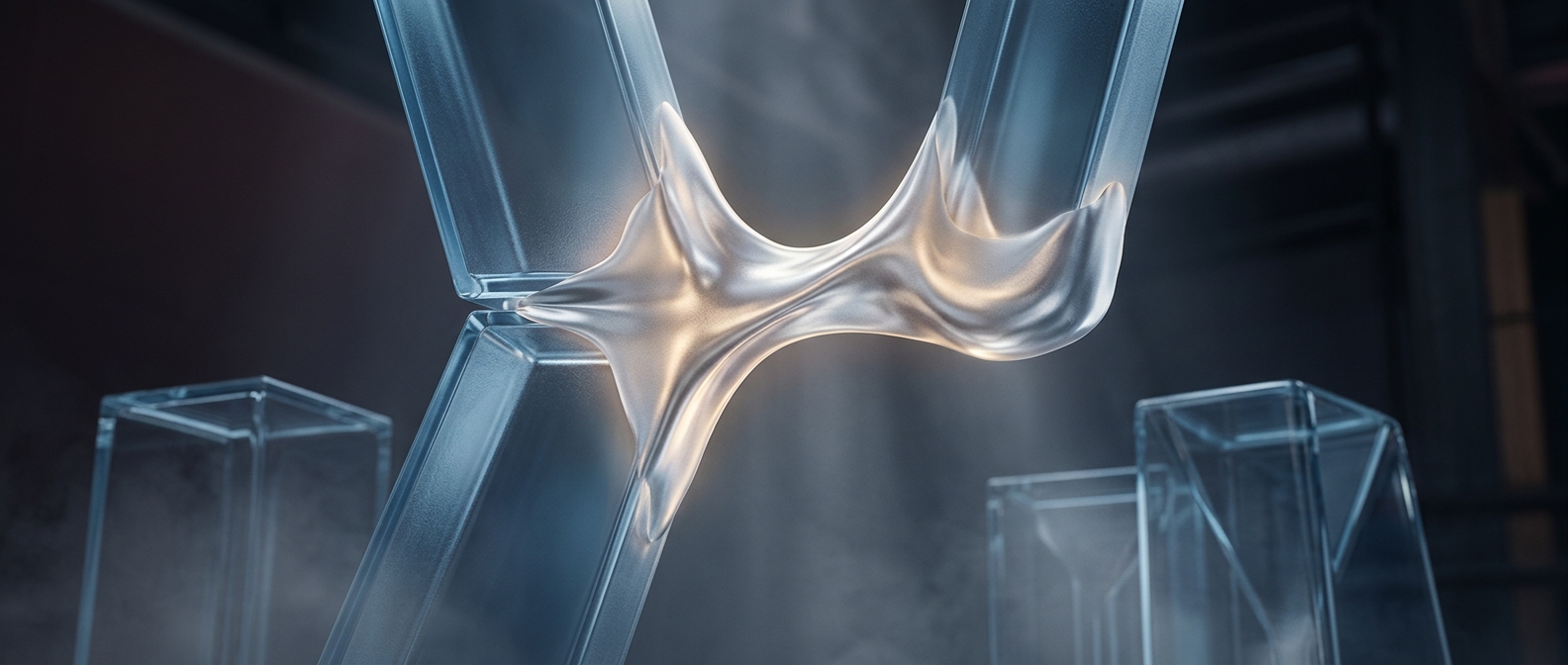
Silicon is not soft or flexible; it can crack when subjected to concentrated force. A wire saw makes a narrow, controlled cut, limiting the force at any one point. The wire’s small diameter also means less silicon is lost as sawdust in the gap, called the kerf, between neighboring slices.
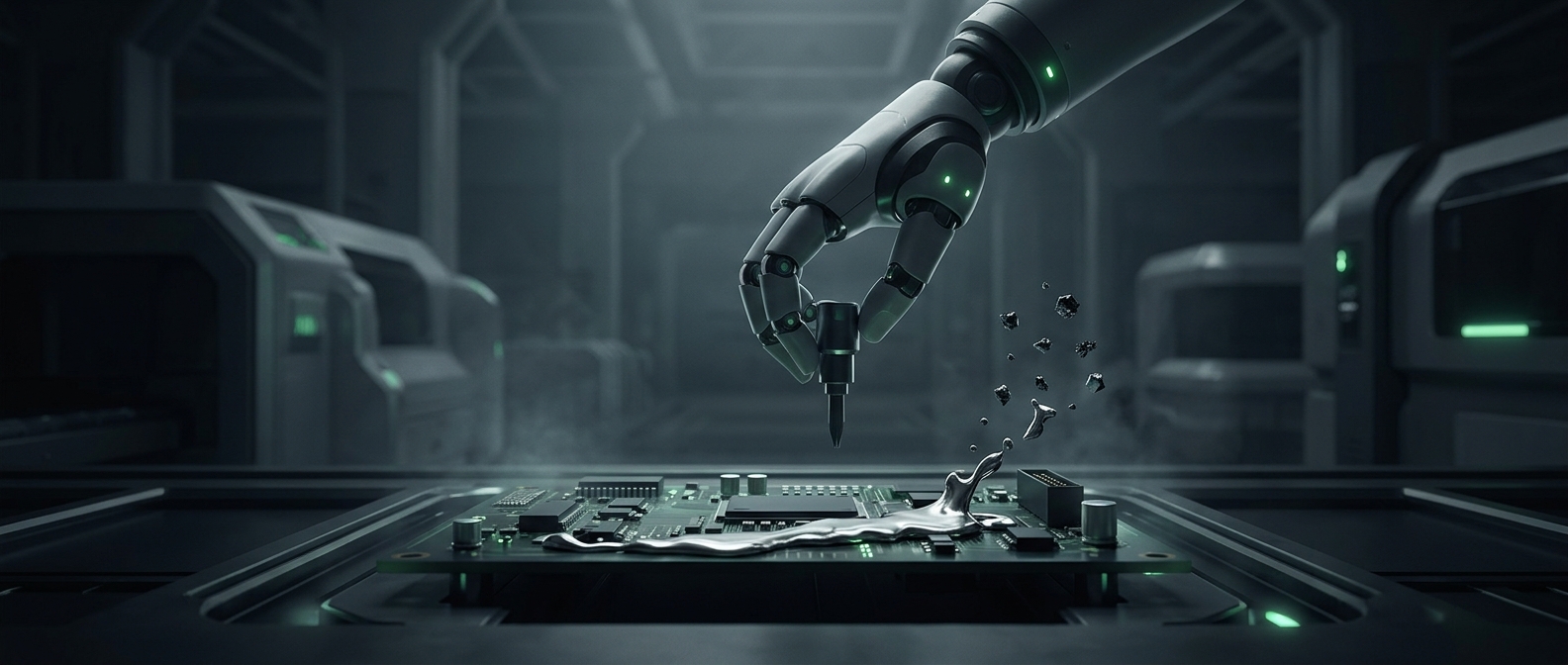
That matters because the ingot is valuable material, and each slice must be thin and even enough to serve as a base for building electronic devices. The saw’s job is therefore not just to get through the crystal, but to produce many usable surfaces while wasting as little silicon as possible. Diamond grit turns a delicate balance—cutting a hard crystal without breaking it—into thousands of tiny, controlled abrasions.