The tunnel lining becomes the machine’s foothold
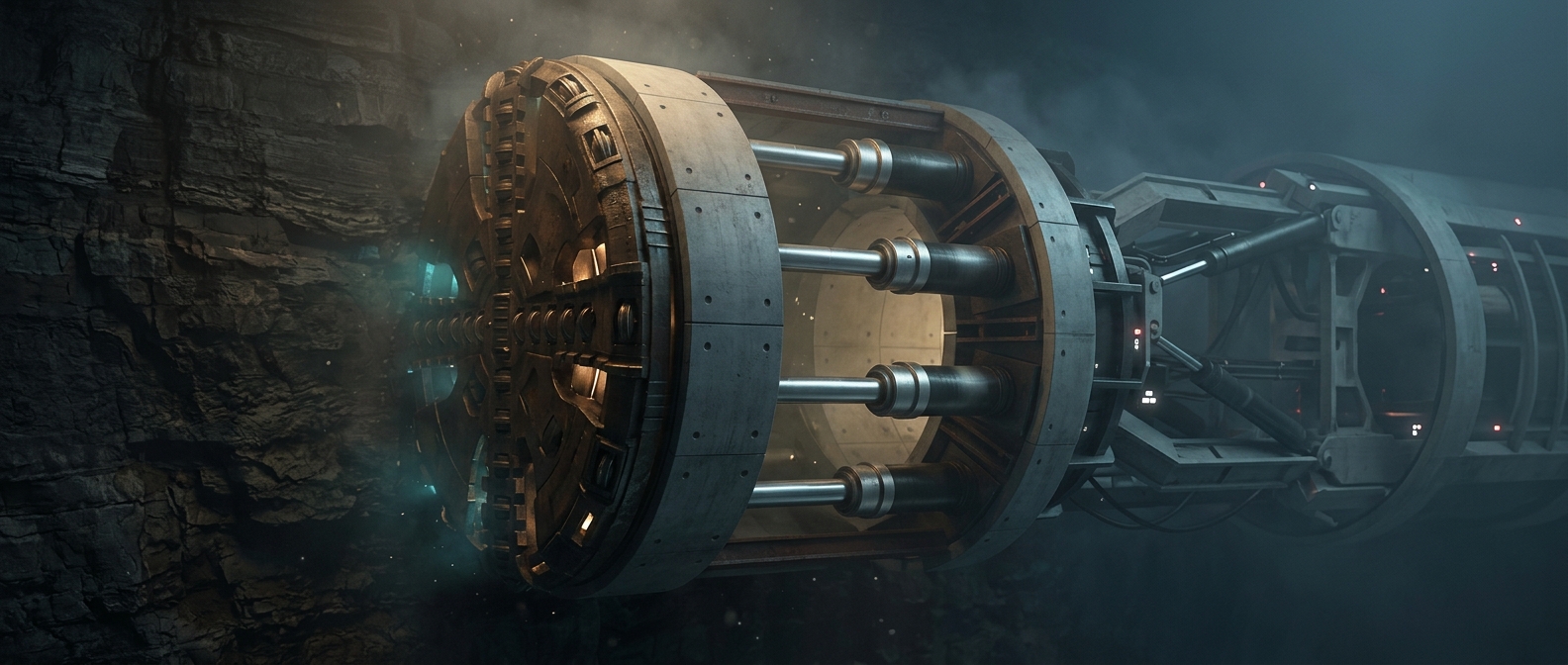
A tunnel boring machine cannot simply drive itself forward like a vehicle: underground, there is no track or firm ground for its wheels to grip. Instead, hydraulic cylinders extend from inside the machine and press backward against the concrete lining already built behind it. The lining pushes back, and that reaction force moves the machine forward.
Hydraulics use pressurized fluid to generate force. Because several jacks press on the lining at once, their thrust is spread around the tunnel rather than concentrated at a single point. The concrete segments must be positioned and supported well enough to withstand that load.
Advance, build, and repeat
As the machine moves, its rotating cutter head breaks up rock or soil at the tunnel face. The loosened material is carried away through the machine, clearing space for the next advance. Meanwhile, the machine’s rear section—called the tail—shields workers and equipment as an erector places curved concrete segments into a complete ring.
When the ring is in place, the jacks retract or reset against it, and the machine thrusts forward again. The newly installed ring becomes part of the permanent tunnel wall and the next foothold for the jacks.
A moving factory underground
This repeating sequence is what lets a tunnel boring machine make steady progress without leaving an unsupported gap behind it. Each advance depends on the lining built during the previous cycle: the machine needs that concrete not just to finish the tunnel, but to push the next stretch into existence.