How Deep Foundations Keep a Skyscraper Steady
At the surface, soft soil may compress or shift too much to support a skyscraper safely. A deep foundation carries the building’s weight down through that weak layer to stronger ground. Its long supports are called piles: they may be precast concrete, steel, or another material suited to the site.
What the Hammering Does
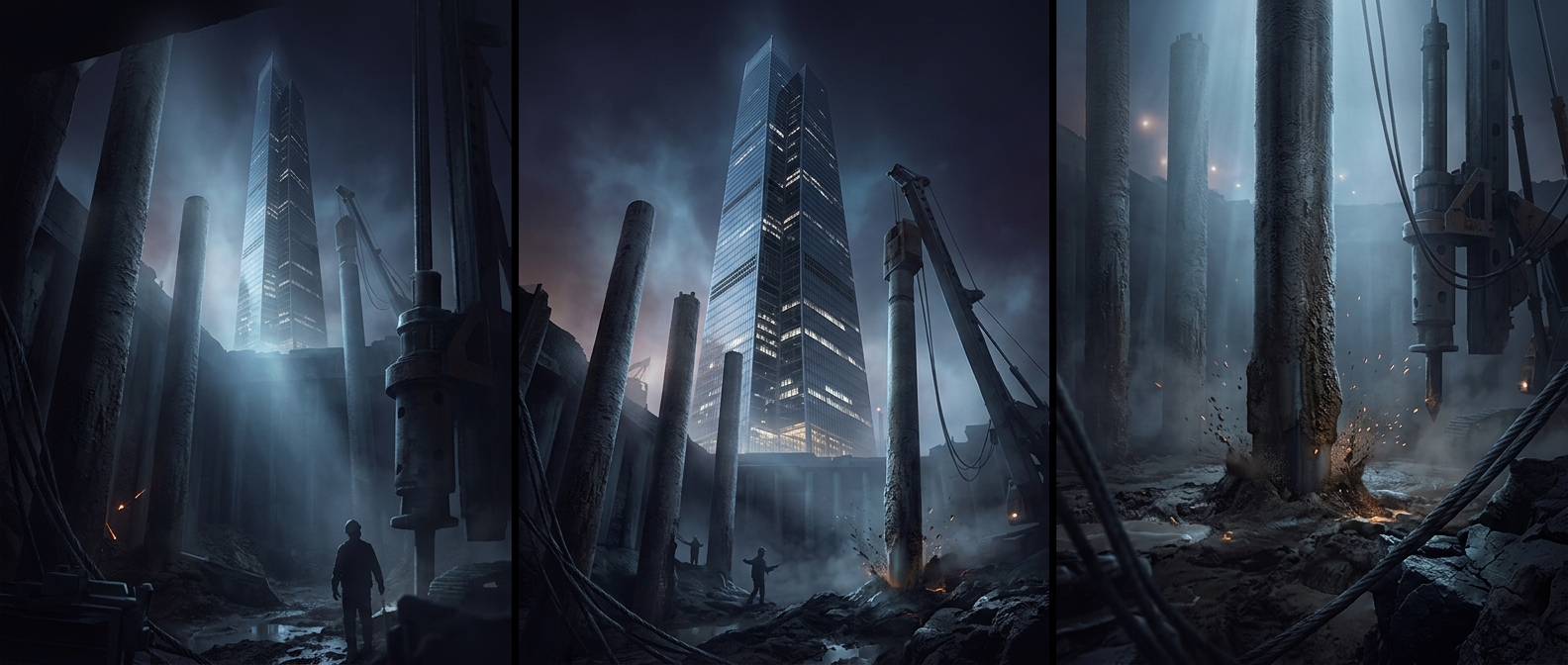
A pile driver repeatedly lifts and drops a heavy hammer onto a pile, pushing it deeper into the ground. Each blow advances the pile a little and helps it pass through loose or soft soil. Crews monitor how the pile responds as it is driven, because the resistance of the ground helps indicate whether the foundation is developing the support the design requires.
A pile can hold a building in two main ways. Its tip may bear on a strong layer or bedrock, like a post resting on a firm base. Or friction between the pile’s sides and surrounding soil can help support the load. Many foundations rely on a combination of the two.
The Ground Determines the Design
Bedrock is not always reachable—or necessary. Engineers use information about the layers beneath a site to choose the pile type, depth, and installation method. Where piles are driven, the hammering itself provides a practical sign of how the soil is resisting them; in other conditions, piles may be installed by drilling instead.
Once connected to the building’s foundation, the piles spread its immense weight across many deep supports. The visible tower rises above ground, but much of the work that keeps it from settling begins out of sight, below the soft topsoil.