Why pressure makes a suit hard to bend
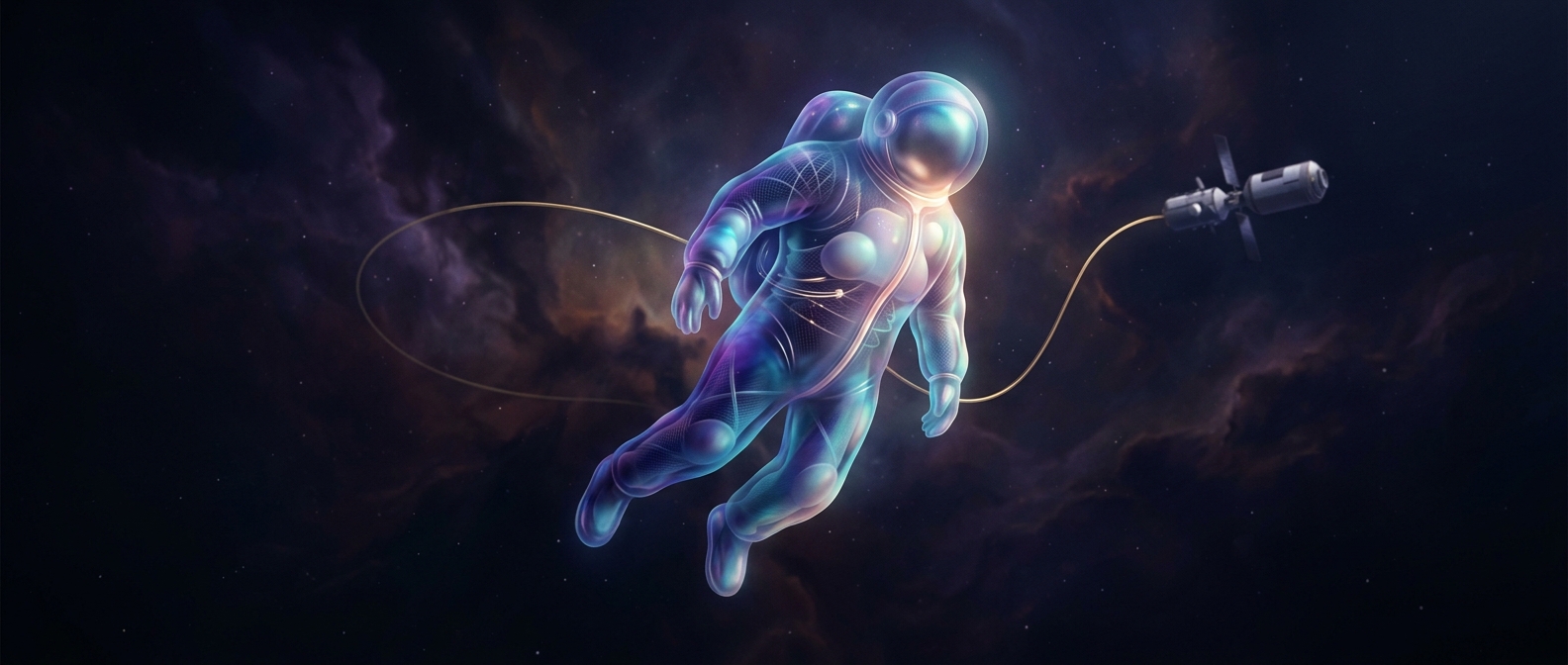
In space, there is almost no surrounding air pressure to push back against the gas inside an astronaut’s suit. The suit must hold its own pressure around the body, much as a balloon holds air. But a person’s joints do not bend like balloon material: when the suit is pressurized, its fabric tends to round out and resist being folded.
That resistance is mechanical, not simply a matter of thick or heavy material. To bend an elbow, an astronaut has to make the pressurized suit change shape against its outward force. The higher the pressure and the tighter the bend, the more effort the movement can demand.
Layers divide the work
A suit’s inner gas-retaining layer keeps pressure from escaping. Outside it, restraint layers limit how far the pressurized suit can balloon. Their cut and construction help the suit hold a useful shape instead of expanding uniformly like an unconstrained bag.
At joints, rotational bearings let adjoining sections turn relative to one another. They help prevent the suit from twisting as an astronaut rotates an arm or leg. The joint still has to preserve a pressurized seal, so mobility comes from carefully arranging the suit’s structure—not from leaving the joint loose or unprotected.
Movement is part of the engineering
Even with these features, working in a suit can be tiring: astronauts move the suit as well as their own bodies. Designers must balance pressure protection against the force and range of motion needed for tasks such as reaching, gripping tools, or walking. A spacesuit is therefore not just clothing around a person; it is a pressurized machine whose shape determines how that person can move.