Why Angled Gear Teeth Run More Quietly
In a straight-cut gear, each tooth meets its partner across nearly the whole width at once. That sudden engagement can create a small impact, sending vibrations through the gears and their housing. As the teeth repeat that contact many times per second, the vibration can become the familiar whine of a gear train.
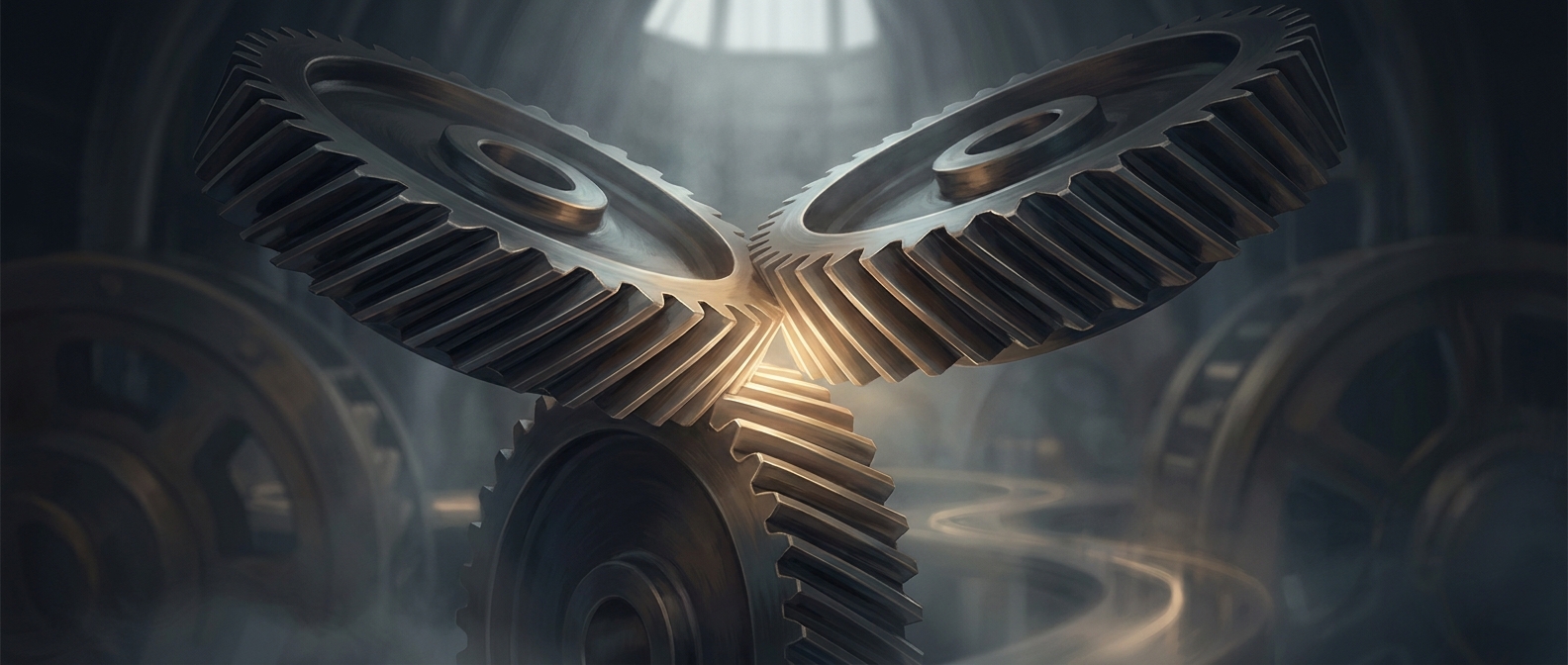
Slanted-tooth, or helical, gears change the timing. Because each tooth runs diagonally across the gear, contact starts at one edge and progresses across the tooth rather than beginning everywhere at once. The handoff is more gradual, and several pairs of teeth can share the load at the same time. That reduces sharp changes in force—and the vibrations that make noise.
Quietness Comes With a Tradeoff
The angled teeth also push sideways as they transmit power. This axial thrust is a force along the shaft, so a machine using helical gears needs bearings and supports capable of handling it. Sliding contact between the angled teeth can also create more friction and heat than the rolling contact of a straight-cut design.
Designers choose between these effects. Where smooth, quiet operation matters, the gradual engagement can be worth the extra demands on bearings and lubrication. The same geometry that softens each tooth’s impact is what produces the sideways force: a quieter gear mesh is not free, but its cost is a manageable engineering tradeoff.