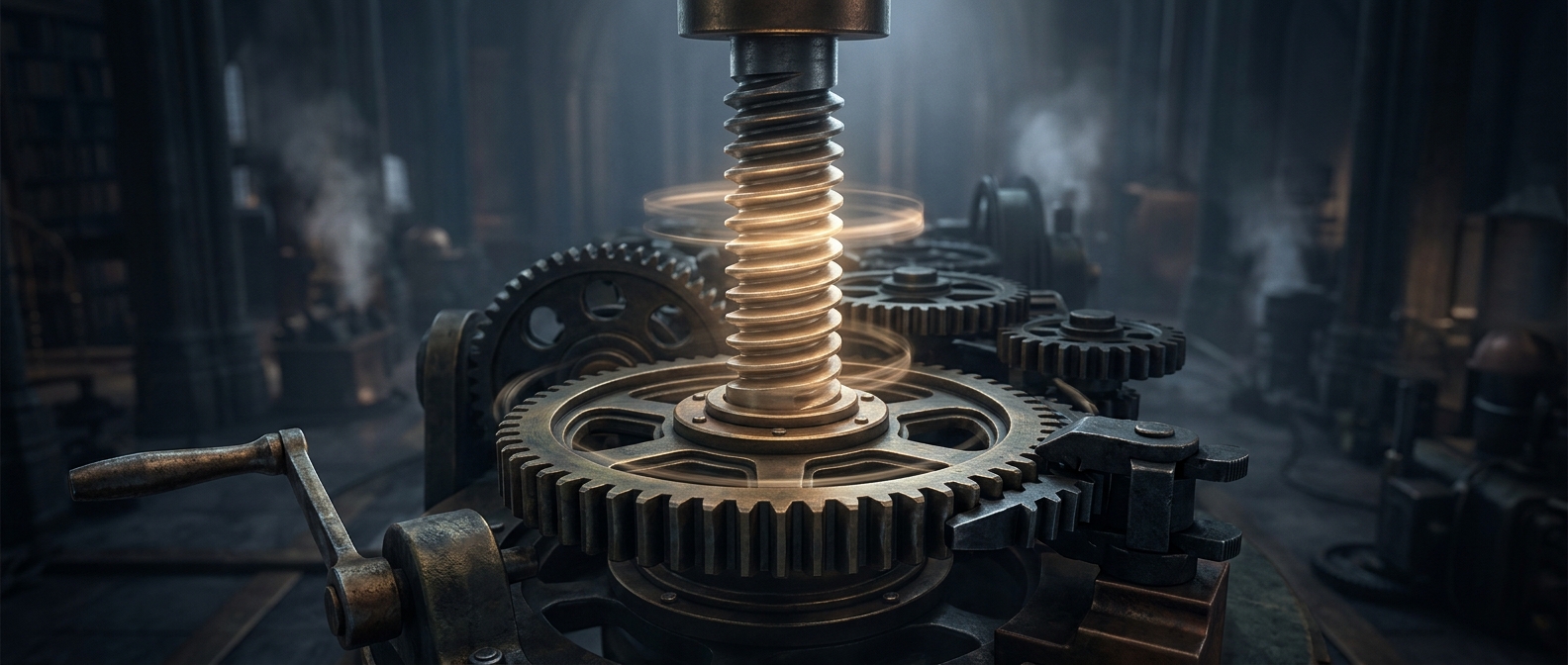
Why a Worm Gear Can Turn Only One Way
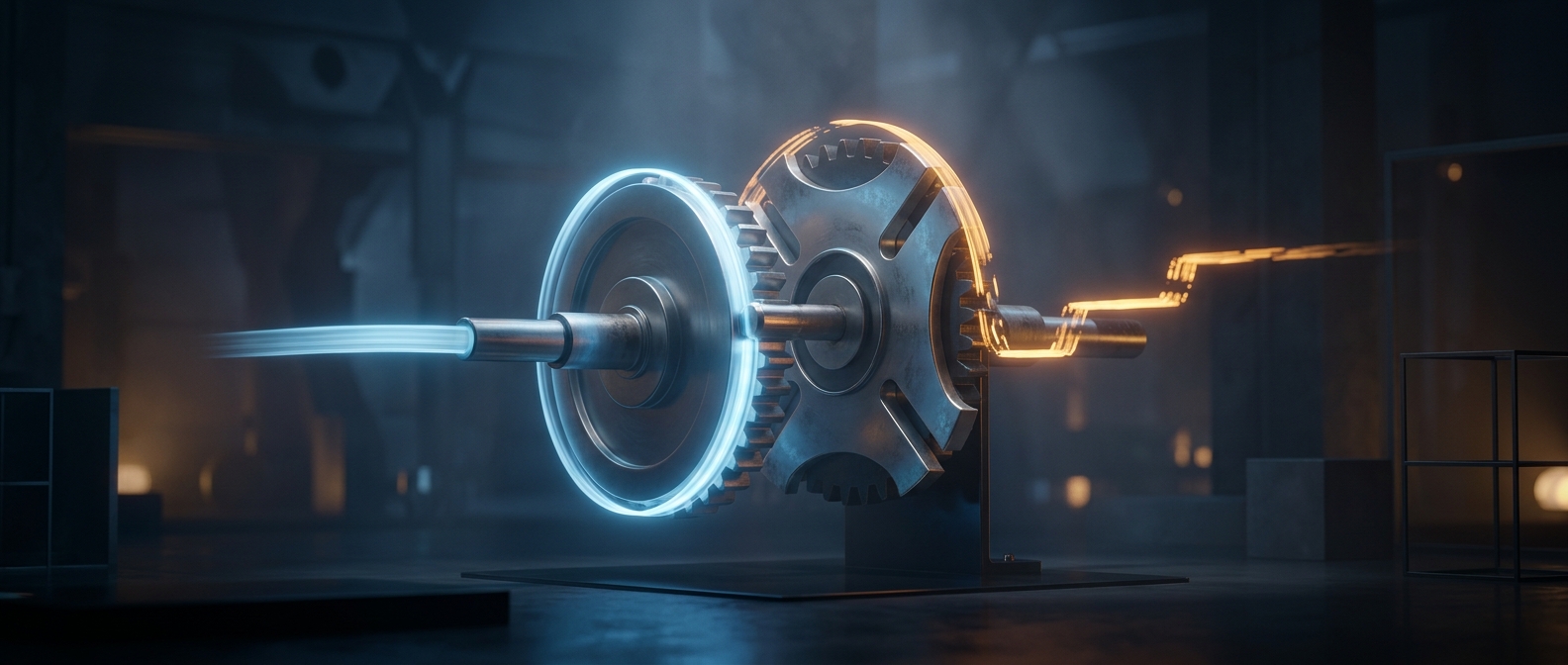
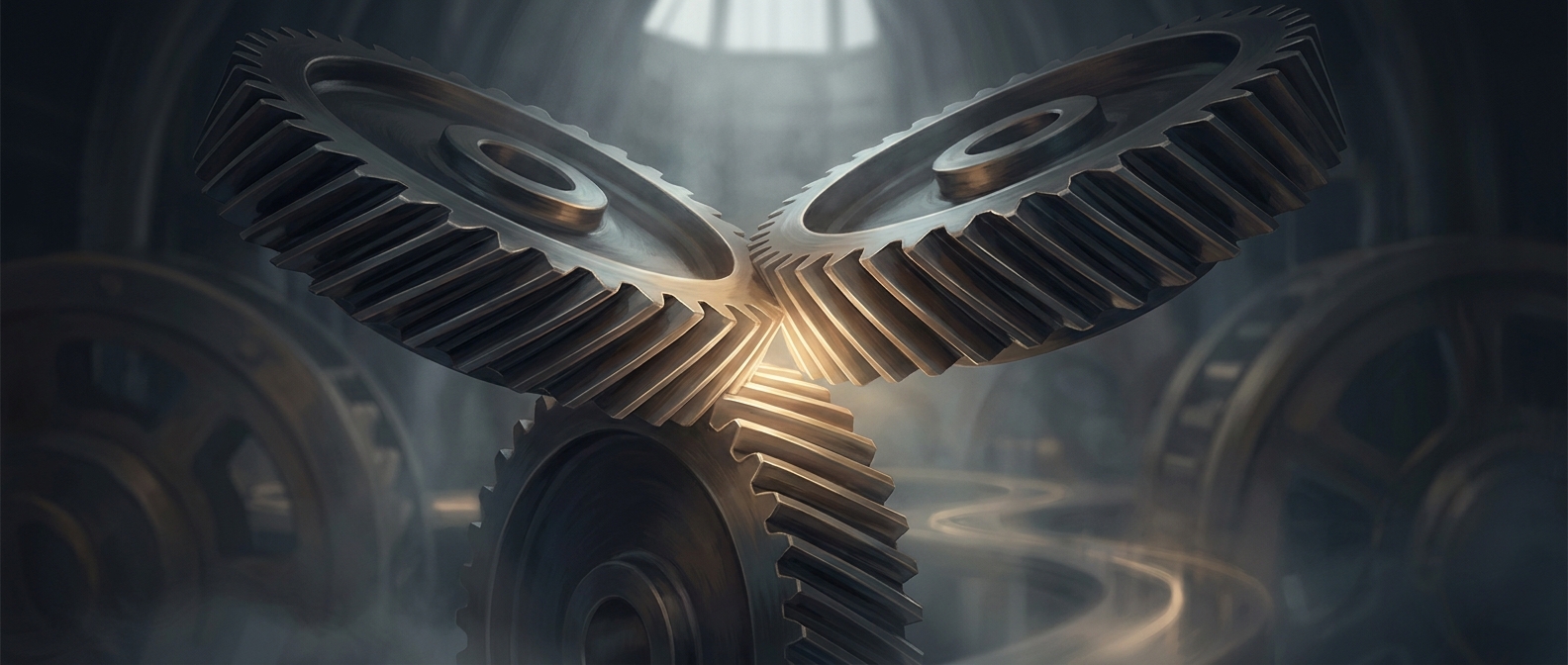
A worm gear pairs a screw-shaped shaft, called the worm, with a toothed wheel. As the worm turns, its helical thread presses against the wheel’s teeth and advances them one at a time. The screw’s rotation can therefore drive the wheel, often slowly and with substantial turning force.
The reverse motion is different. If the wheel tries to turn the worm, its teeth push against the worm’s sloped thread. Instead of easily rolling the screw around, that force meets resistance from friction along the contacting surfaces.
The Thread’s Angle Makes the Difference
A key factor is the worm’s lead angle: how steeply its thread winds around the shaft. With a shallow angle, the wheel’s push is not enough to overcome friction and make the worm rotate. The gear is then self-locking under the conditions it was designed for.
This is not an absolute property of every screw-and-wheel pair. A steeper thread, smoother or lubricated surfaces, or a change in load can make back-driving possible. The mechanism’s geometry and friction must work together to block reverse motion.
Holding a Load Without Constant Input
That one-way behavior is useful when a mechanism needs to stay put after its motor stops, such as in some adjustable platforms or positioning systems. The same gear that moves a load can help resist the load’s attempt to move the motor backward.
Self-locking is not automatically a substitute for a safety brake: if the gear can be back-driven in its actual operating conditions, the load may move. The useful trick is that the screw can deliver motion in one direction while the wheel’s return push is lost to friction.