The pin turns a wheel one step at a time
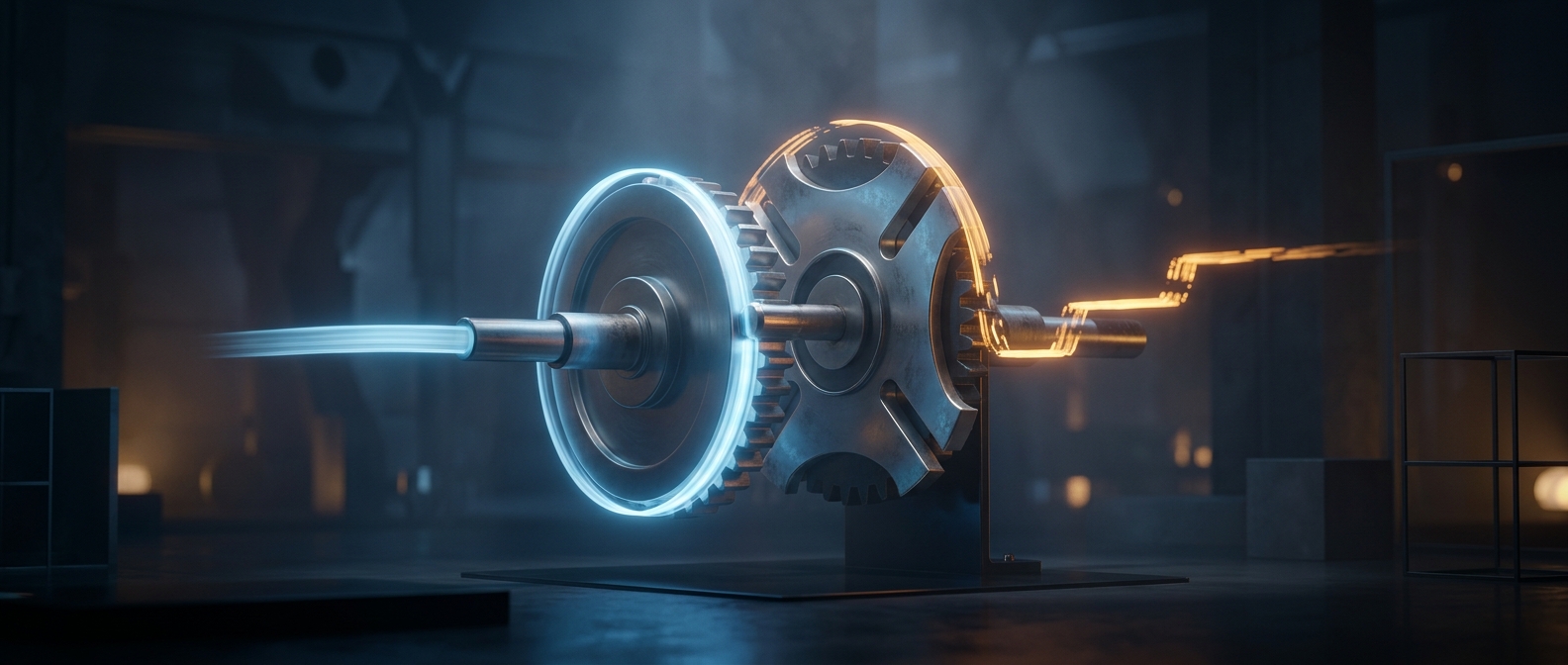
A rotating pin and a slotted wheel form an intermittent drive, often called a Geneva mechanism. The pin rides on a crank attached to the continuously turning driver. As it reaches a slot, it pushes against the slot’s sides and swings the other wheel forward. When the pin slips out, the driven wheel stops while the crank keeps turning.
The stutter comes from the parts’ geometry, not from the motor starting and stopping. Each slot is positioned so the pin can enter, push the wheel through a limited angle, and then leave it. The number and arrangement of slots determine how far the wheel advances during each engagement.
The pause is part of the mechanism
A stationary interval, called a dwell, gives another part of a machine time to act. In many Geneva drives, shaped surfaces on the rotating driver fit against the driven wheel during this pause, helping hold it in place. That matters because a wheel that drifts between steps could misalign whatever it is positioning.
This makes the mechanism useful when a machine needs repeated, predictable advances rather than uninterrupted rotation. It can move a workpiece into position, pause for an operation, and then index it onward. The tradeoff is that each engagement starts and stops the driven wheel abruptly, so speed and load must suit the mechanism. What looks like a wheel hesitating is actually a carefully timed cycle: advance, lock, wait, repeat.