How a planetary gearset changes speed and force
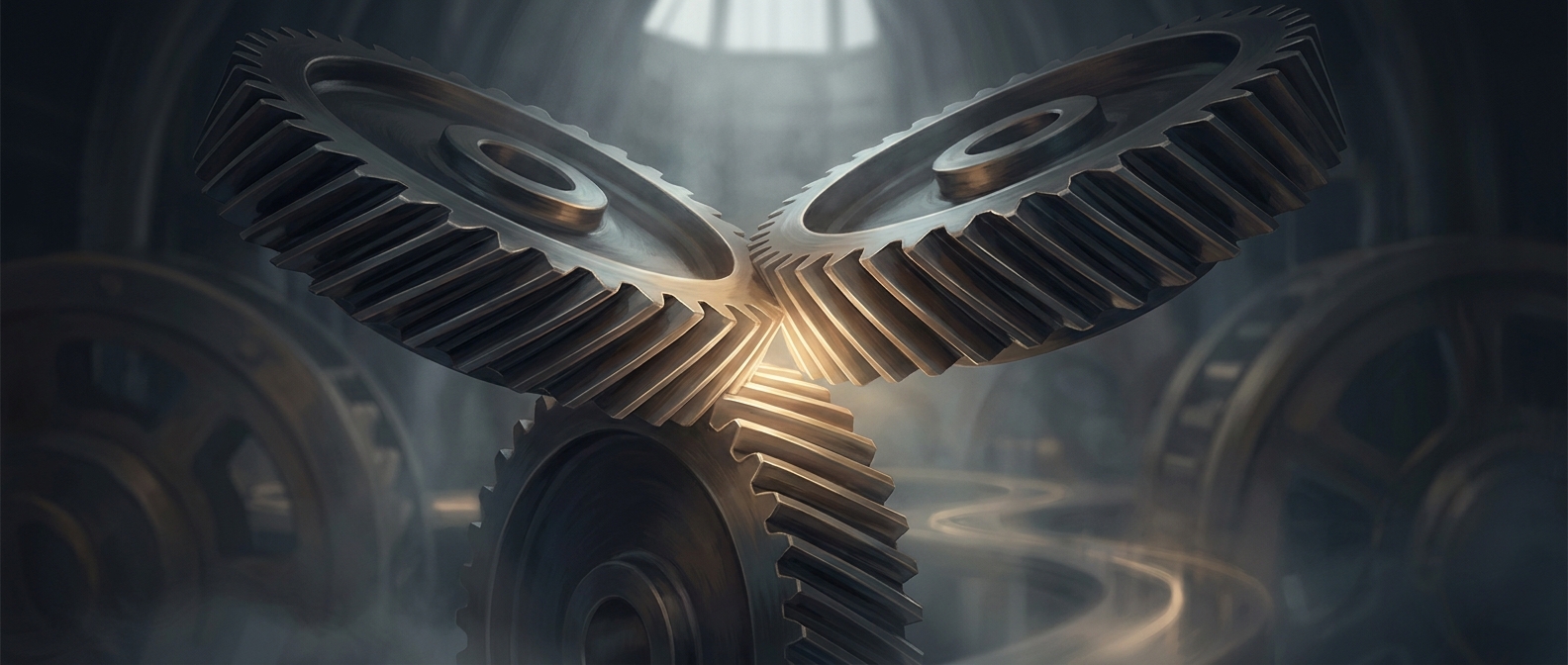
The planets do more than spin against the sun: a carrier holds them in place while they roll around it. The ring gear’s inward-facing teeth mesh with the planets’ outer teeth, so the sun, planets, ring, and carrier move as a linked system. Which part is held still—and which part receives power—determines the gear ratio.
For example, when the ring is held fixed and the sun turns, the planets walk around the sun and carry the carrier with them. The carrier turns more slowly than the sun. In return, it can deliver greater torque, the twisting force that turns a load. This is the same basic tradeoff found in other gear reductions: lower output speed allows higher output torque, apart from losses to friction.
Why the arrangement fits in a small space
Several planets can mesh with the sun and ring at once. They share the load, while their forces are distributed around the center rather than concentrated on one side. The input and output can also lie along the same central axis, making the mechanism compact and easy to package inside a housing.
The result is useful wherever a motor spins quickly but a machine needs a slower, stronger turn. In a vehicle transmission, for instance, changing which gearset member is held or driven can produce different ratios without rearranging the whole mechanism. The planets’ orbit is not what creates extra power; the key is that the gearset trades speed for torque while spreading the work across multiple meshing gears.