How a snowblower moves snow
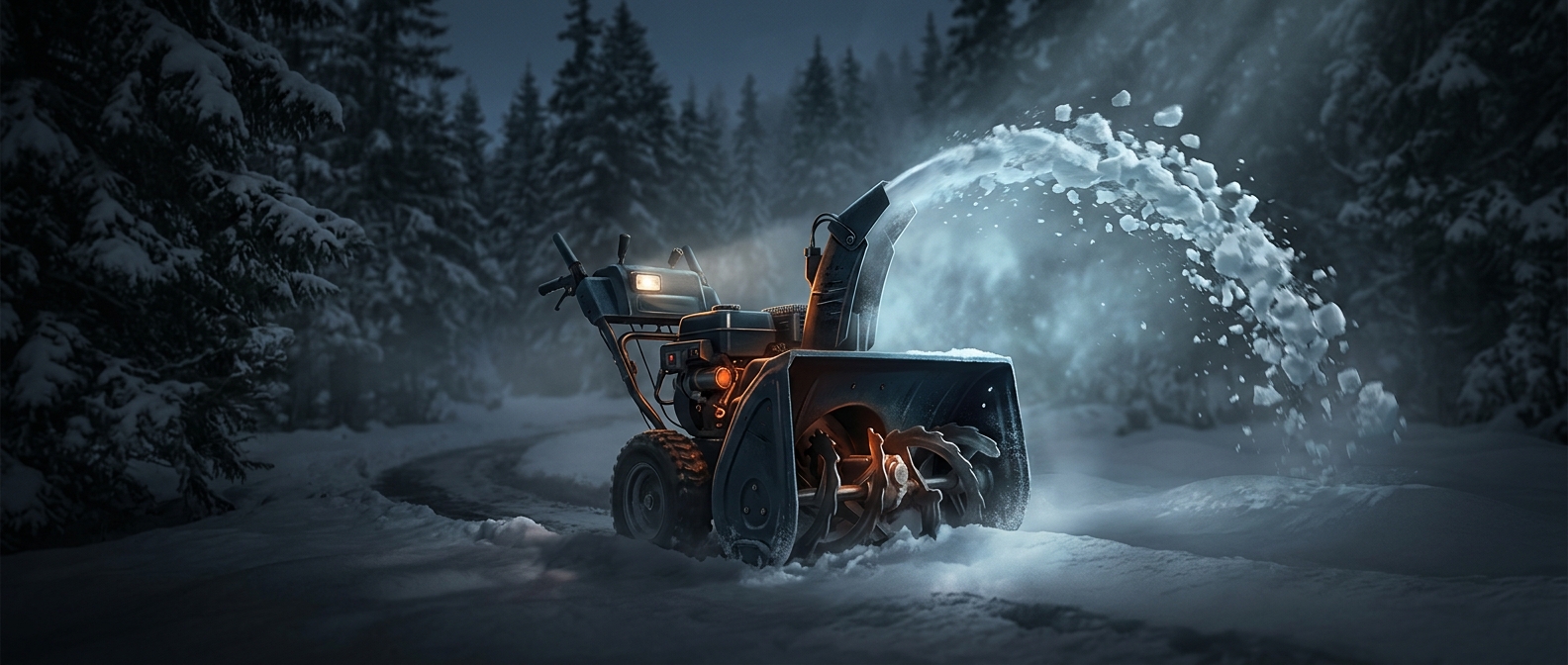
A snowblower does not rely on a blast of air to clear a path. Its front housing gathers snow and directs it toward a rapidly rotating impeller—a bladed wheel that accelerates the snow and sends it through an adjustable chute. The chute aims the outgoing stream away from the cleared area.
From snowdrift to snow stream
Many machines use an auger, a rotating spiral blade, to pull snow inward and break up packed or crusted material. The auger feeds it to the impeller, which supplies the force needed to launch it. The chute then guides the snow upward and to the side, so it lands beyond the path rather than piling up directly in front of the machine.
That sequence matters because snow is heavy and irregular, not a cloud of loose particles that air can easily push. The auger handles the gathering; the impeller handles the throw. In a two-stage machine, these are separate parts. Smaller, single-stage models use an auger that both gathers snow and propels it out, typically over shorter distances.
Why the chute can be aimed
Changing the chute’s direction controls where the snow lands. Aim it toward a lawn or open area, and the cleared route stays clear; aim it across a walkway or toward a parked car, and the machine may simply create another problem. The practical trick is to treat the chute as a moving outlet: its direction determines where the snow goes next.