What Actually Grinds the Food
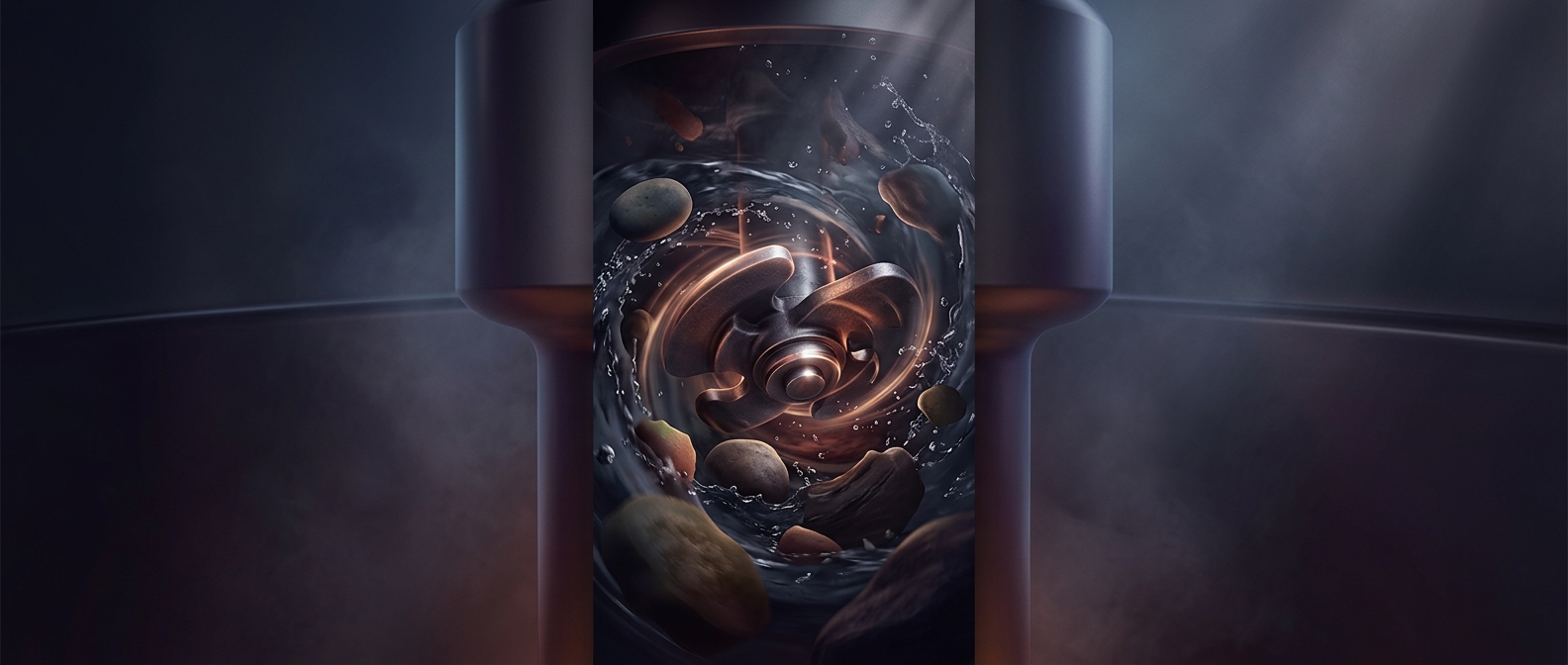
A garbage disposal’s motor turns a circular plate at the bottom of the drain chamber. Small metal projections on that plate—often called lugs or impellers—sweep food outward as the plate spins. They are blunt, not knife edges, so they do not slice food like a blender does.
Around the chamber’s inner wall is a stationary grinding ring with a rough, perforated surface. The moving lugs repeatedly press and throw food against this ring. The food breaks into small particles, which water carries through the ring’s openings and into the drainpipe.
Why Use Blunt Lugs Instead of Blades?
The ring does the grinding, while the lugs provide the motion and force. That arrangement avoids exposed cutting blades inside a wet appliance and lets the disposal reduce scraps through repeated impact and abrasion. It also explains why the unit needs both a spinning motor and a fixed surface to grind against: neither part does the job alone.
The disposal does not make food disappear. It reduces scraps enough to travel through household plumbing, with running water helping move them onward. In other words, the important action happens at the chamber wall—not at a set of spinning knives.