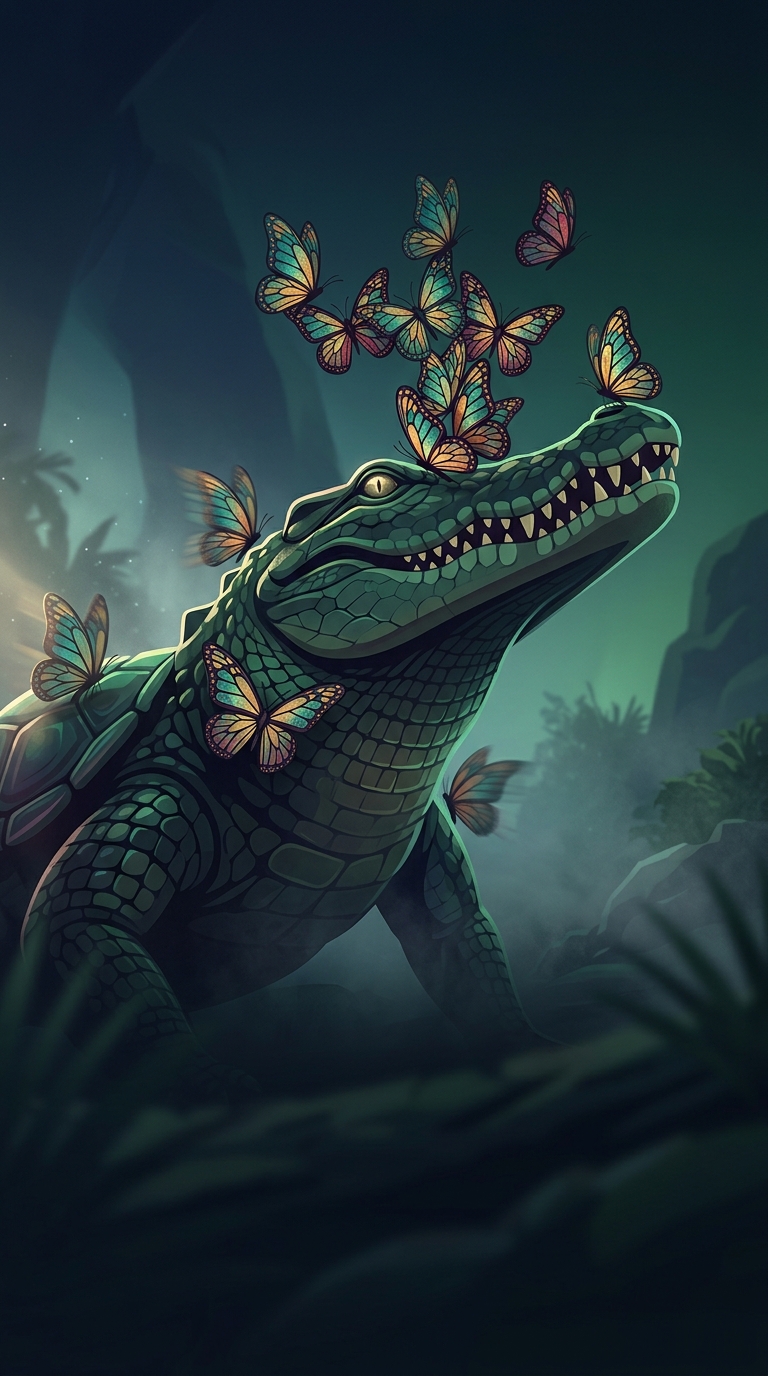
Why butterflies visit crocodile and turtle eyes
The attraction is usually salt, not the animals themselves. Many butterflies get plenty of sugar from flower nectar but too little sodium, a mineral they need for normal bodily functions. Tears can supply dissolved salts, so a butterfly may unfurl its long, straw-like mouthpart—the proboscis—and sip fluid from the moist skin near an eye.
This behavior is called lachryphagy, meaning the consumption of tears. It has been observed in butterflies visiting turtles and crocodilians, including animals resting quietly enough for the insects to approach.
A tiny feeding opportunity in a risky place
A butterfly’s proboscis lets it take up small amounts of liquid without biting or piercing the animal. The insect is not trying to clean the eye, and the reptile is not deliberately feeding it. The butterfly is exploiting an available source of minerals; the reptile is simply sitting still.
That stillness matters. A crocodilian could easily swat or snap at an insect, so the butterfly’s visit is a gamble made worthwhile by the chance to collect a scarce nutrient. Nearby butterflies may gather at once when one animal remains undisturbed, creating the striking impression of a swarm settling on its face.
The tradeoff for the reptile
The exchange is not necessarily a useful partnership. The butterfly gets a mineral-rich drink, while the reptile may gain little or nothing; repeated contact near the eye could even be irritating. The remarkable image is therefore less a scene of friendship than a close-up of opportunistic feeding: a small insect turning a large, motionless animal’s tears into a source of salt.