A Homemade Machine That Made the Story Believable
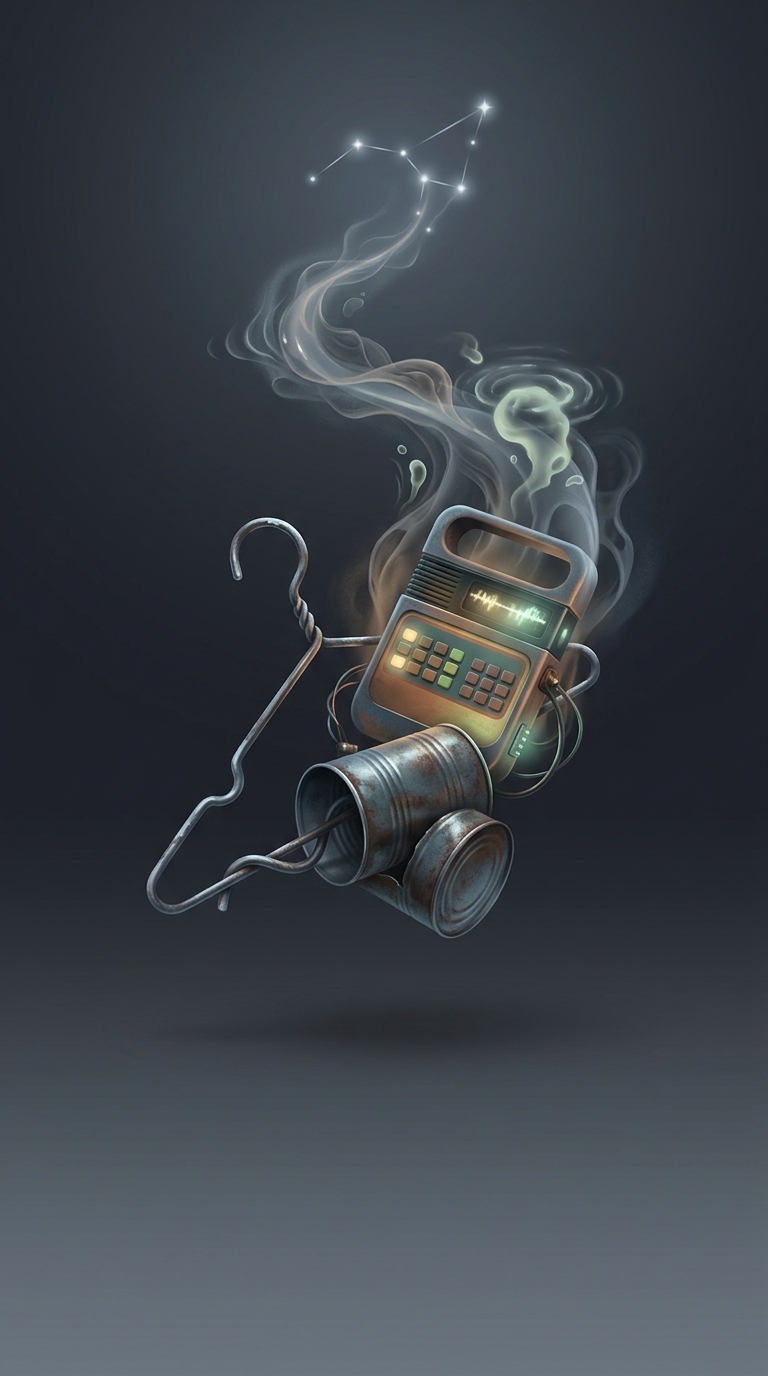
E.T.’s communication device had to do more than look like a collection of parts: it had to make the audience accept that a stranded alien could improvise a way to reach home. Familiar objects helped sell that idea. A coat hanger, coffee can, and Speak & Spell—the children’s electronic spelling toy—gave the machine a visual logic viewers could grasp at a glance: E.T. was assembling technology from whatever was at hand.
That choice also suited the scene’s scale. The device is not presented as a sleek, fully explained piece of science fiction. It is an invention built in a domestic setting, where ordinary household clutter becomes the raw material for an extraordinary attempt. Its makeshift appearance keeps the focus on E.T.’s ingenuity and urgency, rather than on technical details the film does not need to explain.
Making an Alien Voice Feel Alive
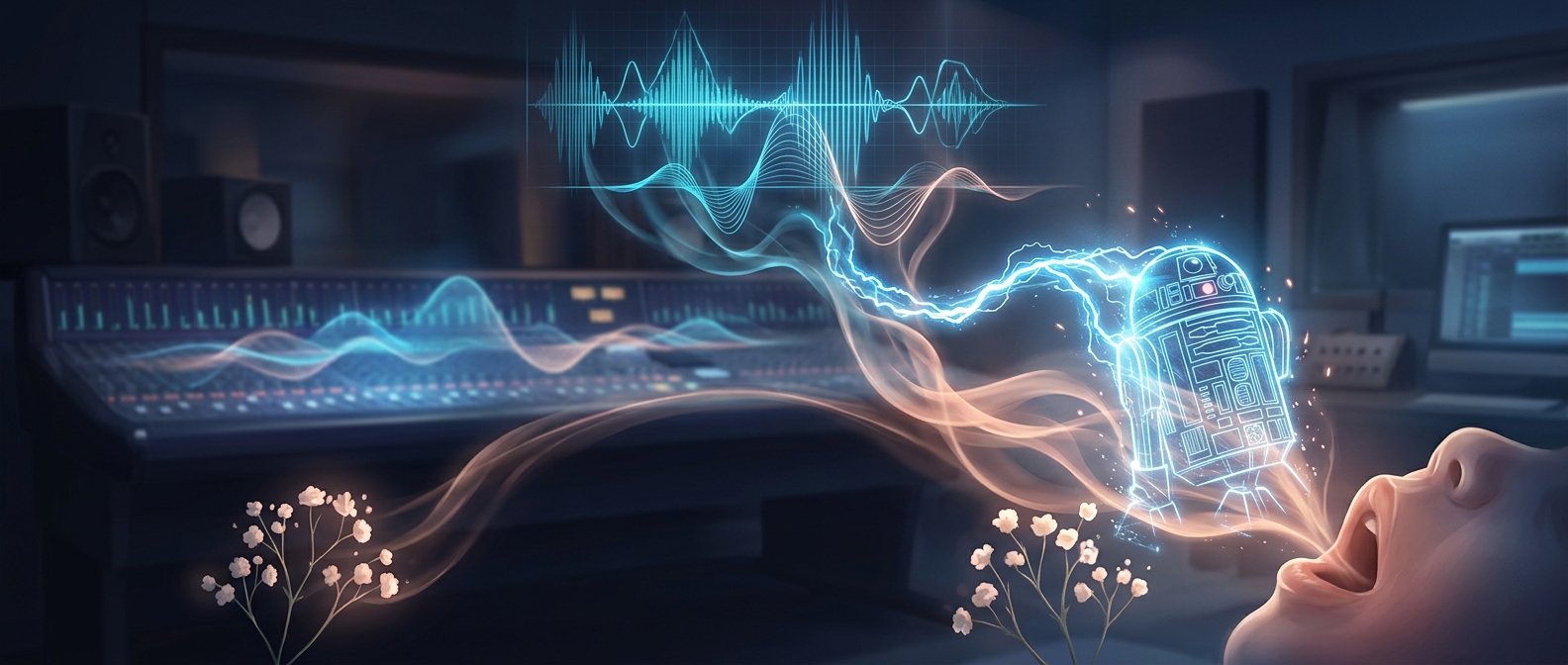
The same principle applies to E.T.’s vocalizations. A sound effect can suggest that a character is nonhuman, but a voice also needs texture and expression if viewers are to read it as communication. Using a film professor’s burps as part of the sound design supplied an unexpectedly human, bodily sound—something rough and recognizable that could help make the alien feel like a presence rather than a machine.
The contrast is what makes the details memorable: the device looks like scavenged household gear, while the voice draws on an irreverent human sound. Both choices give an impossible visitor a tangible foothold in the everyday world. E.T.’s attempt to call home feels less like abstract space-age technology and more like a resourceful outsider making do with what a family might have around the house.