A face built from two different signals
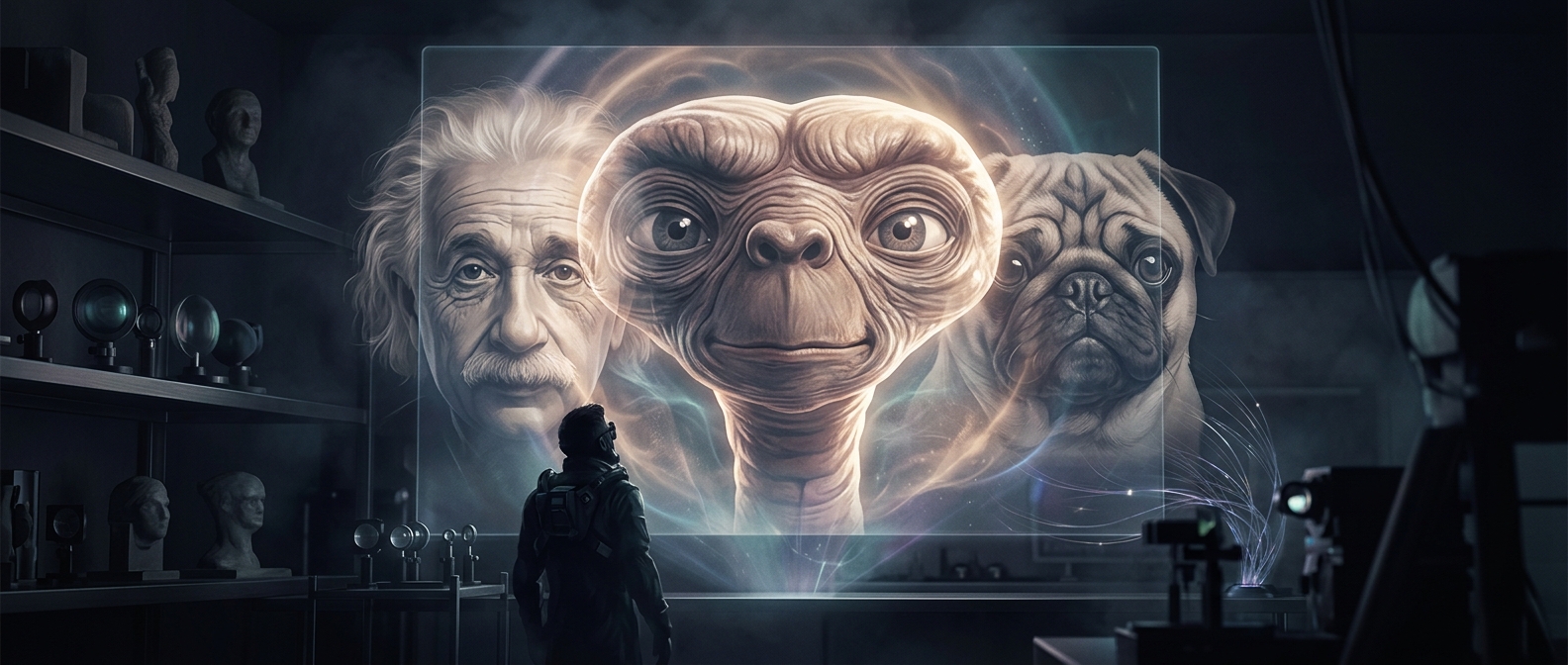
E.T.’s design works because its features pull in opposite emotional directions. The furrowed brow associated with Albert Einstein suggests concentration and age: it makes the alien seem as if he is thinking, even when he is simply looking at someone. The pug-like, compressed face softens that impression. Its rounded, flattened shape feels vulnerable rather than imposing.
Together, those cues make E.T. seem both ancient and childlike. That tension helps explain why the character can look strange without reading as threatening. Viewers can recognize a thoughtful expression in the brow while the rest of the face invites sympathy.
Why the combination matters on screen
A movie creature has to communicate through its appearance, not just through what it says or does. A face that looks only wise might feel remote; one that looks only helpless might seem passive. E.T.’s features give the audience two ideas to read at once: this is an unfamiliar being with a mind of its own, but also someone who needs care.
That balance supports the film’s emotional premise. The alien is not designed to be merely a marvel or a monster. His face makes curiosity and tenderness plausible before the story has to explain either one.