Why Ethernet needed a collision rule
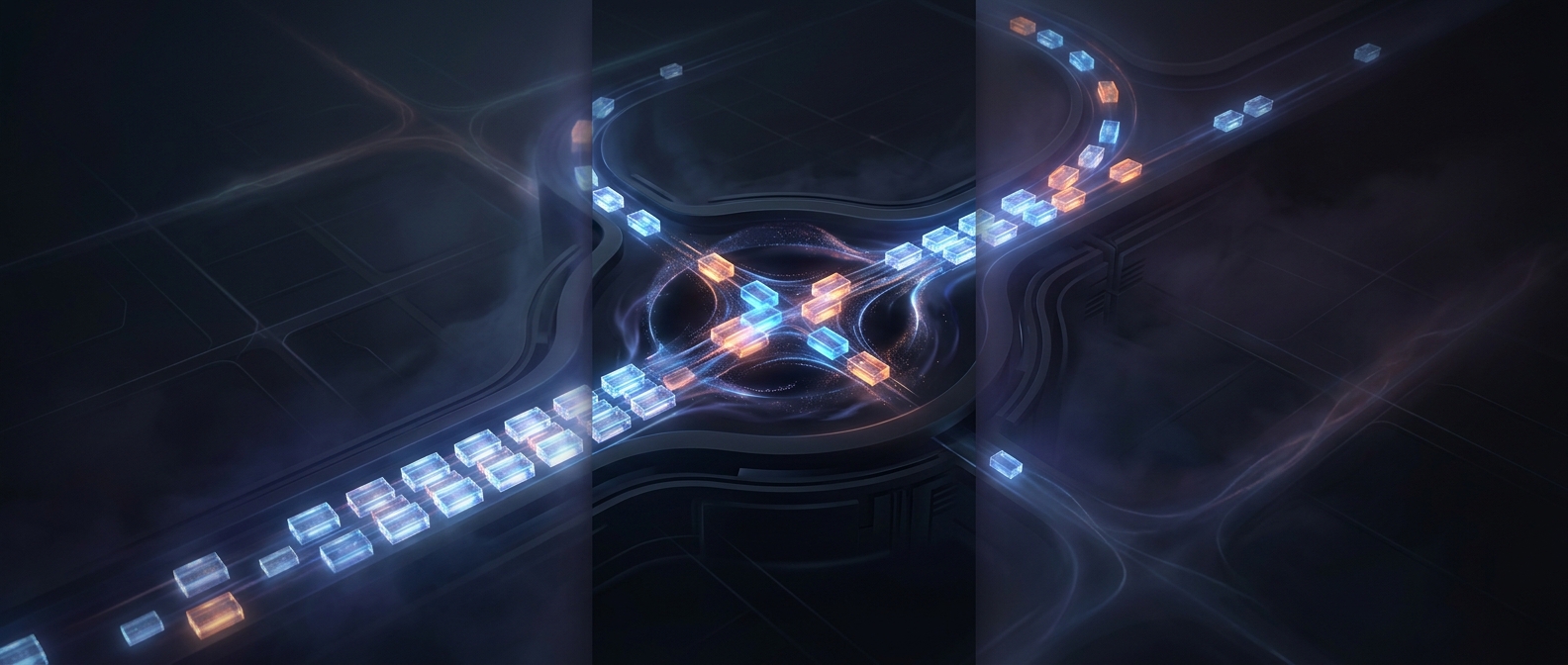
Early Ethernet connected multiple computers to one shared cable. Each device could listen before transmitting, but two might find the line quiet at nearly the same moment and begin sending together. Their electrical signals then interfered, corrupting the data. Listening first reduced collisions; it could not eliminate them because signals take time to travel along the cable.
How the retry stays orderly
On a shared, half-duplex Ethernet link—a connection where devices take turns using the same channel—a sender monitors the cable while transmitting. If it detects a collision, it stops and sends a brief signal so the other devices know the attempt failed. The computers then wait before trying again.
That wait is chosen randomly from a growing range of time slots. After repeated collisions, the range expands, making it less likely that the same pair will immediately choose the same retry time again. This method is called carrier-sense multiple access with collision detection, or CSMA/CD: devices check whether the channel is in use, then detect and recover from overlapping transmissions.
Why the rule faded from everyday Ethernet
The shared cable made collisions a normal possibility, so Ethernet needed a common procedure every device could follow. Later, switched networks gave each computer a separate link to a switch, and full-duplex links let devices send and receive at the same time without competing on one shared channel. On those connections, collisions do not occur in the old shared-cable sense, so CSMA/CD is no longer needed.
The rule remains a neat example of a practical tradeoff: Ethernet could let devices contend for a simple shared medium, provided they all knew how to recognize a failed transmission and retry without repeating the same mistake.