A temporary name built around the idea of connection
In 1997, Intel engineer Jim Kardach proposed “Bluetooth” as a working name for a technology effort aimed at getting different devices to communicate wirelessly. The name referred to Harald Bluetooth, a tenth-century Scandinavian king associated with bringing Danish groups together. It offered a compact metaphor for the project: make separate systems work as one.
The name was meant to be temporary, not a polished brand. But it stuck—helped by the way it expressed the technology’s central challenge. A wireless connection is useful only when devices with different designs and purposes can agree on how to find one another and exchange information.
The initials hidden in the logo
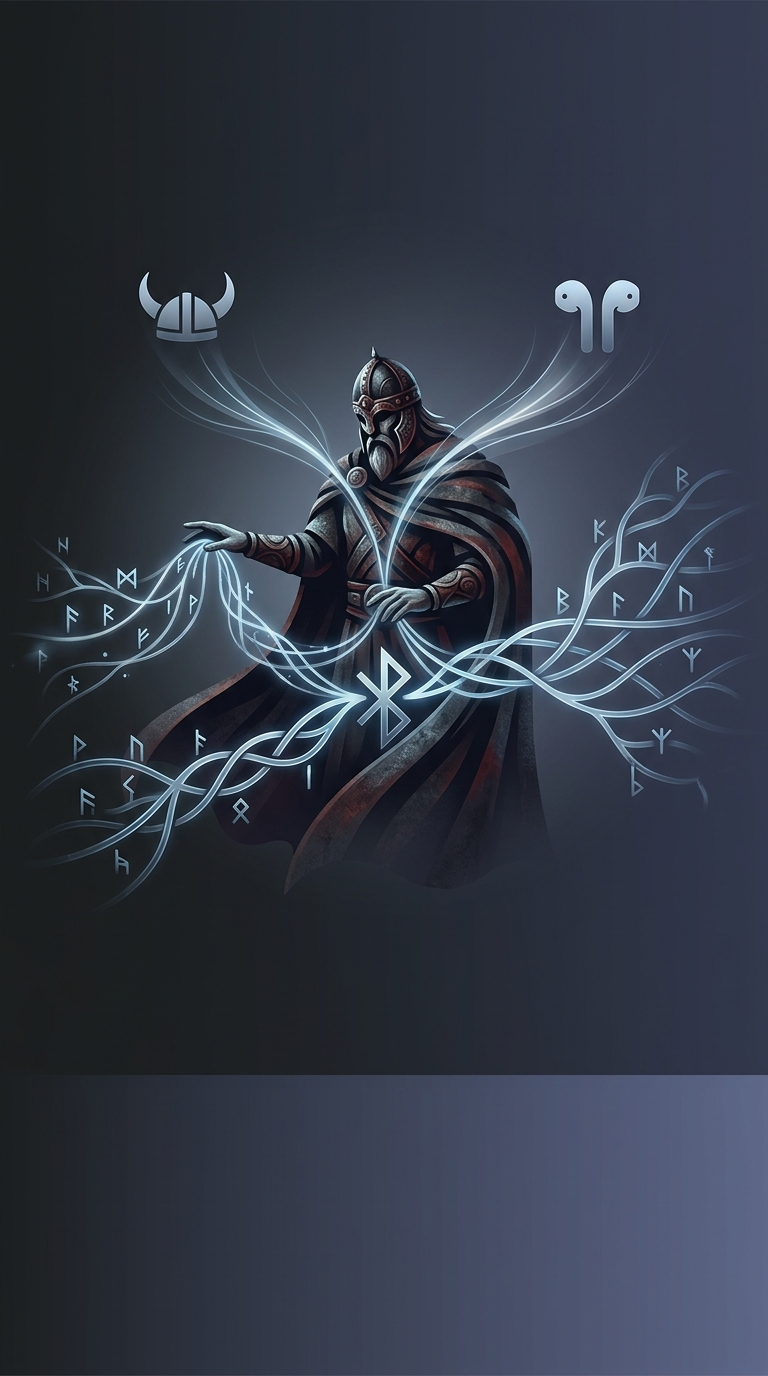
The symbol is a bind rune: a design that combines two runic characters into one mark. It joins the Younger Futhark runes associated with Harald Bluetooth’s initials, H and B. The logo therefore turns the historical namesake into a compact graphic, rather than simply spelling out the word.
That choice also links the project’s metaphor to its identity. A single mark is assembled from two characters, just as the technology was intended to bring distinct communication systems together.
From placeholder to permanent identity
The name’s survival reflects a useful piece of engineering culture: a temporary label can become lasting when it captures what a project is trying to do. Bluetooth was not named for a technical component or a radio frequency. It was named for the problem the technology set out to solve—connecting devices that otherwise might not speak the same language.