A physical object became a shortcut for an abstract action
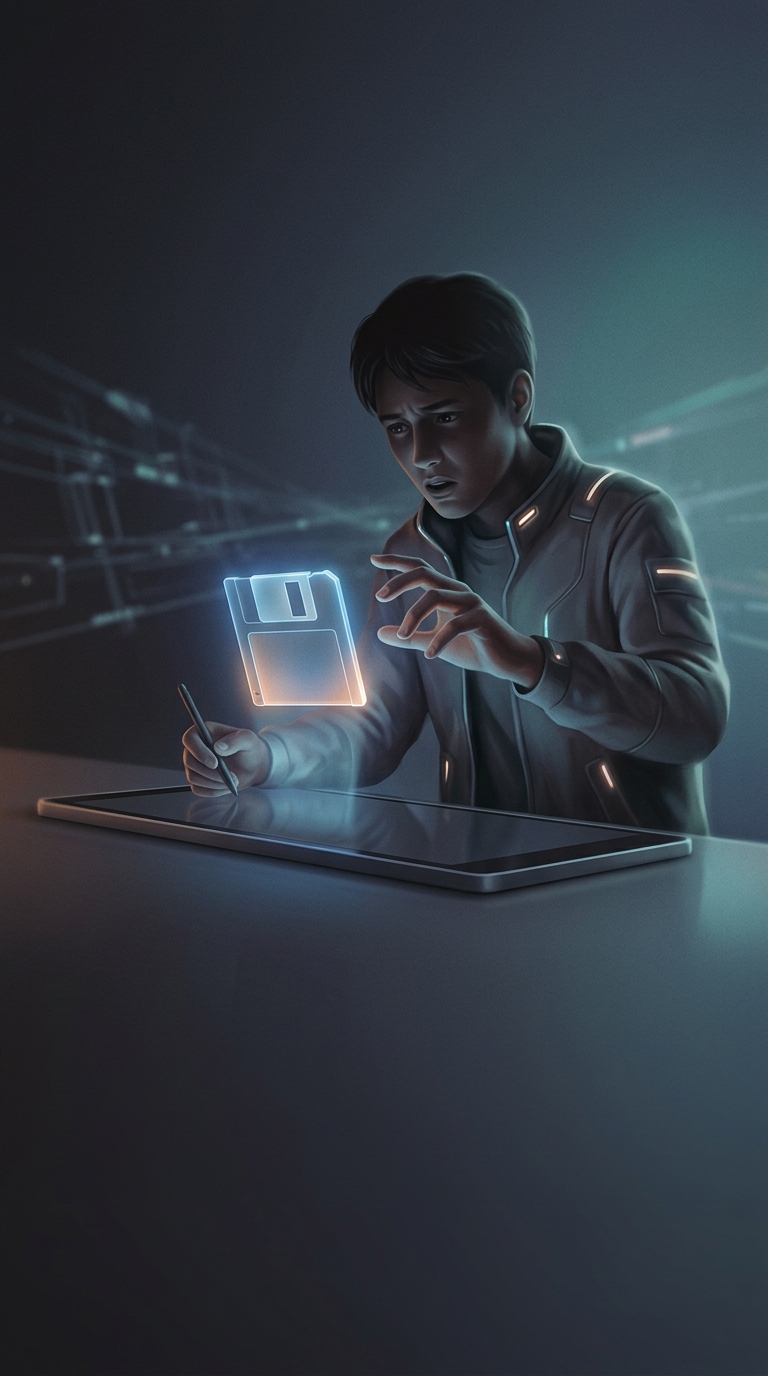
A floppy disk was once a familiar way to carry files between computers. The square plastic case held a flexible magnetic disk; a drive could write information onto it and read it back later. When early graphical interfaces needed a small picture for the command to preserve a document, the floppy offered a concrete visual answer: put the work on a disk so it would still be there afterward.
That picture made an invisible computer operation easier to understand. Saving does not look like anything happening inside a screen, but a recognizable object could stand in for the result: a file stored for later.
The symbol outlasted the hardware
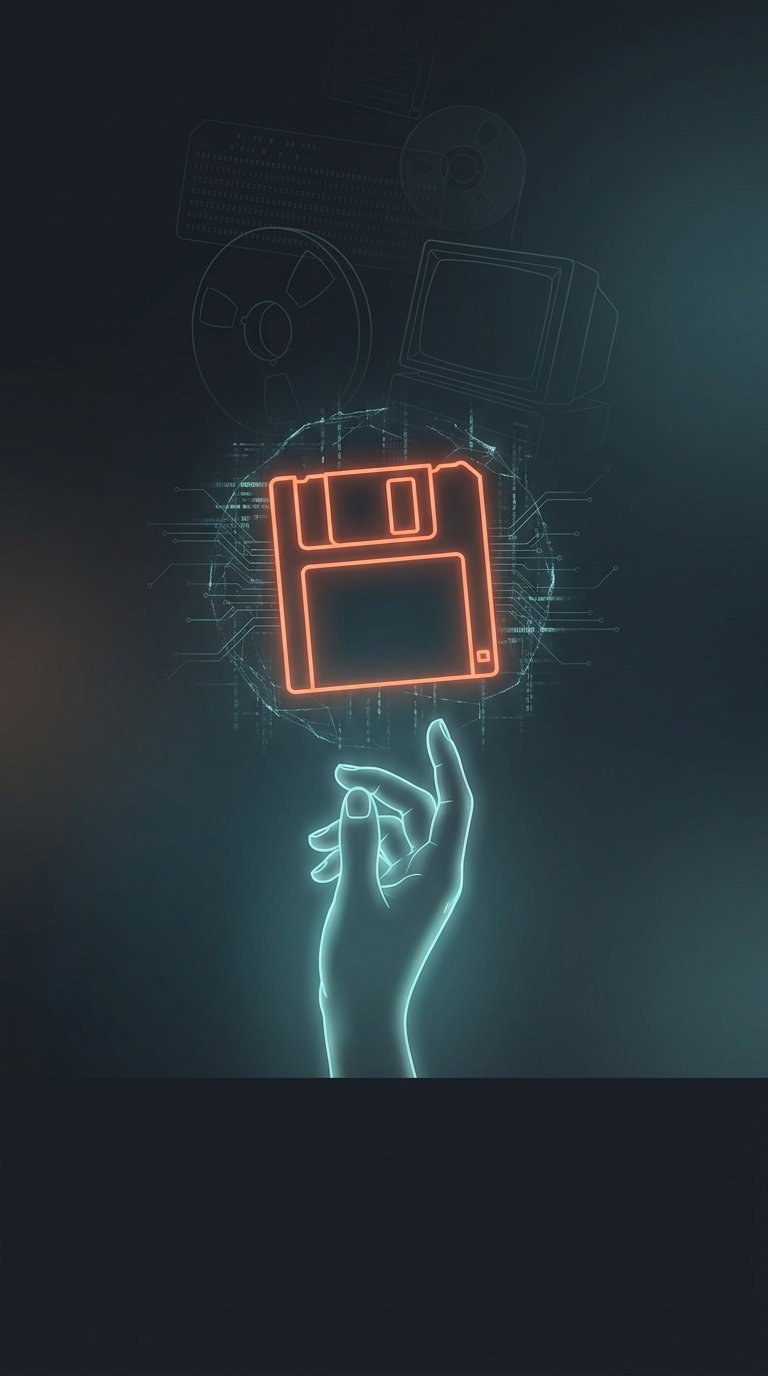
Floppy disks gave way to hard drives, flash drives, cloud storage, and systems that save work automatically. The icon stayed because interface symbols can become conventions. Once users learn that the disk picture means “save,” replacing it may make the command less immediately recognizable—even if the replacement depicts newer technology.
This is a form of visual shorthand: a familiar image points to an action rather than describing the machinery currently doing it. The save icon no longer promises that a floppy disk is involved. It signals what the command does.
Learning the icon without knowing the object
People who have never handled a floppy can still learn the symbol through repetition: they see it beside a save command, click it, and discover that their work is preserved. Tooltips and labels help when the picture is unfamiliar. Over time, the meaning attaches to the interface itself, not to the object’s original use.
That leaves a small historical artifact on modern screens: a picture of obsolete hardware still telling computers to remember what we made.