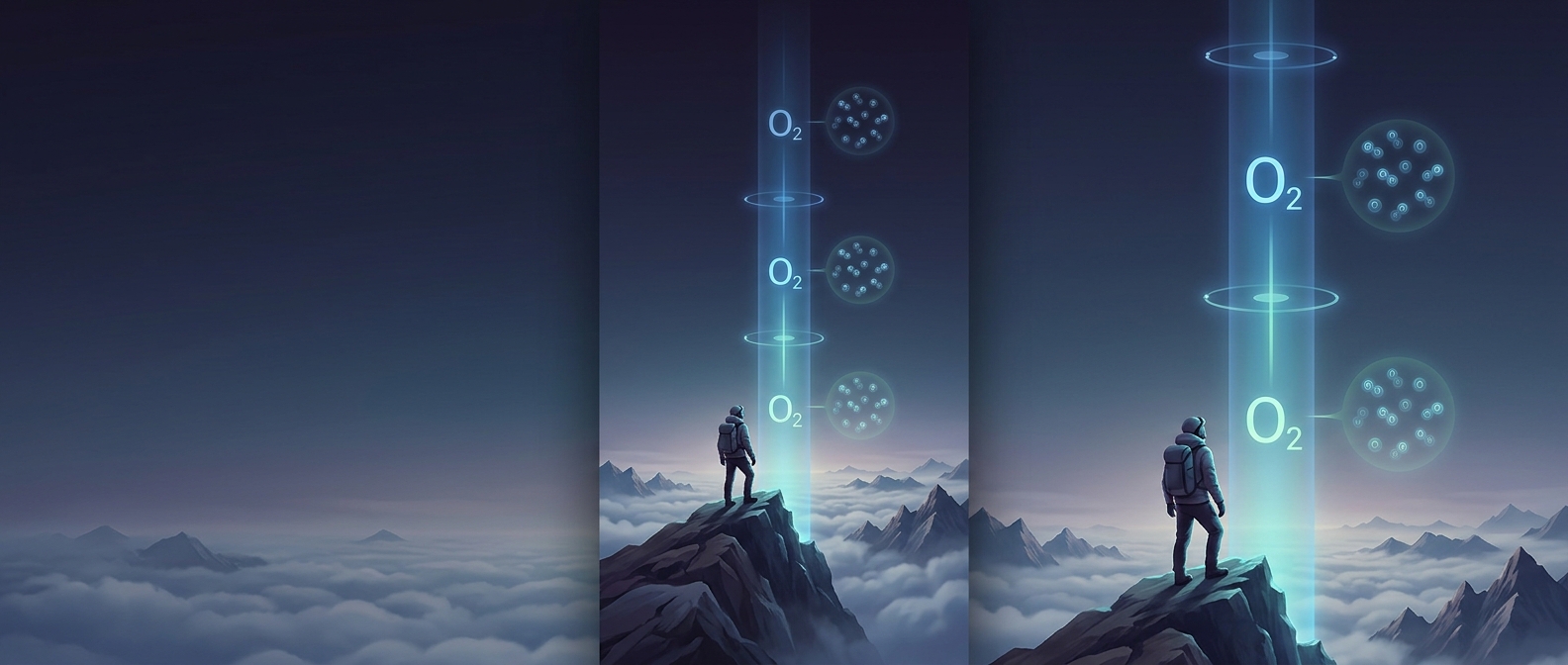
Why the same percentage delivers less oxygen
The percentage of oxygen in the air does not tell the whole story. What matters to the body is also air pressure: the force that packs gas molecules into each breath. At Everest’s summit, pressure is only about a third of what it is at sea level, so a lungful contains far fewer oxygen molecules even though oxygen still makes up roughly 21% of it.
In the lungs, oxygen moves into the blood because its pressure is higher in inhaled air than in the blood arriving there. At extreme altitude, that pressure difference shrinks. Less oxygen crosses into the blood with each breath, and the blood carries less onward to the brain and working muscles.
The body tries to compensate
The first response is to breathe faster and more deeply. The heart also speeds up to move oxygen-poor blood around more quickly. These adjustments help, but they cannot restore the oxygen supply to sea-level levels; a person may still feel breathless while standing or walking slowly.
Over days, the body can acclimatize—adjust gradually to thin air. Breathing remains elevated, and the kidneys help rebalance blood chemistry as the body adapts. This takes time, which is why climbing high too quickly can overwhelm the response and cause altitude illness. Acclimatization improves the odds of functioning at height; it does not make summit air equivalent to air at home.
The striking point is that nothing has changed the oxygen’s share of the atmosphere. The summit’s problem is that each breath is a much smaller delivery of the same mixture, leaving the lungs and bloodstream with less to work with.