A cell built to change shape
A red blood cell is not a tiny rigid disk. Its shallow, indented center gives it extra surface area relative to its volume, leaving room for the cell to stretch and bend without needing to expand. Inside, a flexible protein mesh just beneath the cell’s outer membrane helps it keep its shape while allowing that shape to change.
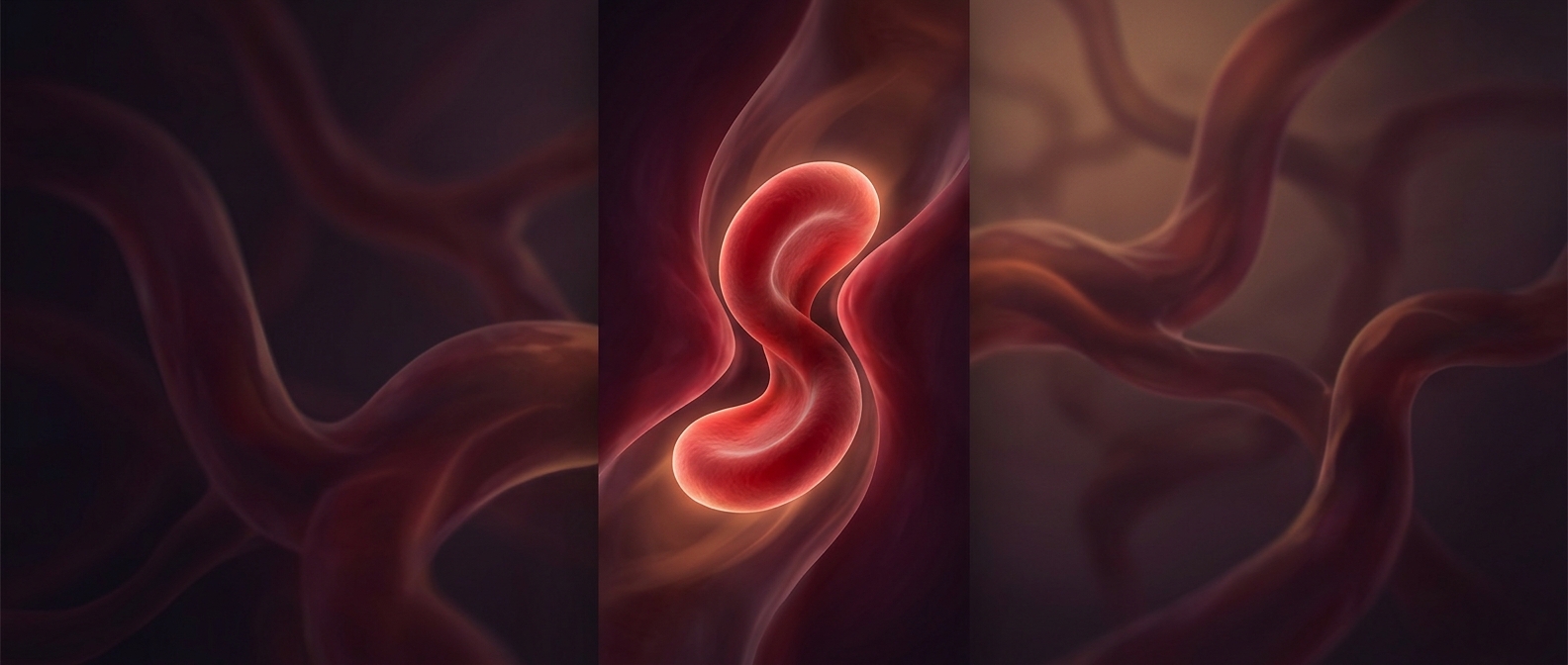
That combination matters in the smallest blood vessels. Some capillaries—the narrow vessels where blood exchanges oxygen and other materials with tissue—are tighter than a red cell’s resting width. As a cell enters, pressure from the flowing blood pushes it into a narrower profile. Its membrane and inner protein mesh deform together; after the restriction, the cell can recover its usual shape.
Flexibility keeps oxygen moving
The squeeze is not just a feat of shape. Red cells must remain intact through repeated passages, then continue carrying oxygen bound to hemoglobin, the protein inside them that holds oxygen. A cell that is too rigid may have trouble making it through narrow passages, slowing its route through the circulation and making it more likely to be removed as damaged or aging cells are filtered from the blood.
The useful feature is therefore not simply that a red cell can crumple. It can change shape temporarily without losing the membrane integrity needed for the next stretch of its journey. That lets a cell wider than a tiny vessel pass through it and emerge ready to carry oxygen onward.