A protein’s route begins at the ER
A cell does not build every protein in the same place. Proteins destined for export, for insertion into a membrane, or for certain internal compartments are made on ribosomes attached to the endoplasmic reticulum (ER). As a protein is assembled, it enters the ER’s interior or becomes embedded in its membrane. This lets the cell route it into the right production line from the start.
Folding is part of the job
Inside the ER, newly made proteins take on their working shapes. Helper molecules assist with folding, while quality-control systems check whether a protein is assembled properly. Proteins that fail these checks can be held back for repair or broken down, rather than sent onward in a faulty state.
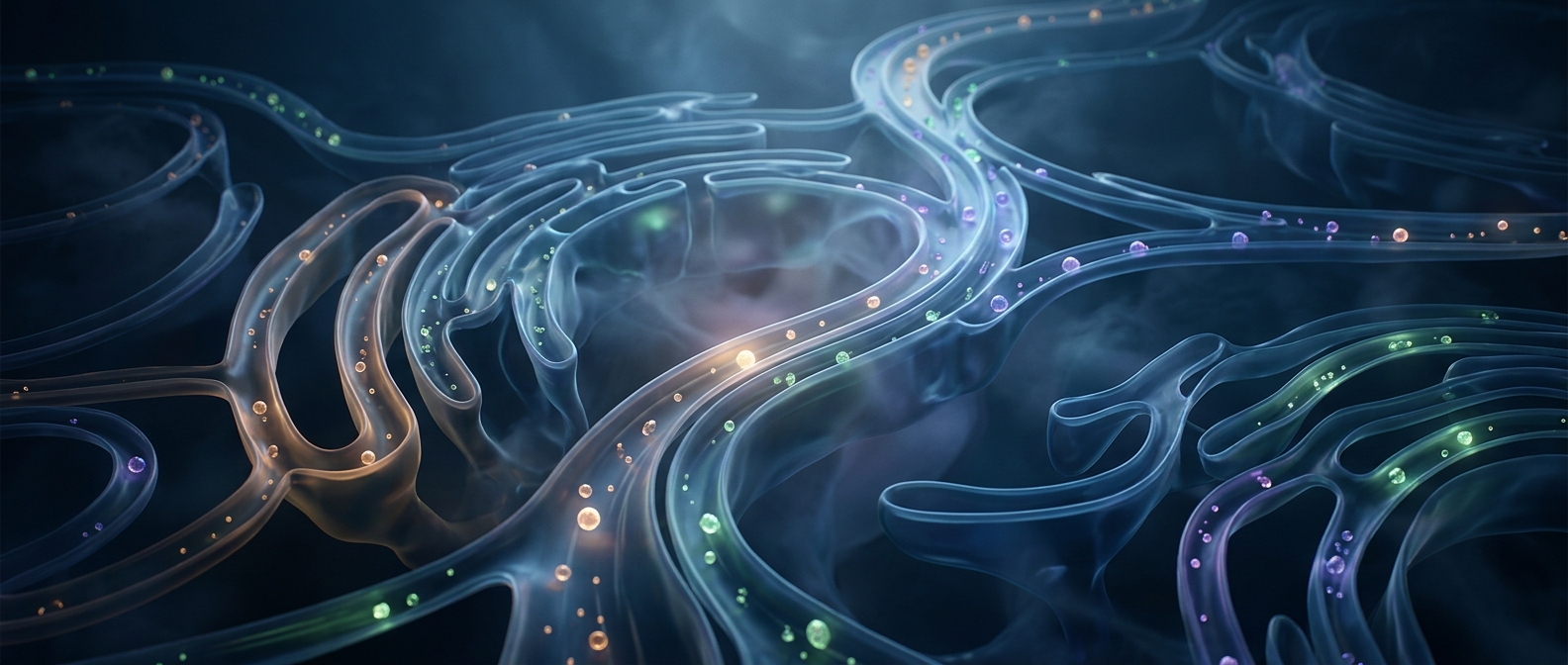
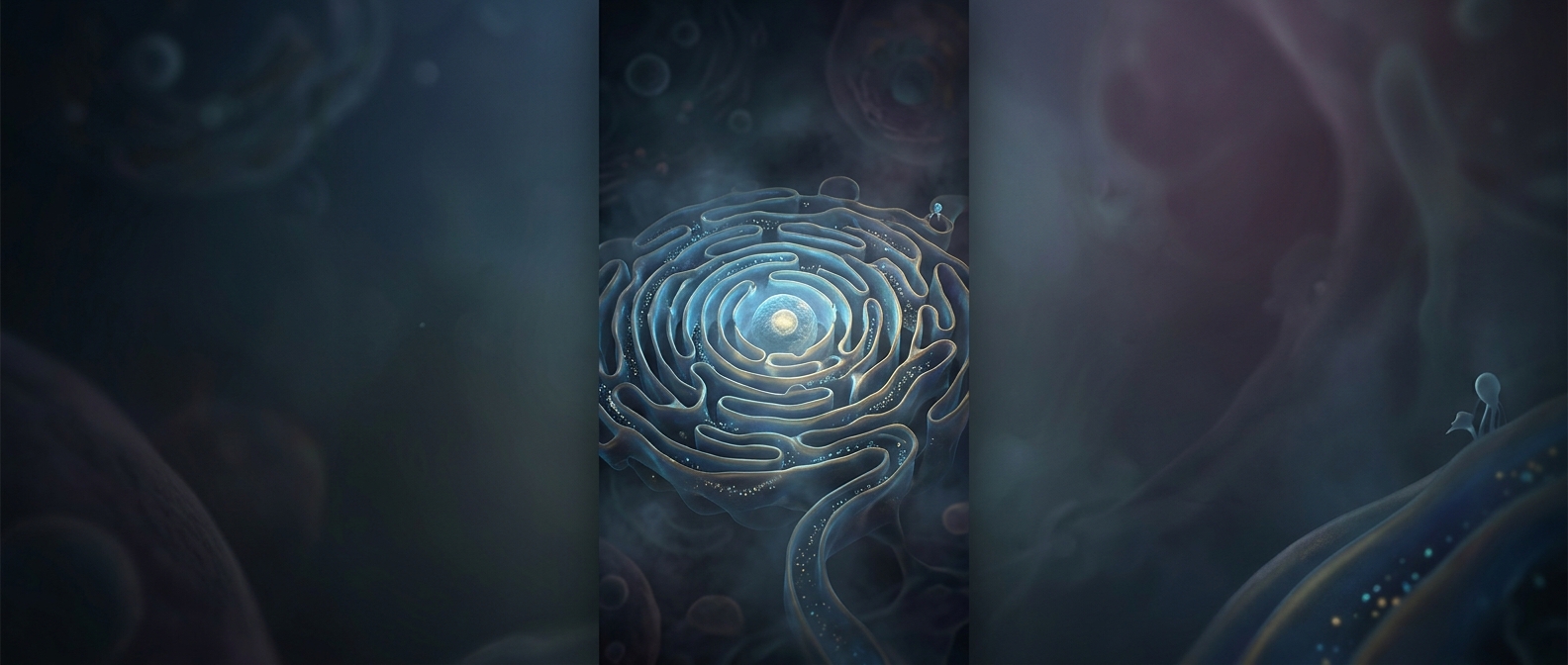
The ER’s many connected folds provide a large working surface within the cell. That matters especially for membrane proteins, which must be built into a membrane, and for cells that produce large amounts of proteins to be released elsewhere.
From the ER to the cell’s shipping center
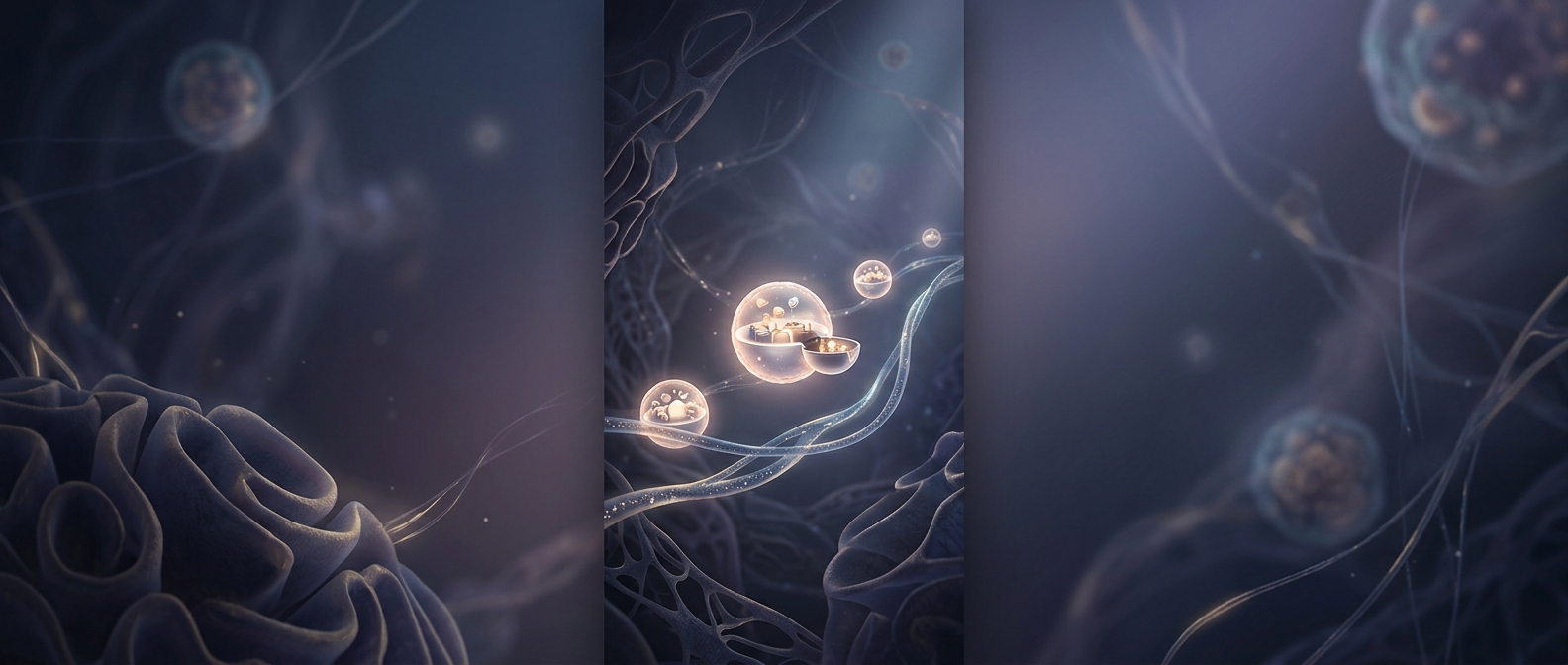
Once a protein is ready, it can leave the ER in a small membrane-wrapped carrier and travel to the Golgi apparatus, a cell compartment that further modifies and sorts many proteins. The carrier’s membrane comes from the ER itself, linking production to delivery.
The ER also makes many of the cell’s membrane components and helps manage calcium, a mineral ion used in cellular signaling. Its maze-like structure is therefore not just extra surface area: it connects protein construction, inspection, membrane supply, and transport in one continuous system.