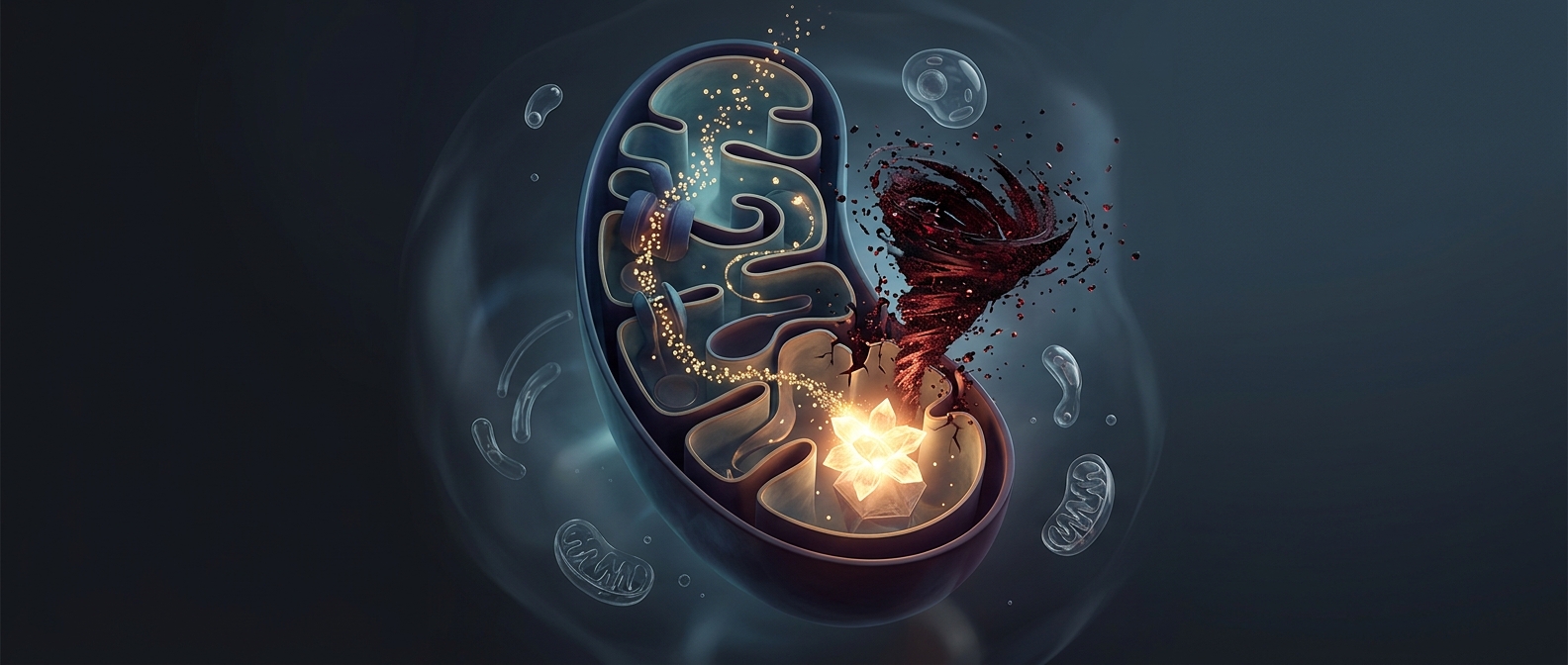
What “zombie cells” are
The scientific term is cellular senescence: a state in which a cell permanently stops dividing, often after damage to its DNA or after many rounds of copying. This can help protect the body. A damaged cell that cannot multiply is less likely to pass its problems on to daughter cells, and senescent cells can also play useful roles in processes such as wound repair.
But stopping division does not switch off the cell’s other activities. Many senescent cells remain metabolically active—using energy and making and releasing substances.
How a stopped cell affects its neighbors
Some of those substances are chemical signals, including inflammatory molecules and proteins that alter the surrounding tissue. Together, this output is often called the senescence-associated secretory phenotype, or SASP. In plain terms, the cell broadcasts instructions that can change what nearby cells do.
During repair, such signals can help coordinate a response. If senescent cells linger, however, the same kind of signaling may sustain inflammation, disrupt normal tissue behavior, or encourage neighboring cells to change. The effects depend on the cell type and setting; senescence is not simply harmful in every case.
Why persistence matters
The body can clear many senescent cells, but some may accumulate with age or under ongoing stress. Their influence can extend beyond their own lack of division: a small population can alter the local environment through repeated signals. That is why researchers study ways to remove senescent cells or quiet their secretions, while trying to preserve the roles they play in protection and repair.
The striking point is that a cell need not multiply to affect a tissue. It can stop copying itself and still keep sending messages.