The energy-making chain runs on electron handoffs
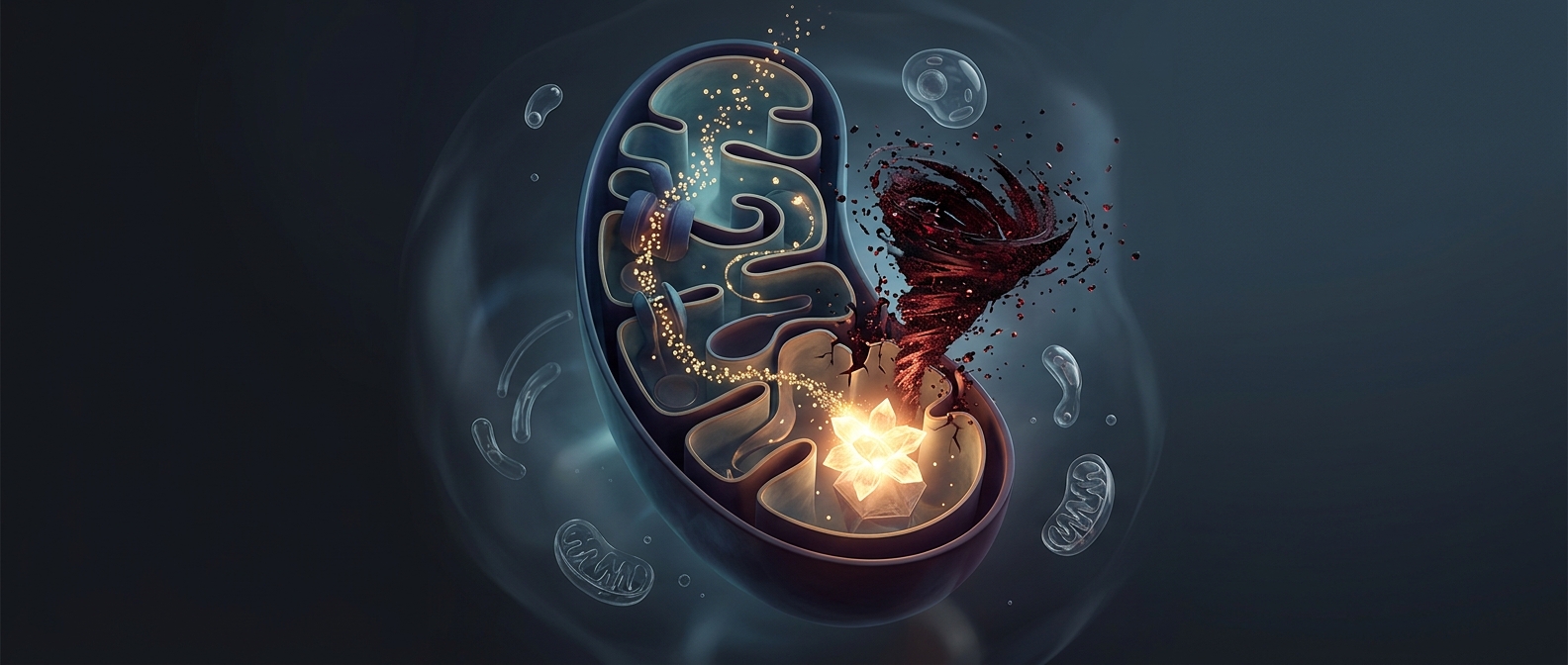
Most usable energy in a cell is made in mitochondria, where a series of protein complexes passes electrons from one carrier to the next. The handoffs release energy in small steps. The cell uses that energy to pump charged particles across a membrane, building a gradient—like water held behind a dam—that drives the production of ATP, the cell’s main energy-carrying molecule.
Oxygen accepts the electrons at the end of the chain. But the handoff is not perfectly sealed: sometimes an electron reacts with oxygen before reaching the proper endpoint. That can form reactive oxygen species, molecules that readily react with nearby chemicals.
Why a small leak can matter
Reactive oxygen species can alter fats in membranes, proteins, and DNA. The damage depends on how much is made, where it appears, and how quickly the cell can neutralize or repair it. A brief, limited amount is part of ordinary cell chemistry; trouble arises when production outpaces the cell’s defenses.
Cells use enzymes and other protective molecules to convert reactive compounds into less harmful forms. They also repair or replace damaged components. These safeguards are not an optional add-on: they let cells keep extracting energy from oxygen without allowing every stray reaction to spread.
The tradeoff is built into the process
The electron chain is valuable precisely because it releases energy in manageable stages, rather than all at once. Its chemistry still involves energetic electrons and oxygen, so some side reactions are possible. The cell’s challenge is not to eliminate every reactive byproduct, but to keep their formation and cleanup in balance. That balance helps explain why the same mitochondrial process can sustain routine activity while, under strain or with impaired defenses, contributing to cellular damage.