How a cell packs a parcel
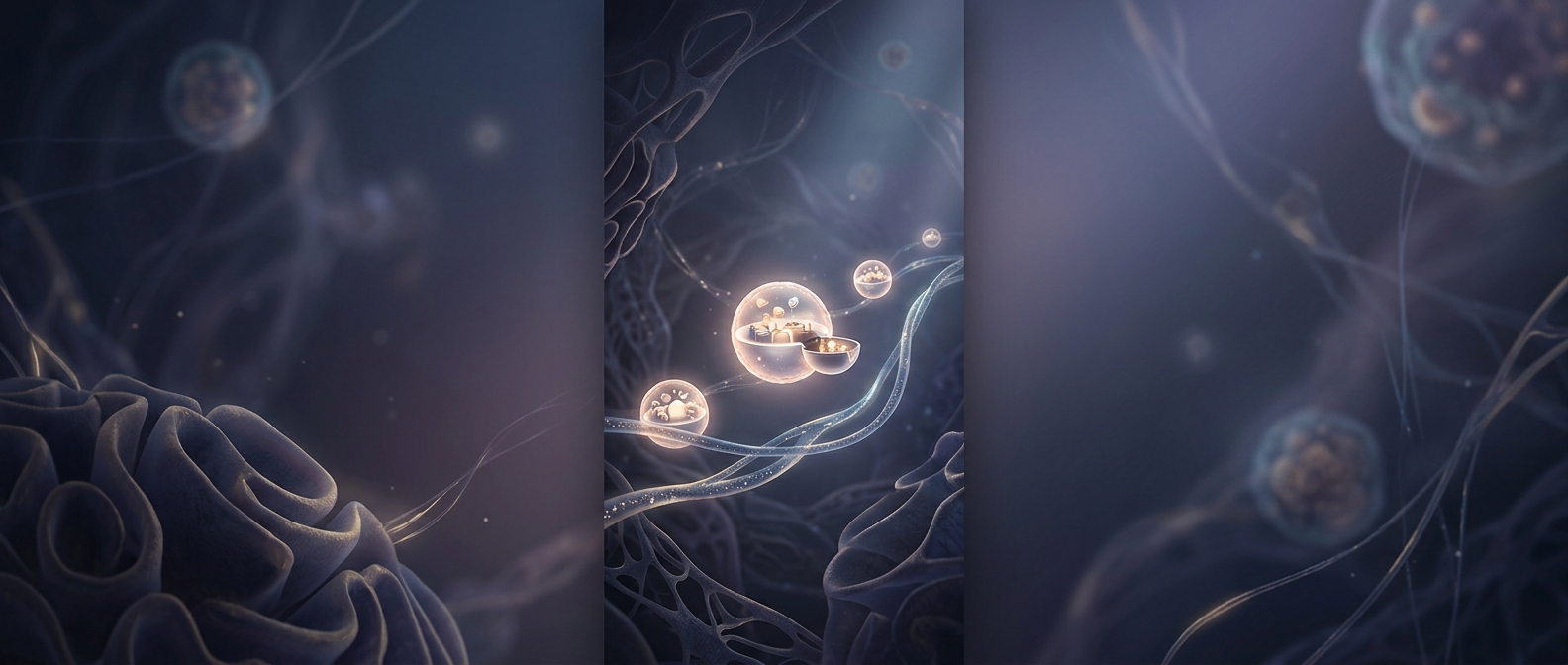
Some cellular cargo is routed into small compartments inside the cell. Those compartments can collect inside a larger membrane-bound structure; when it joins the cell’s outer membrane, it releases the smaller bubbles outside. These vesicles are called exosomes when they form through this internal route. The cell’s sorting machinery helps determine which molecules are packed into them, so their contents are not simply a random sample of everything inside the cell.
Delivery is only the first step
A released exosome may travel through fluid around cells or, in the body, through circulation. A recipient cell can take it up by drawing the vesicle inside, or its membrane can interact with the recipient cell’s surface. The delivered molecules may then influence how that cell behaves—for example, by changing which proteins it makes or how it responds to signals.
But a parcel’s contents do not dictate a guaranteed response. The outcome depends on the cargo, the recipient cell, and whether enough vesicles reach it. Many vesicles are cleared or taken up by cells that are not the intended target. Cell-to-cell messaging is therefore a chain of selective packing, release, delivery, and response—not a simple instruction sent from one cell to another.
Why researchers pay attention
Because vesicles can carry molecular traces of the cells that released them, researchers study them as possible clues to what is happening in tissues. They are also being investigated as ways to deliver useful cargo. Both ideas face the same practical challenge: understanding and controlling which cargo gets into which cells, and what those cells do with it.