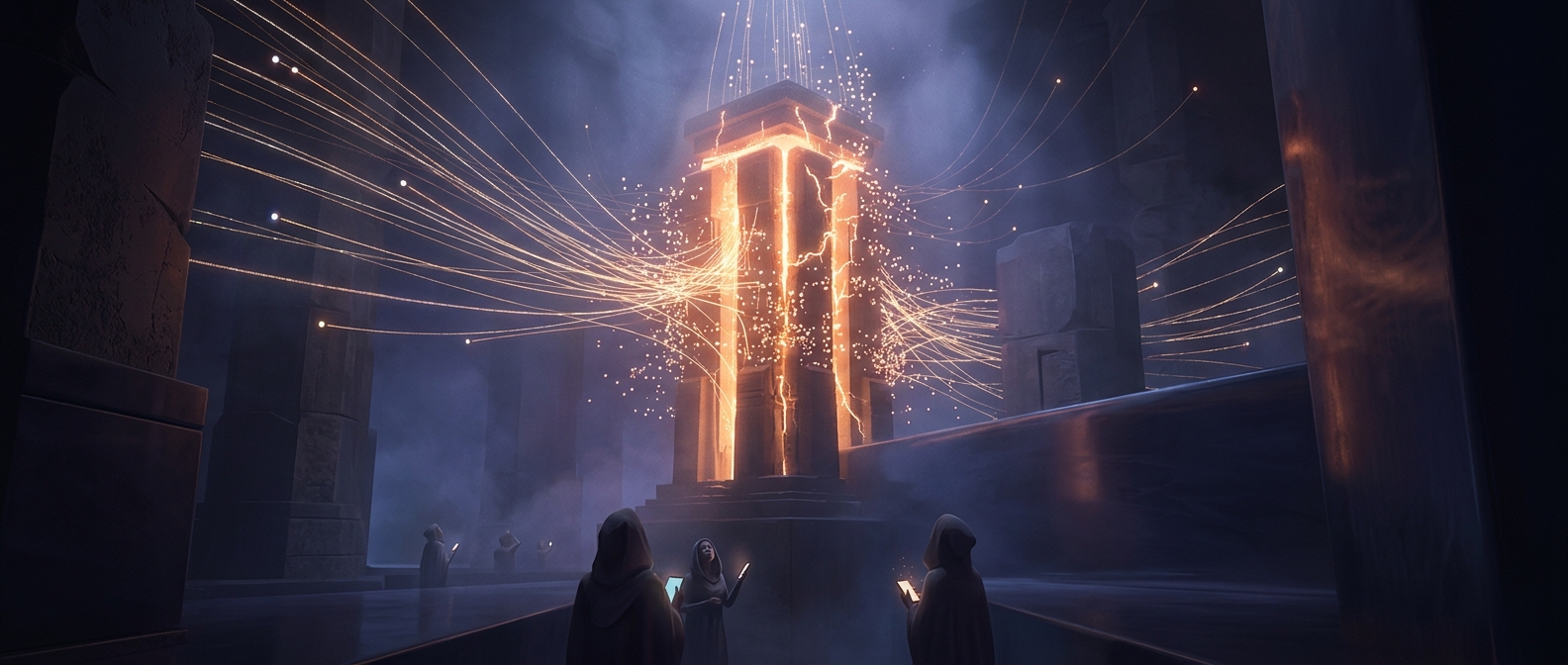
Why a celestial-event app can freeze at the busiest moment
An app may feel quiet for days, then receive a crowd in the same few minutes when an eclipse, meteor shower, or astrological event draws attention. Each person opening it can trigger several tasks: loading a chart or map, checking an account, and fetching fresh data. The server must handle those requests together, not merely add up the app’s usual daily traffic.
The bottleneck is often behind the screen
A server is a computer that receives app requests and sends back the information needed to display a screen. If too many requests arrive at once, they may wait in a queue. Some can time out before the server responds, leaving users with a spinner, an error, or an app that appears frozen.
The limit may lie not in the server itself but in a shared dependency, such as a database that stores user information or a service that supplies maps. Adding more servers will not help much if every one of them is waiting on the same overloaded system. This is why a service can work normally during testing yet falter when a large audience arrives together.
Preparing for a crowd
App operators can spread work across multiple servers, temporarily add capacity, and use cached copies of information that does not change often. They can also test with many simulated users before a public event. These measures involve tradeoffs: extra capacity costs money, while aggressively caching data can mean some users briefly see an older version.
For an event tied to a precise time, a delay of even a few minutes can defeat the app’s purpose. The practical fix is to prepare the digital infrastructure for the moment everyone wants to look at once—not to search for a cosmic cause.