A biblical map drawn across the Seychelles
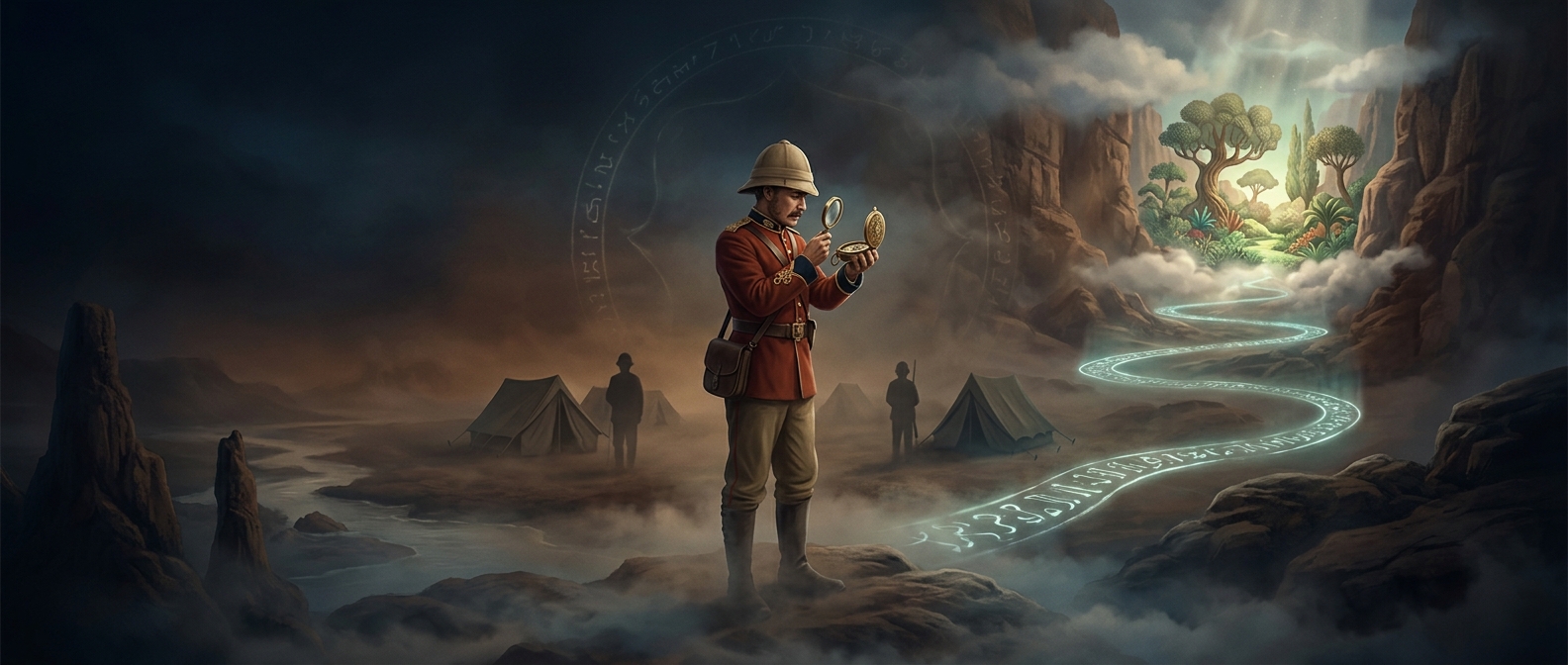
Charles George Gordon’s Eden was not merely a metaphor. In the Seychelles, he treated the landscape as a possible surviving location for the garden described in Genesis. The biblical account names four rivers flowing from Eden; Gordon tried to trace those waterways onto the islands, turning a scriptural description into a piece of geographical evidence.
His proposed setting was Praslin, especially the lush palm forest now known as Vallée de Mai. There, the coco de mer offered a striking object to interpret. Its enormous, deeply divided seed has a shape that can suggest a human pelvis, and Gordon identified it with the forbidden fruit associated with Eve. The fruit’s appearance did not prove a biblical connection, but it helped make the tropical forest seem, to him, like a place where the story’s clues had survived.
When resemblance became evidence
Gordon’s reasoning joined two kinds of interpretation: matching a sacred text to physical geography, and reading meaning into a natural form. A suggestive shape could reinforce a proposed location; the proposed location could, in turn, make the shape feel significant. That loop gave the landscape a narrative coherence, even when resemblance and biblical description could not establish that Eden had been there.
The episode also shows how far a conviction can redirect attention. Gordon approached the Seychelles with military responsibilities, yet his Eden theory made its palms, waterways, and terrain parts of a personal scriptural investigation. The island forest became, in his reading, not just a place to survey but a map of humanity’s first story.