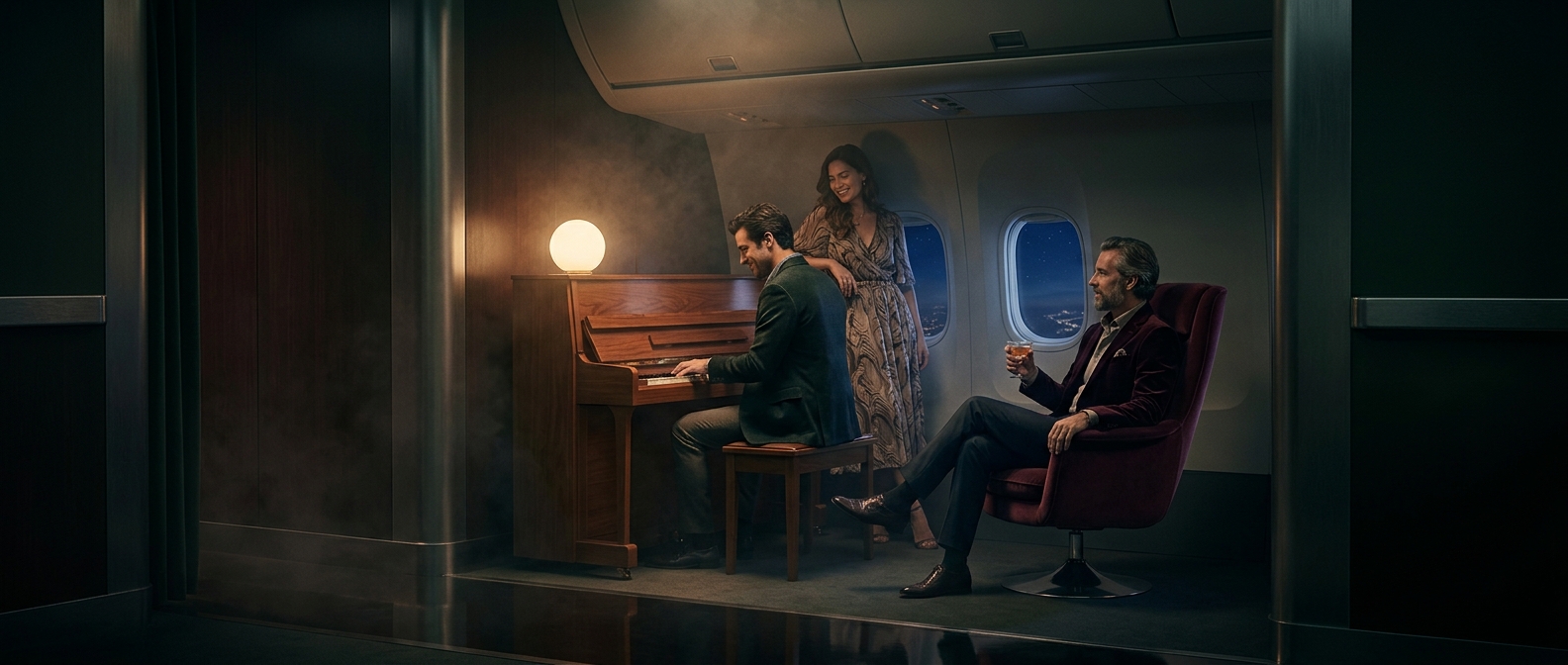
A lounge in the middle of a flight
In the early 1970s, some Boeing 747s treated first class as more than a row of roomy seats. Their electric piano bars gave passengers a place to gather, have a drink, and sing while the aircraft was in flight. The point was not simply to provide another amenity: it made the journey itself part of the luxury being sold.
That kind of shared space required a real sacrifice. Every stretch of cabin used for a bar and room to gather was unavailable for seating. On a large aircraft, airlines could choose to spend that space on an experience for a limited number of first-class travelers—or use it to carry more passengers.
The cabin became a revenue calculation
As airlines reconsidered how to use the cabin, the lounge lost out to seats. Replacing the space with about 20 economy seats changed its purpose from a place where a few passengers could socialize to capacity that could earn fares across many flights.
The switch captures a lasting tension in airline design: a cabin can make a trip feel memorable, or it can be arranged to carry more paying passengers. Those piano bars were a particularly visible version of the first choice—and their removal turned the same floor area into a much more conventional source of revenue.