The bicycle had to become rideable first
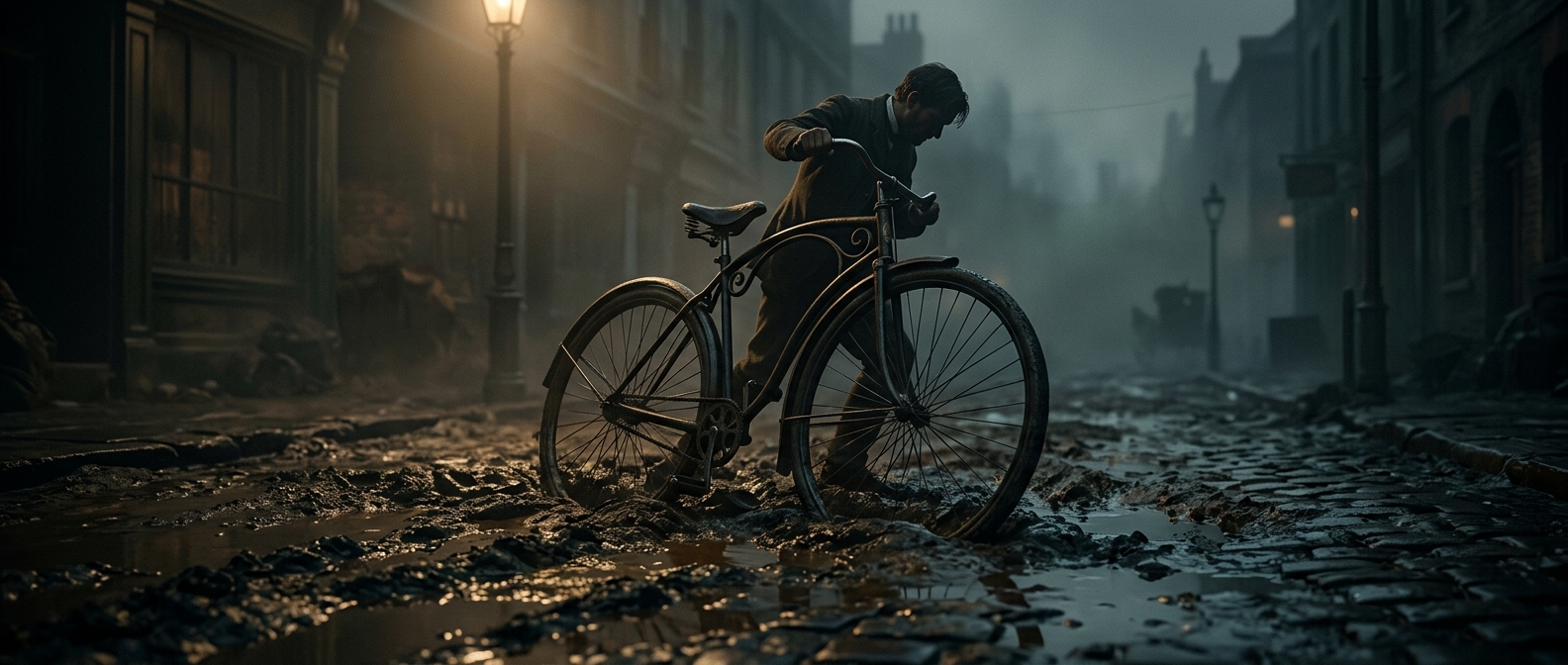
Early bicycles were not simply less refined versions of today’s. Many put the rider directly over a large front wheel, which both drove and steered the machine. That layout made speed depend on wheel size, and a sudden stop or bump could pitch the rider forward. Smaller-wheeled designs avoided some of that drama but could be slow, uncomfortable, or awkward to control.
The trouble was not just that these machines were difficult to master. A bicycle meant for everyday travel had to feel predictable on ordinary roads, where loose gravel, ruts, and abrupt turns could turn a wobble into a fall.
Why the safety bicycle changed the ride
The safety bicycle separated steering from propulsion. Its front wheel steered, while pedals and a chain turned the rear wheel. A chain drive—a loop of linked metal that transfers power from the pedals to a wheel—let designers use wheels of similar, manageable size without putting the rider high above the ground.
That lower, more balanced arrangement made it easier to mount the bike, keep control, and recover from small jolts. The rider no longer had to sit atop a giant front wheel, where the machine’s geometry could make a forward fall especially punishing. Better control also made cycling practical for more than daredevils willing to accept a rough ride.
A machine that could fit daily life
Once bicycles became steadier and easier to operate, they could serve as useful transport rather than a novelty or sporting challenge. Riders could travel on familiar roads with less fear that a bump or a misjudged movement would send them over the handlebars. The breakthrough was not merely a faster bicycle; it was a bicycle people could trust themselves to ride.