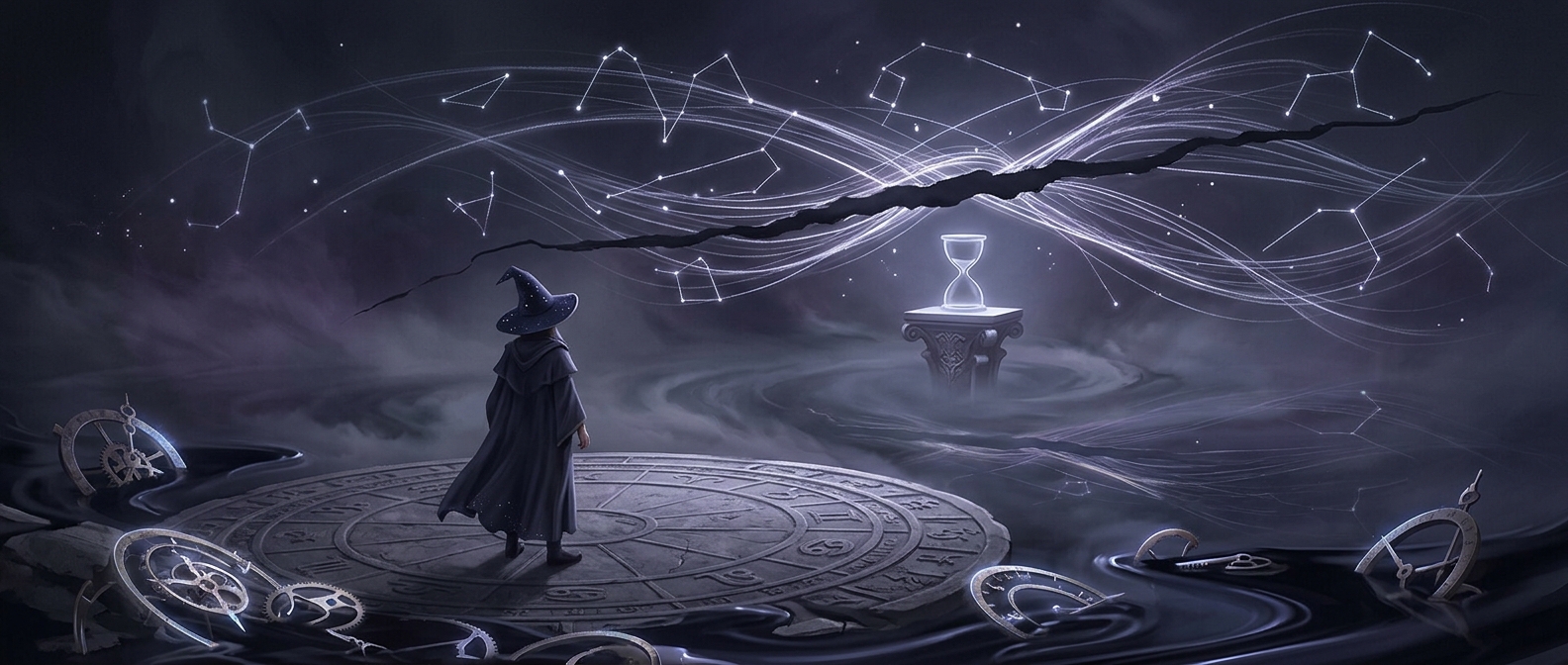
From a birth moment to a wheel
A natal chart turns a time and place into a symbolic map. In common Western astrology, the wheel is centered on Earth: it shows where the Sun, Moon, and planets appeared along the zodiac as seen from the birthplace. The zodiac is a band of sky divided into twelve named sections, not a set of star patterns drawn to scale.
The birth location matters because the horizon changes from place to place. The sign rising over the eastern horizon at that moment—called the Ascendant—anchors the chart’s arrangement. Astrologers use it to set the houses, twelve sections associated with different areas of life in their interpretive system.
A diagram built from several coordinates
The chart is not a literal picture of the whole sky. It compresses celestial positions into a circle, then adds relationships among them. A planet’s sign marks its position within the zodiac; its house marks where it falls in the chart’s horizon-based layout. Lines drawn between planets indicate angular relationships called aspects.
Those layers explain why two people born on the same day can have different charts: the Moon moves across the sky, and the rising sign and house layout can change with the hour and location. Even when two charts share many placements, their arrangements may differ.
Why the map is read symbolically
Astrologers interpret the placements together rather than treating the wheel as a list of isolated labels. A planet, sign, house, and aspect each contribute part of a reading, much like distinct marks on a map acquire meaning from their position and relation to one another. The chart’s compact format makes that system easy to compare and discuss—but its meaning comes from astrological conventions, not from the diagram being a physical photograph of the sky.