A Small Order That Establishes Who Is in Charge
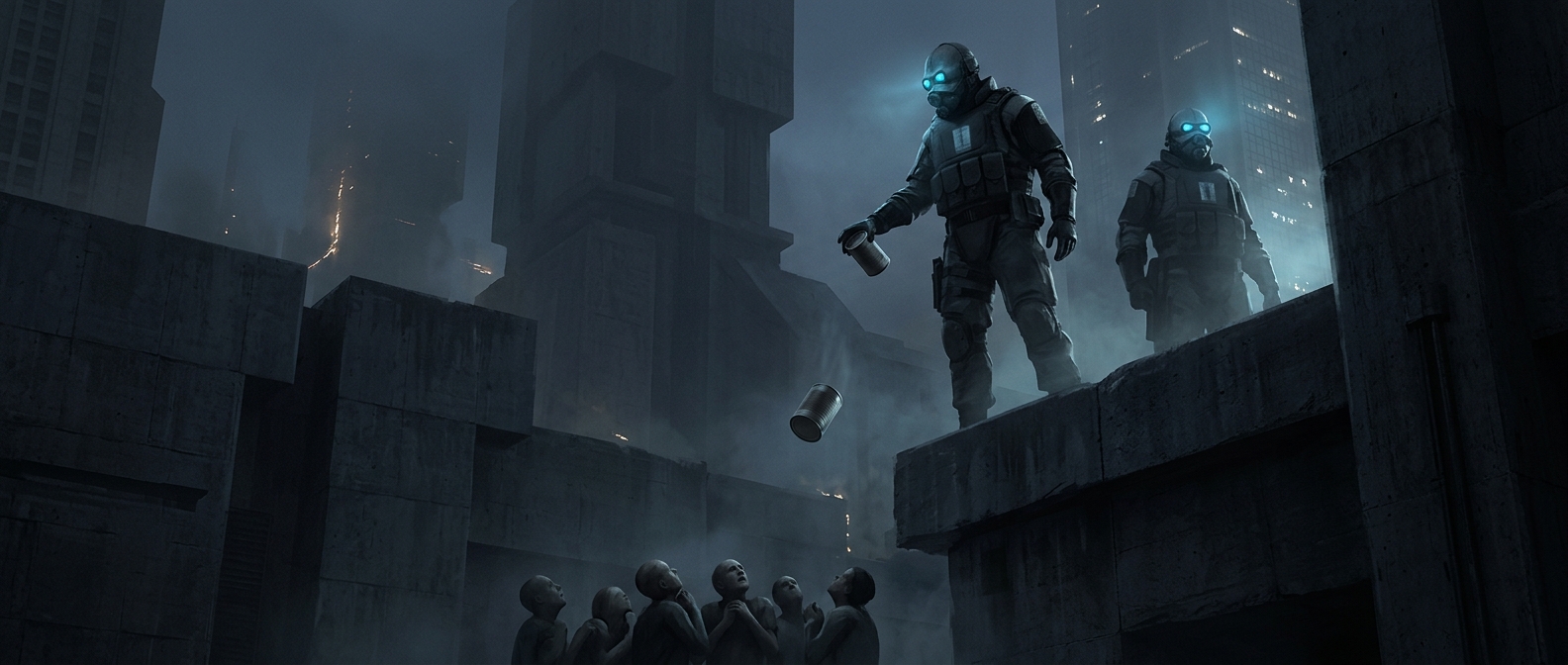
In Half-Life 2, a Combine soldier knocks an empty can onto the floor and makes a citizen pick it up. The point is not to keep the street clean. The soldier creates a minor mess, then uses the power to decide who must fix it. That turns an ordinary object into a small demonstration of authority.
Why the Moment Feels So Unsettling
The demand is petty enough to be recognizable: someone has to bend down and do a pointless chore because a more powerful person says so. There is no urgent danger to justify it. That imbalance makes the encounter feel less like a practical rule being enforced and more like a reminder that citizens have little control over their own time or dignity.
The scene also introduces the occupation through everyday behavior rather than a speech explaining the regime. The Combine’s control is visible in who gives orders, who obeys, and who is allowed to turn a trivial inconvenience into someone else’s problem.
Environmental Storytelling Before the Action
This is environmental storytelling: a game conveys its world through what characters do and how a place is arranged, not only through dialogue or exposition. The player encounters the power dynamic while moving through the city, before needing to fight anyone. Because the act is simple and legible, it makes the setting’s hierarchy immediate.
The can is easy to remember precisely because it is so insignificant. A regime that can make a citizen submit over litter does not need a dramatic display of force to show how thoroughly it governs daily life.