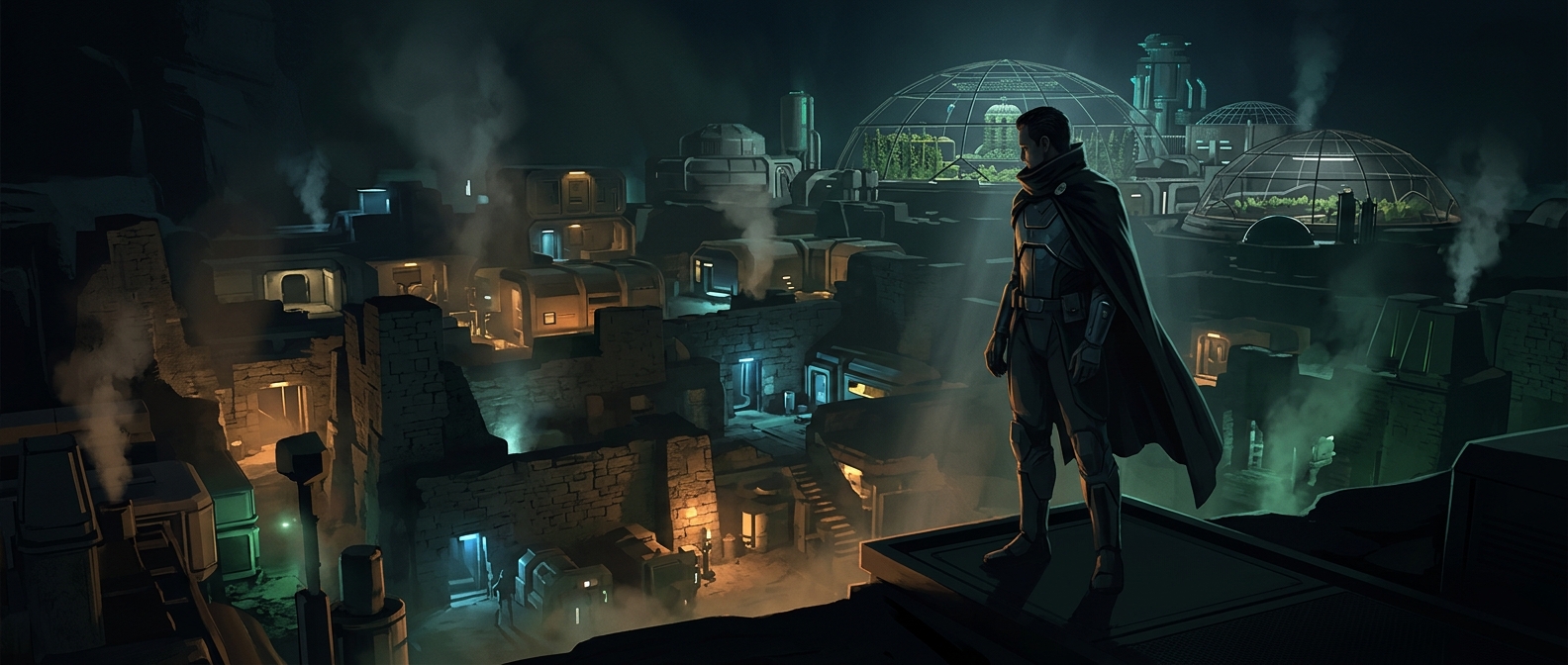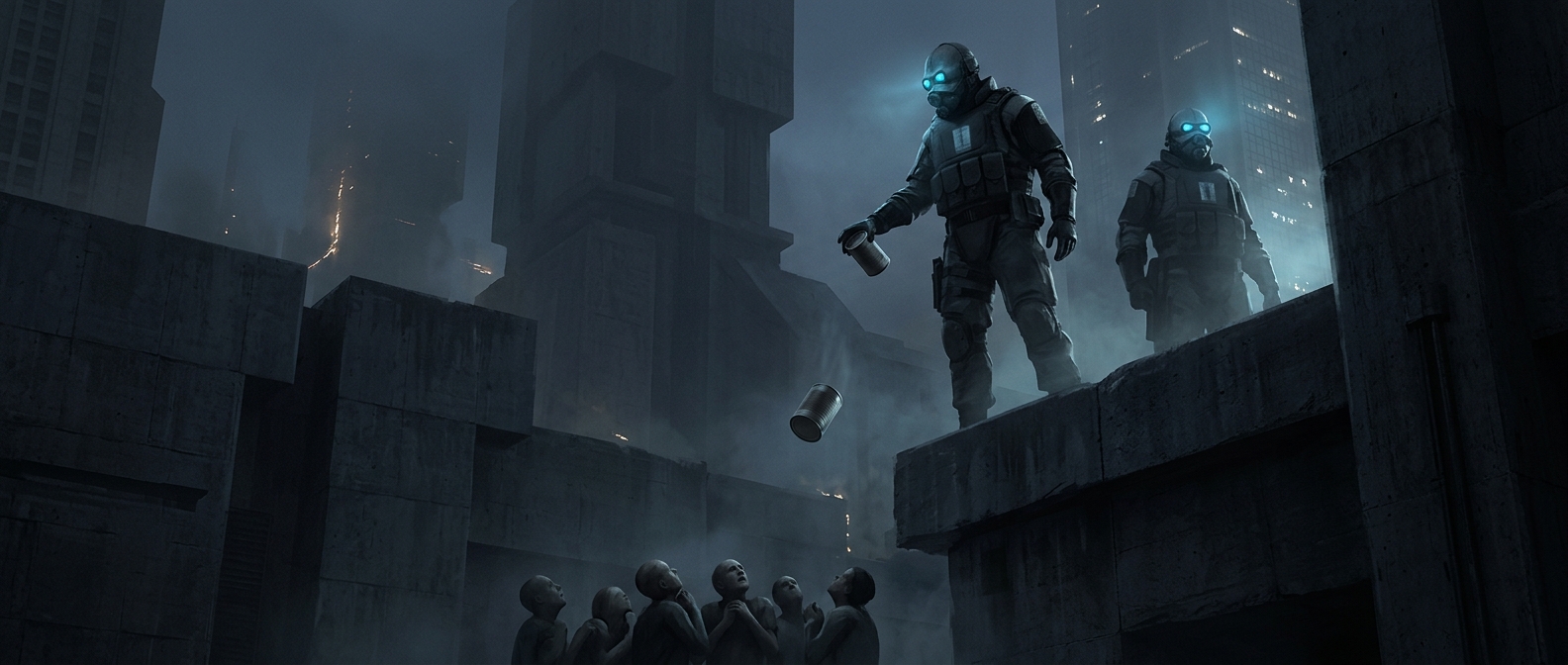
A missing landmark becomes part of the setting
In Deus Ex, the absent Twin Towers could have looked like a simple oversight. They were among New York’s most recognizable landmarks, and the game is set in a future version of the city. Instead, the developers made their absence a fact of that future: the game’s world explains that a terrorist attack destroyed them.
That explanation turns a practical production limit into worldbuilding. Worldbuilding is the detail that makes a fictional place feel as though it has a history beyond the scenes the player sees. Rather than asking the game to render two more prominent structures, the designers gave players a reason they were gone.
A technical constraint with narrative consequences
A game’s skyline is not just a picture in the background. Buildings have to be represented in the game’s data and displayed alongside the streets, characters, and other scenery. With limited memory available, every visible element competes for space. Leaving out a major landmark could therefore be a deliberate tradeoff, not a claim that it was unimportant.
The fictional attack also fits the game’s tense, crisis-filled setting, where terrorism is part of the surrounding story. The result is a small but memorable example of a design constraint becoming narrative: a technical omission gives the imagined New York a traumatic past.