A meal reduced to its cheapest function
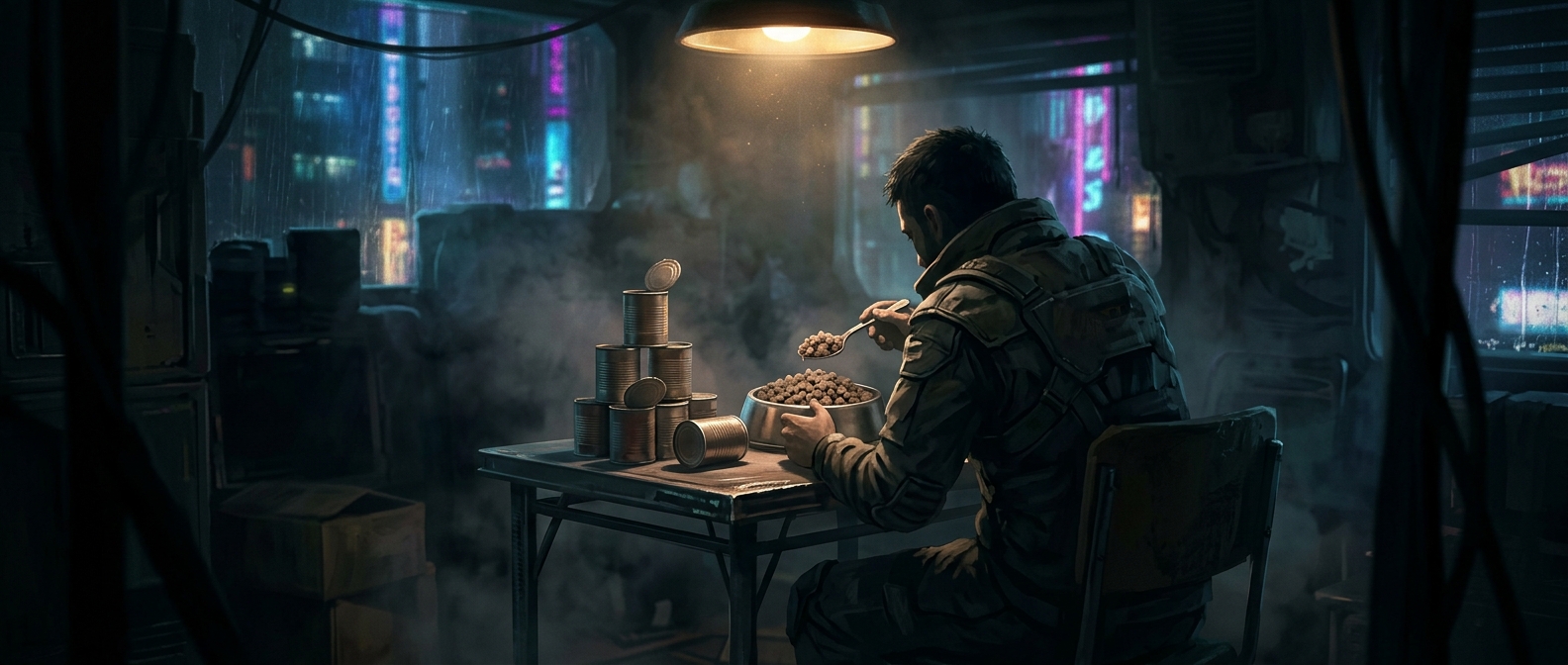
In Night City, the distinction between human food and pet food has become a measure of purchasing power. When fresh ingredients cost too much, residents can turn to manufactured chunks made for dogs—not because the food is appealing, but because it is an available way to get something to eat. The choice makes poverty visible at the level of an everyday purchase.
The chunks also fit a city where food is treated as a mass-produced commodity. Their flavoring suggests an attempt to make a basic product more palatable, but it cannot disguise the underlying tradeoff: people with little money must accept a product designed for a different customer and purpose.
Worldbuilding through what people eat
This detail works as environmental storytelling: instead of explaining economic inequality in a speech, the game lets players encounter it in the food supply. A product crossing the boundary from pet aisle to human meal hints at how far scarcity has pushed ordinary life—and at how little room poorer residents have to be selective.
It also sharpens the contrast between abundance and access. Night City can produce and sell food, yet that does not mean everyone can afford food made for them. For a resident counting every expense, the question is not what sounds good; it is what costs least and is still edible.