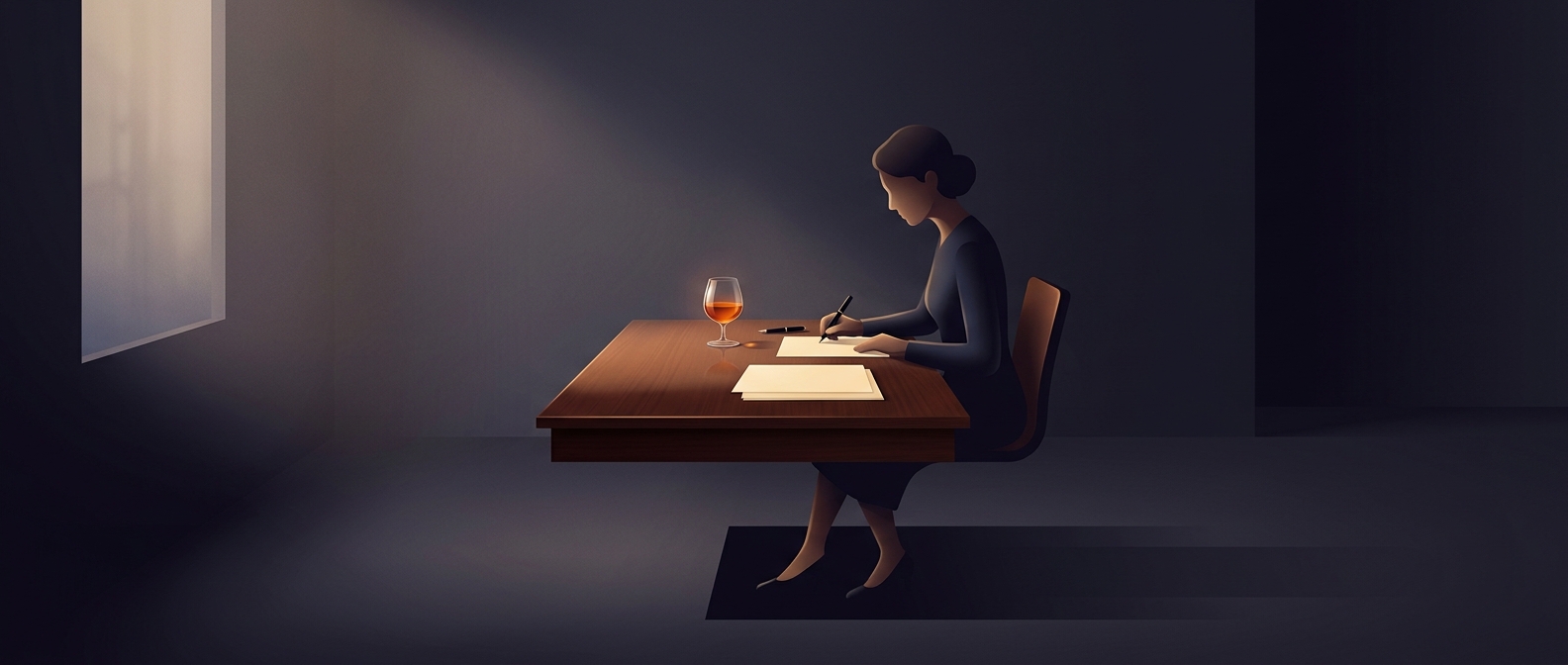
A room designed to hold her attention
Maya Angelou’s stripped-down motel room was less a retreat than a deliberately controlled workspace. By asking for the artwork to be taken down, she removed visual details that might pull her mind away from the page. The generic room offered no personal history or décor to respond to; its blankness made it easier to treat the hours there as work.
That choice reflects a practical problem writers face: a writing space can invite concentration, but it can also supply endless small distractions. Angelou reduced the room’s competing signals before she began, leaving a legal pad and a compact set of reference materials close at hand. The Bible and dictionary served different purposes—one a familiar text, the other a tool for finding or checking words—while the routine itself narrowed the day to writing.
A routine that made writing a job
Arriving early and returning to the same kind of bare room turned inspiration into a scheduled practice. The room did not need to be beautiful or comfortable in a personal way; it needed to be predictable enough for her to sit down and work. The important design decision was not what she put on the walls, but what she removed from them.