How Dumas Turned Drafts Into Dumas Novels
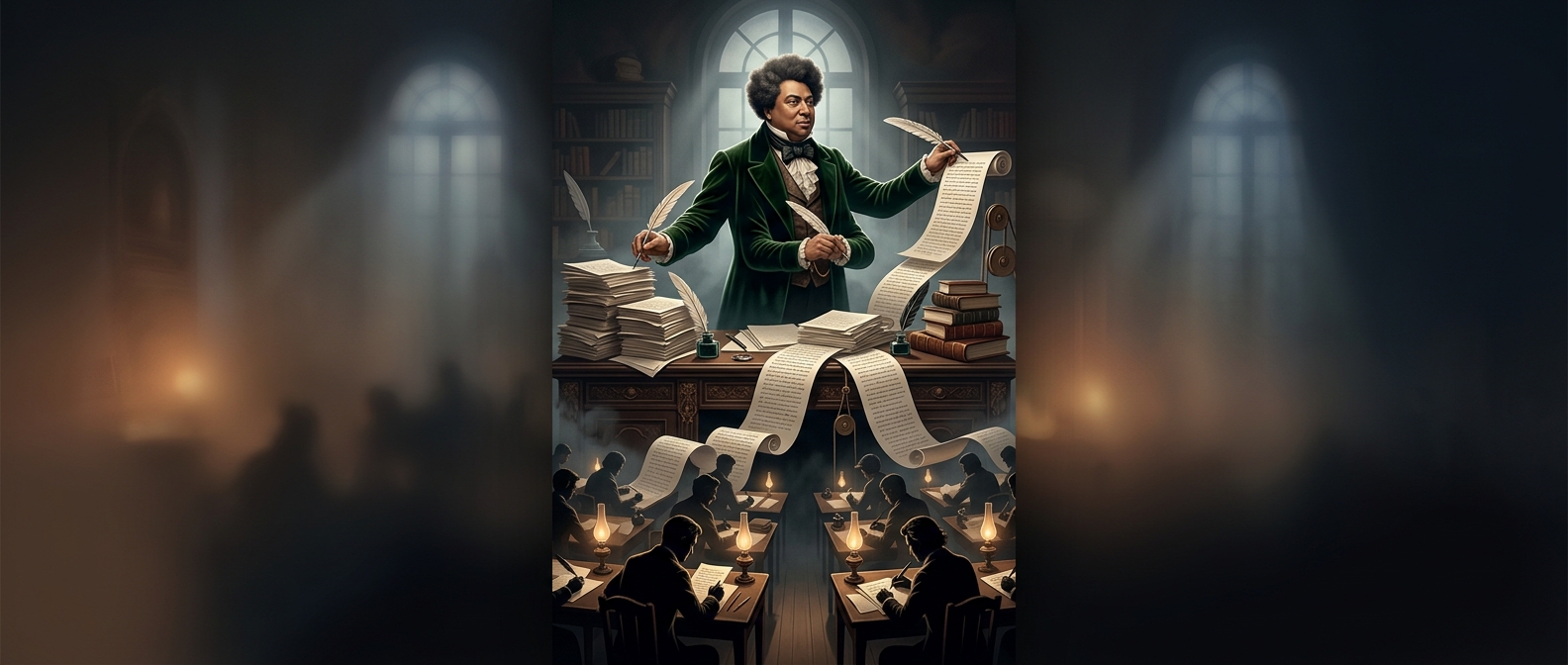
The collaboration behind Alexandre Dumas’s enormous output worked less like a modern author dictating to a room of writers and more like a literary workshop. Auguste Maquet helped build the story’s framework: he supplied plot outlines and early drafts that gave Dumas material to develop. Dumas then reworked that material, shaping its voice, scenes, and dramatic momentum for publication under his name.
That distinction matters. A plot outline can set events in motion, but the finished novel depends on how those events are staged: who speaks, what a reader learns and when, and how each chapter creates a reason to continue. Dumas’s contribution was not simply to put a flourish on an otherwise complete book; the partnership divided parts of the work that readers often assume one novelist performs alone.
A Workshop Built for Scale
Serial fiction rewarded a steady supply of engaging episodes. A collaborator preparing story material could help keep that supply moving, while Dumas concentrated on turning it into fast, vivid narrative. The arrangement helps explain how he could publish so extensively without reducing the books to anonymous assembly-line products: the labor was shared, but the published voice was associated with Dumas.
It also complicates the idea of authorship as a solitary act. Maquet’s outlines and drafts were part of the creative process, yet Dumas’s revisions gave the work the style readers recognized as his. The result was a partnership in which one writer helped generate the story’s architecture and another made that architecture unmistakably his on the page.