A novel drafted by the half-hour
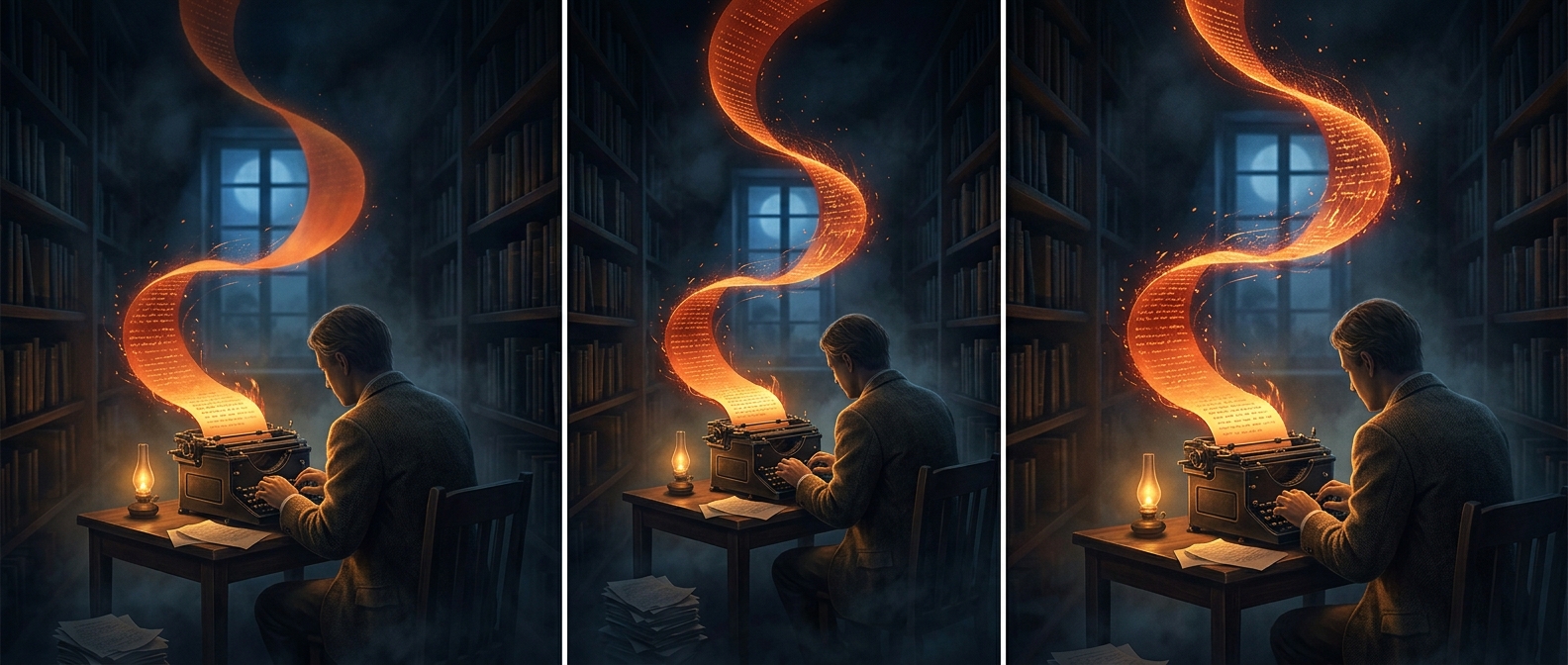
The typewriter in UCLA’s Powell Library basement was available for rent by the clock: coins bought Bradbury blocks of typing time. That arrangement turned a writing session into a small, practical calculation. He could work at a machine without buying one, but every pause used up paid time—a useful contrast with the novel’s imagined world, where books are destroyed to keep people from stopping to think.
From a shorter story to a novel
Bradbury had already explored the premise in a shorter work, The Fireman. He later expanded it into Fahrenheit 451, building a fuller story around Guy Montag, a fireman whose job is to burn books until he begins questioning the society that employs him. The basement draft was not simply a sudden idea captured on a rented machine; it was an earlier concept developed into a novel.
The coin-operated setup makes the writing process unusually tangible: the book’s first draft took shape one paid interval at a time, in a public building rather than a private study. Its eventual subject—what a society loses when reading and independent thought are suppressed—could hardly be more different from the modest, immediate problem of keeping the typewriter running.