From a household pet to a novel character
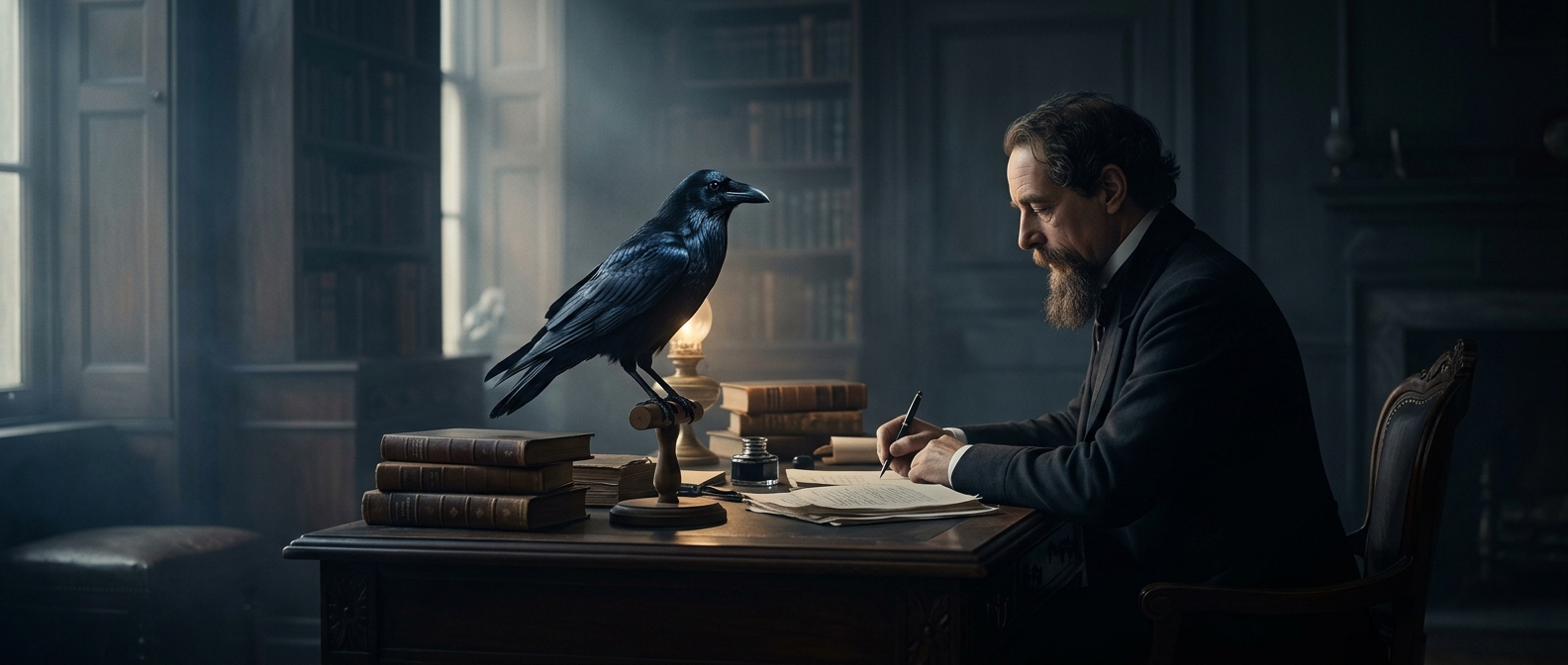
Grip was more than a curiosity in Dickens’s study: the raven became a model for a bird in Barnaby Rudge, Dickens’s historical novel published in 1841. Its ability to imitate human speech gave the character an unsettling, almost conversational presence. A raven that seemed to answer people could make a scene feel eerie without needing any supernatural explanation.
That transformation also shows how closely Dickens drew on observation. He could turn a distinctive behavior from ordinary life into a memorable literary device: the bird’s mimicry made it both comic and ominous, depending on the moment.
The literary trail to Poe
Edgar Allan Poe encountered Dickens’s raven through Barnaby Rudge. The bird caught his attention, and the novel helped spark the idea that a raven could anchor a poem. Poe later developed that premise into “The Raven,” published in 1845, using the bird’s repeated speech to intensify the poem’s atmosphere of grief and fixation.
Grip was not the poem’s sole source; Poe shaped the idea through his own choices as a writer. But the chain is striking: a pet’s mimicry entered Dickens’s fiction, and that fictional raven helped point Poe toward one of the most recognizable birds in American literature.