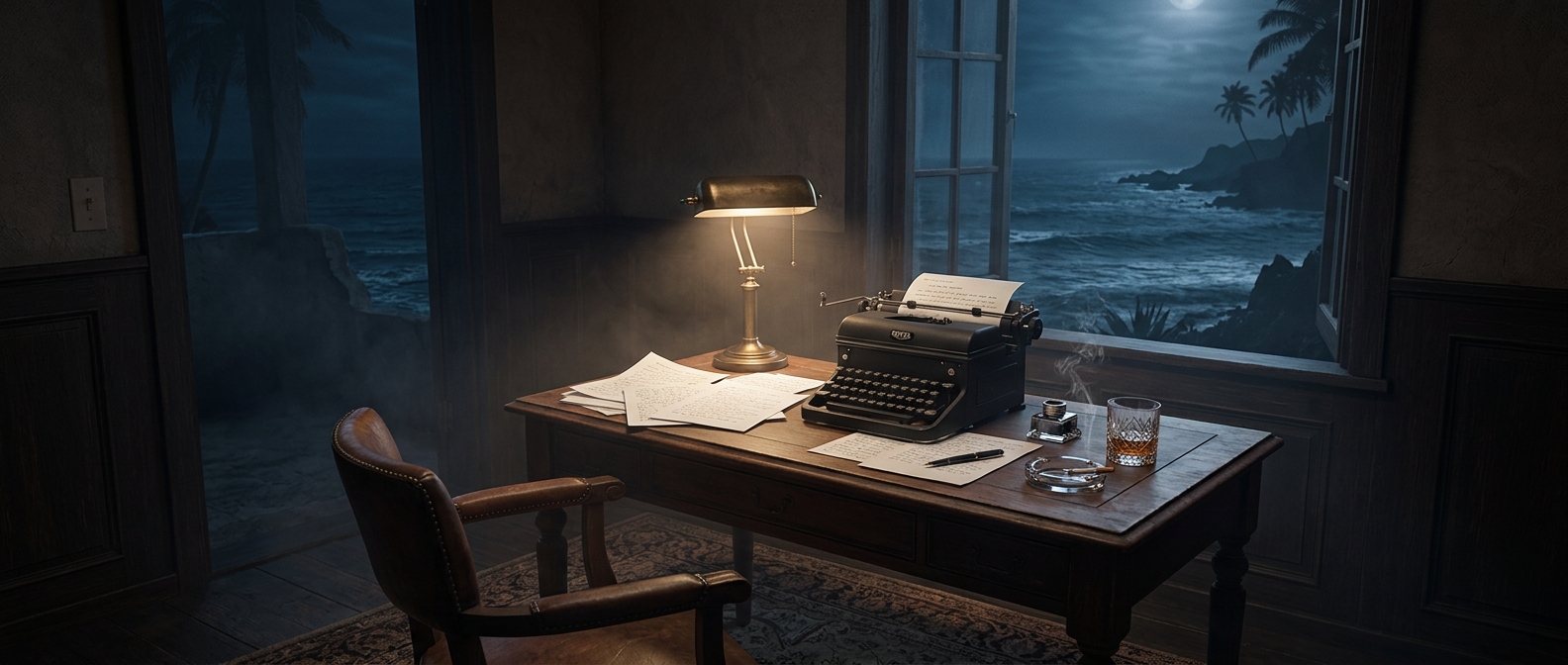
The wall behind James Bond’s writing routine
At Goldeneye, Ian Fleming made the Caribbean scenery something to resist, not admire. He sat facing a wall so the view would not pull his attention from the page. It was a small, practical decision: the setting that might have made writing feel like a holiday was kept out of sight while he worked.
Fleming spent two months a year at the Jamaican estate, using that time to write the Bond books. The wall helped give those visits a clear purpose. Instead of treating writing as an activity to fit around the landscape, he arranged the room so the work occupied his field of view.
A view turned into a distraction
The choice points to a useful tension in creative work: an inspiring place can also compete for attention. Facing the wall did not make Goldeneye less beautiful or remove the view from the house. It changed what Fleming encountered while writing. The scenery remained nearby, but it was no longer the most immediate thing in front of him.
That detail makes the routine memorable because it reverses the expected image of a writer in the tropics. Fleming’s Caribbean setting was not the backdrop he kept gazing at; it was the temptation he positioned himself away from. The novels came out of a place of extraordinary views, written with his eyes on a wall.