The pillars make the card a threshold
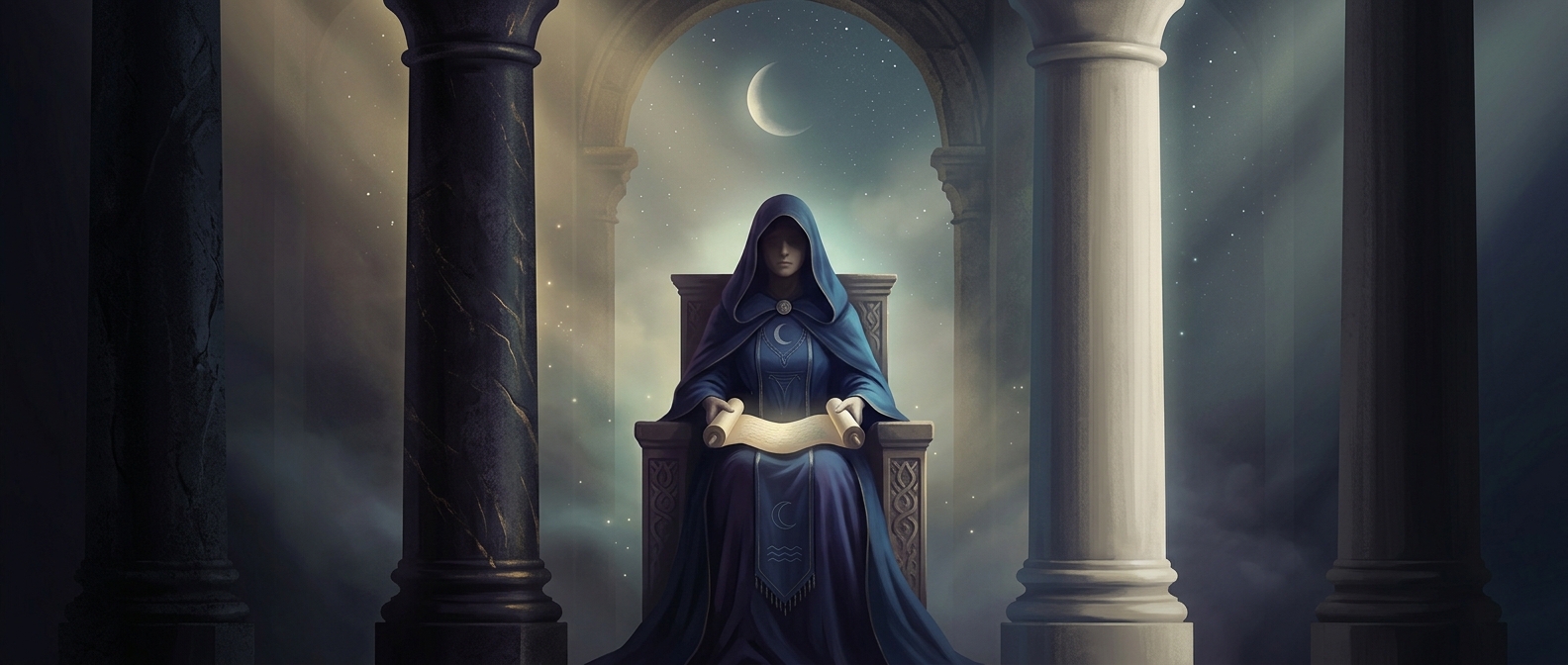
In the familiar Rider–Waite–Smith image, the High Priestess sits between a dark pillar marked B and a light one marked J. The letters refer to Boaz and Jachin, the names traditionally given to the two pillars at the entrance to Solomon’s Temple in biblical accounts. Their placement turns the space around her into a symbolic doorway: she is seated at the boundary between what is visible and what lies beyond it.
The contrast also invites a reading in terms of paired forces—dark and light, concealment and revelation, or opposing ways of understanding. Neither pillar wins. The priestess occupies the middle, suggesting that insight may come from holding tensions together rather than choosing one side.
The scroll hints at knowledge not yet opened
The scroll in her hands is partly covered, so its contents are not fully available to the viewer. In this image, that small visual choice makes knowledge feel present but not automatically accessible. The card’s symbolism often links it with intuition, study, and mysteries that require patience; the covered text gives those ideas a concrete form.
Together, the pillars and scroll make the scene less like a simple portrait than a threshold guarded by a reader of hidden things. In a tarot reading, these details can prompt reflection on what is known, what remains concealed, and whether the moment calls for careful attention rather than an immediate answer.