Why the Chariot’s driver has no reins
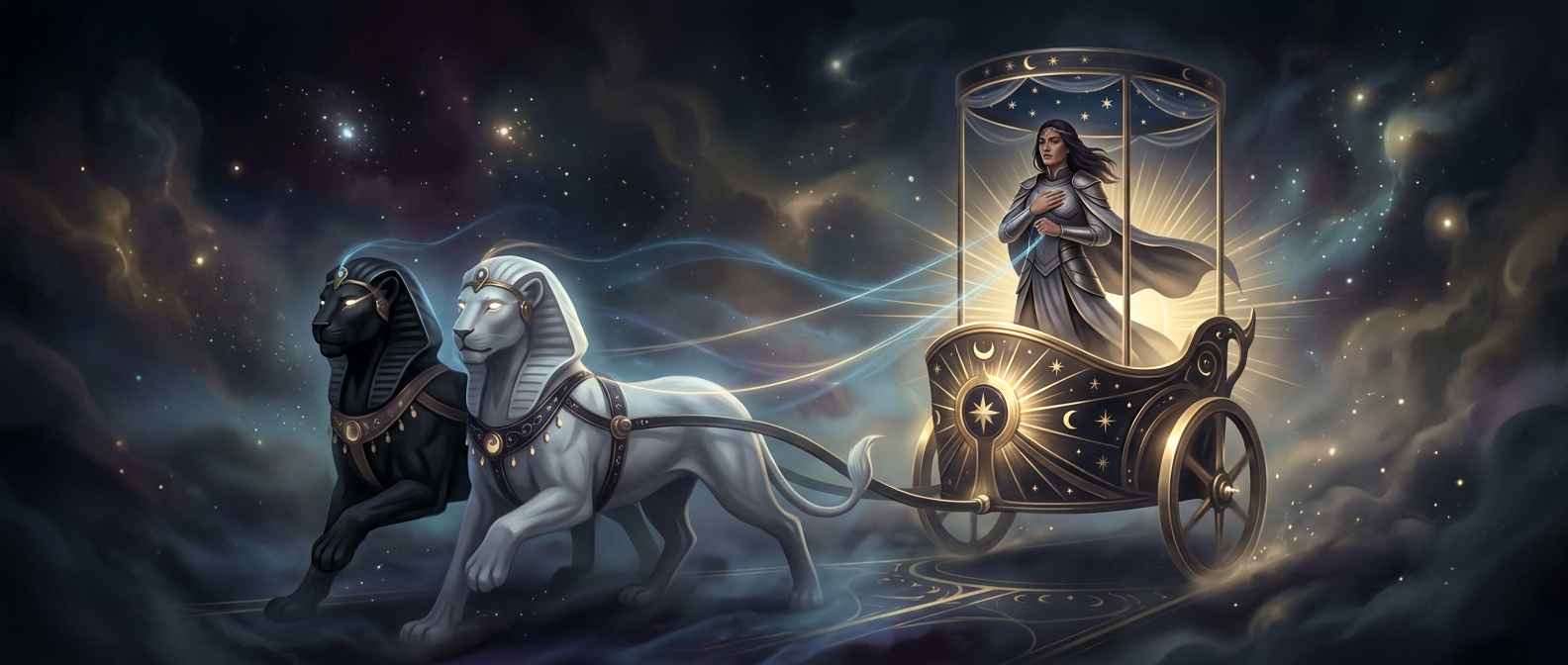
In many familiar depictions of the Chariot card, the driver sits between two animals or other powerful figures without visibly holding reins. The empty hands are part of the image’s message: control is shown as something other than simply pulling an animal in a chosen direction.
The card belongs to tarot’s symbolic language, where a scene invites interpretation rather than documenting a literal technique for driving. Its paired creatures can suggest forces pulling in different directions—competing desires, obstacles, or pressures. The driver’s task is to keep moving while holding those forces together.
Willpower means direction, not brute force
The missing reins make inner direction the focus. In common readings, the Chariot is associated with resolve, self-discipline, and forward momentum: progress depends on choosing a course and staying with it, even when different impulses threaten to scatter attention.
That is not the same as effortless mastery. The image can imply that control takes concentration; the driver must remain steady rather than let either beast dictate the route. Read this way, the card is less about overpowering every difficulty than about coordinating forces that cannot simply be wished away.
A symbol, not a universal rule
Tarot imagery and interpretations vary among decks and readers, so the animals and the driver’s posture may carry different nuances. But the reins-free scene makes a memorable point: in the Chariot, effective control is pictured as disciplined intention. The vehicle moves because its driver maintains direction—not because the image shows a hand tugging it forward.