Why the card is called Judgment
In tarot, the twentieth card of the Major Arcana is usually called Judgment. Its imagery borrows from the Christian tradition of the Last Judgment, in which the dead rise in response to a trumpet and face a final accounting. In the card, that scene becomes a symbol that can be read beyond its religious setting: a moment when the past is brought into view and a person must decide what to do with it.
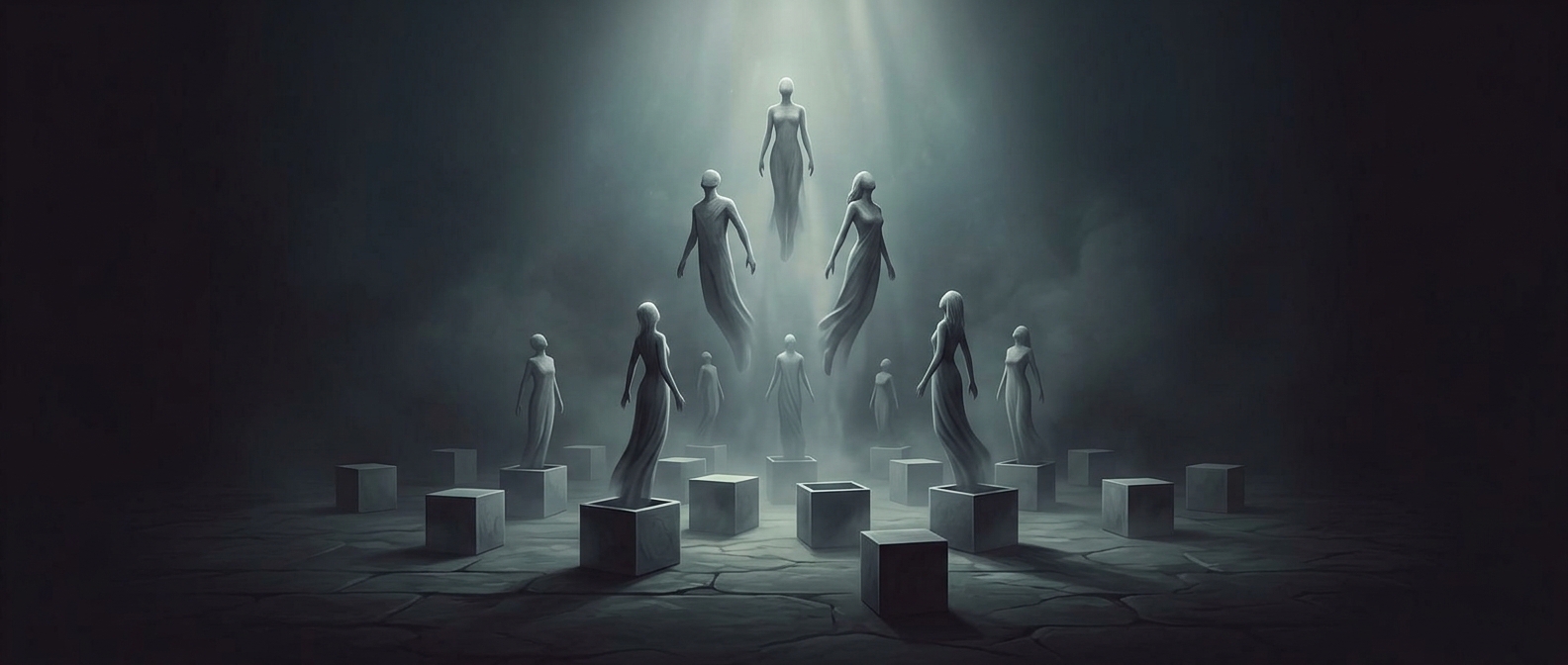
The small boxes are coffins, not prisons. Their open tops and the figures emerging from them make the image a scene of return: something buried is becoming visible again. The figures’ upward movement suggests a change in perspective, as though they are being called to answer for their lives and also given a chance to begin anew.
Reckoning without a verdict
A reading of Judgment need not predict a literal trial or supernatural event. In tarot interpretation, it often points to taking stock—recognizing the consequences of earlier choices, hearing a call to change, or deciding whether to leave an old identity behind. The trumpet gives that turning point a sense of urgency: what has been avoided can no longer stay hidden.
That makes the card’s renewal conditional rather than effortless. Rising from the coffin is the beginning of a response, not proof that everything is forgiven or fixed. Its central tension is between accountability and possibility: the past matters, but it does not have to dictate what comes next.