Making a rewind work in front of the camera
A convincing rewind asks an actor to do more than walk backward. Every gesture has to seem like the reverse of a familiar action: a hand that appears to pull away from an object must actually be reaching toward it, and a body that seems to rise must be lowering itself. Carrey built the effect by performing those motions in reverse order, giving the camera a rewind-like sequence without relying on reversed footage.
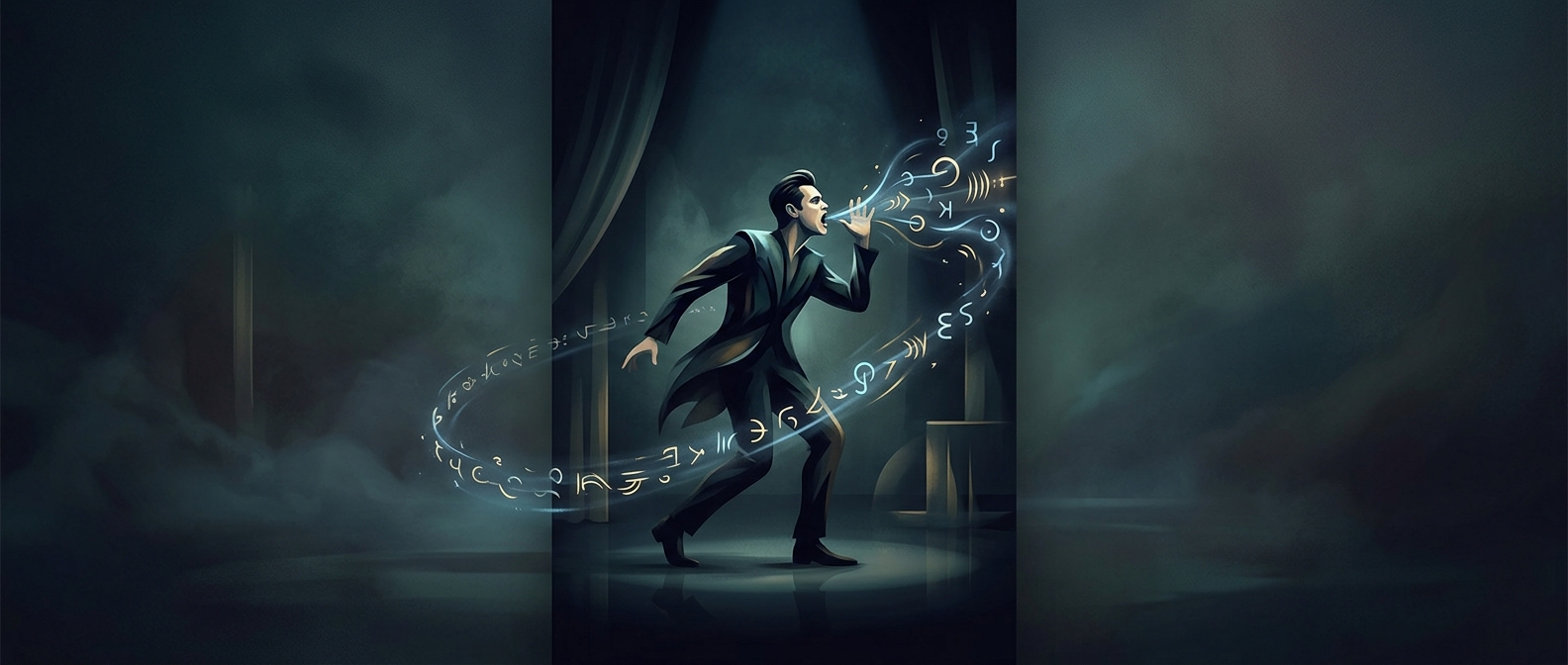
Speech posed a separate challenge. Ordinary dialogue played backward becomes an unintelligible wash of reversed sounds. Carrey instead learned the lines phonetically backward—roughly, the sounds in reverse order—so he could deliver them while the scene played normally. The result could suggest speech being pulled back into a tape, rather than simply sounding like a recording run backward.
Why the performance matters
Reversing footage is a straightforward way to create backward motion, but it reverses everything in the image, including small movements and the timing of speech. A performer doing the action backward in real time has to control those details deliberately. The illusion depends on the body anticipating how an action normally unfolds and then reproducing its opposite convincingly.
That makes the scene an acting feat as much as an editing trick. The memorable rewind is built from two kinds of precision at once: physical movements that retrace an action and speech shaped to evoke reversed sound. Carrey’s performance gives the gag its uncanny quality—the sense that the tape, and the person on it, are being drawn backward.